

Parental alienation is a pattern of repeated rejection, negative messaging, or blocked contact that can shape a child’s view of one parent. Look for clusters of signs over time, document them calmly, and seek support early.
When families search for the 17 signs of parental alienation, they are usually trying to understand a painful pattern, not win an argument. This article explains the warning signs in plain language, with a child-first approach that keeps the focus on behavior, communication, and next steps.
- Pattern matters: One incident is not proof, but repeated behaviors can be a warning sign.
- Watch for rehearsed language: Adult-style phrases and copied criticism deserve attention.
- Keep records neutral: Dates, quotes, and events help professionals assess the situation.
- Stay child-centered: Avoid forcing loyalty tests or adding pressure.
What “Parental Alienation” Means in 2026: A Quick, Careful Definition
Parental alienation is a term people use when a child becomes strongly resistant to one parent in ways that seem influenced by the other parent, the surrounding conflict, or repeated negative messaging. It is not a casual label to throw around during a tense co-parenting week.
Because family situations are complex, the safest approach is to look for patterns over time. A child may be upset for many reasons, including stress, inconsistency, fear, loyalty conflicts, or past hurt. The question is not, “Who is the villain?” The question is, “What repeated behaviors are shaping the child’s view?”
How readers are likely using the keyword “17 signs of parental alienation”
Most readers want a practical checklist: what to notice, what to document, and when concern becomes more serious. They may be a parent, stepparent, teacher, counselor, or relative trying to make sense of a child’s sudden shift.
This is why the article stays specific. It avoids dramatic assumptions and instead focuses on observable signs, such as repeated rejection, copied phrases, or a child refusing contact without a clear reason.
Why this topic needs a serious, family-first tone even on a humor site
At PunRealm, we know family content often works best when it feels warm and human. But this subject involves child emotional safety, so the tone must stay steady, respectful, and clear.
That does not mean the writing has to feel cold. It means the article should help readers breathe, think, and respond wisely rather than react in the heat of the moment.
The 17 Signs of Parental Alienation: Clear Patterns Parents Should Notice
No single sign proves parental alienation on its own. What matters is the pattern, the context, and whether the child’s language or behavior seems unusually rigid, rehearsed, or disconnected from their own experience.
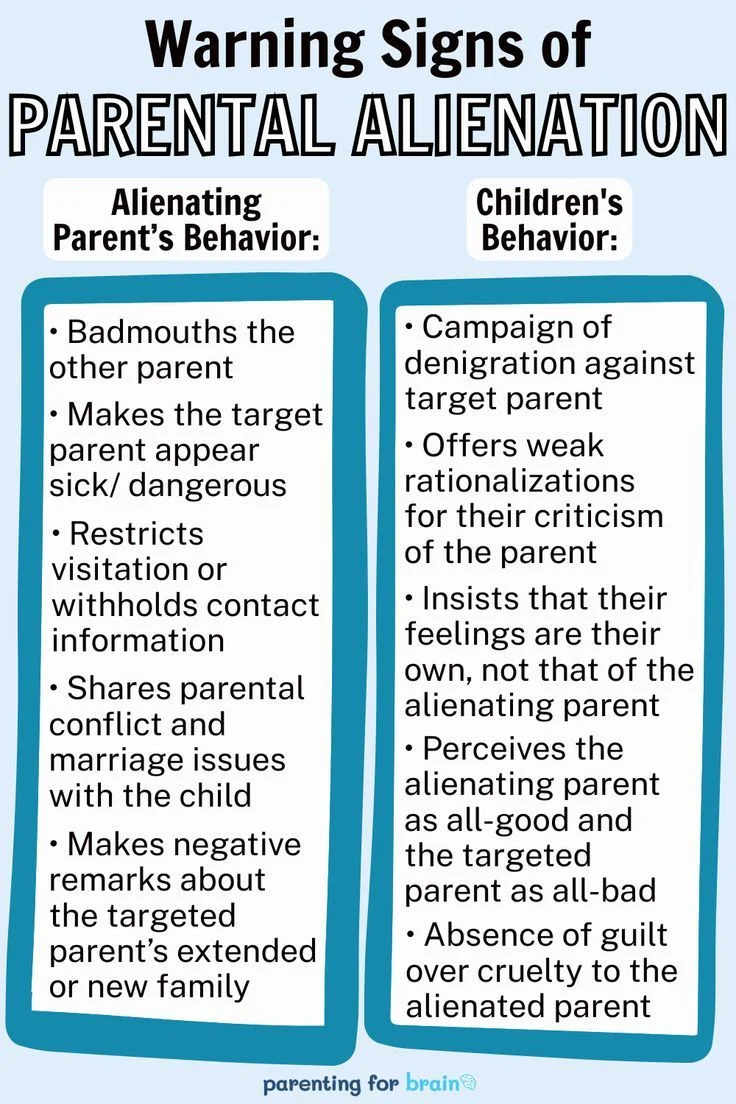
1–5: Rejection, rewriting history, and sudden loyalty shifts
1. Sudden rejection of one parent. A child who once seemed comfortable may abruptly refuse visits, calls, or even simple conversation.
2. Rewriting past experiences. The child may describe earlier happy moments as if they never happened or were always bad.
3. Unexplained loyalty flip. The child may seem to “choose sides” very quickly, as though affection for one parent now feels disallowed.
4. Extreme black-and-white thinking. One parent is all good and the other is all bad, with no room for mixed feelings.
5. Overreaction to ordinary parenting. A normal boundary, like bedtime or homework, is described as proof that one parent is harmful.
6–10: Repeated criticism, fear-based language, and selective messaging
6. Repeated insults or criticism that sound rehearsed. The child may use adult-style language that feels too polished for their age.
7. Fear-based statements without clear examples. The child says they are scared, but cannot explain a specific event or pattern.
8. Selective memory about one parent’s efforts. The child remembers every mistake from one parent but ignores consistent care, routines, or support.
9. Refusal to communicate directly. The child may avoid calls, texts, or face-to-face contact, even when the interaction is calm and appropriate.
10. Messages are filtered or controlled. Important updates about school, health, or plans may not reach one parent in a timely way.
11–17: Social isolation, copied phrasing, and refusal without a clear reason
11. Social isolation from one side of the family. The child stops engaging with grandparents, cousins, or other relatives connected to the targeted parent.
12. Copying phrases from an adult. The child repeats words that sound borrowed, such as “toxic,” “unsafe,” or “manipulative,” without explaining them in age-appropriate terms.
13. Refusal without a concrete reason. When asked why they do not want contact, the child gives vague answers like “I just don’t want to.”
14. Disproportionate anger after neutral events. A simple scheduling change or missed call triggers a response that seems far larger than the event itself.
15. Pressure to keep secrets. The child may feel they must hide messages, visits, or feelings from one parent.
16. Rejection of gifts, photos, or memories. Items that once mattered are suddenly treated as unwanted or “bad” because they came from the other parent.
17. A child seems unable to hold a balanced view. They cannot acknowledge that both parents may have strengths, flaws, and moments of care.
These signs can also appear in high-conflict divorce, anxiety, trauma, or attachment stress. A careful assessment should always consider the child’s full history and current environment. [Source: CDC]
If you are reading this as a parent, it may help to treat the list like a map, not a verdict. The goal is to notice repeated behavior and respond in a way that protects the child’s emotional stability.
Where These Signs Show Up: Home, School, Texts, and Social Media
Parental alienation concerns do not stay neatly inside one conversation. They often show up in everyday places where adults exchange information and children absorb narratives.
Classroom clues teachers may notice during pickup, conferences, or assemblies
Teachers may notice a child becoming unusually tense when a specific parent is mentioned during pickup or a conference. Some children become quiet, avoid eye contact, or suddenly insist on leaving with one adult only.
In assemblies or school events, a child may refuse to sit near a parent, even if there was no recent school-related conflict. A teacher should not diagnose the situation, but they can document behavior and share concerns with the appropriate caregiver or counselor.
TikTok, group chats, and digital “echo chambers” that intensify one-sided narratives
Today, children and teens may absorb family narratives through short videos, group chats, screenshots, and repeated comments from peers or adults. A one-sided story can harden quickly when it is repeated in digital spaces.
That is why tone matters online. A teen may see a parent framed as “the problem” in a message thread and begin repeating that language before they have fully processed what they actually feel.
If digital messages are part of the concern, save screenshots and note dates. Clear records are more useful than emotional back-and-forth in the moment.
Newsletter-style family updates, co-parenting apps, and custody-related communication
Some families rely on co-parenting apps, shared calendars, or message threads to keep communication organized. These tools can help reduce confusion, but they can also reveal patterns such as blocked updates, delayed responses, or repeated gatekeeping.
When communication is custody-related, keep it factual. Short, child-centered updates are easier to review later than long messages filled with blame. That is true even when the emotional urge to explain everything is very strong.
What Parents, Teachers, and Caregivers Should Do Next
Once you notice a pattern, the next step is not to escalate the conflict. The next step is to create clarity, reduce pressure on the child, and seek support where needed.
Document patterns without escalating conflict
Write down dates, behaviors, exact quotes if possible, and what happened before and after the incident. Keep the record neutral. “Child refused call after being told parent was late” is more useful than “Other parent poisoned the child’s mind.”
Documentation is not about collecting ammunition. It is about creating a reliable timeline that helps counselors, mediators, or legal professionals understand what is happening.
Do not use documentation as a way to provoke the other parent. If every note becomes a confrontation, the child may feel even more pressure to choose sides.
Use calm, child-centered language in conversations
When speaking with the child, avoid demanding loyalty or asking them to “pick a side.” Instead, use language that makes room for feelings: “You do not have to solve the adult conflict. I want to understand what feels hard for you.”
For teachers and caregivers, a similar approach works well. Focus on the child’s comfort, routine, and safety. The more the conversation stays about the child, the less likely it is to become a battleground.
When to involve counselors, mediators, or legal professionals
If the child is showing persistent distress, refusing contact, or repeating adult language that seems out of step with their age, a counselor or family therapist may help sort through the emotional layers. Mediation can also help when communication has become too reactive to manage alone.
Legal professionals may be necessary when custody orders are being ignored or when a child’s access to a parent is being blocked. If safety is involved, seek urgent help through the proper local channels.
- Look for repeated patterns, not one-off reactions.
- Keep records neutral, dated, and specific.
- Use child-centered language instead of blame.
- Bring in support early when the pattern keeps growing.
Jamie Reed’s Humor Craft Tips: How to Keep the Topic Human Without Making Light of It
Even in a family humor brand, sensitive parenting topics need restraint. The writing can still feel approachable, but the humor should support understanding rather than distract from the child’s experience.
Use gentle observational humor, not jokes about the child’s pain
Humor works best when it points at the shared chaos of family logistics, not at the child’s distress. A calm, observational line about messy calendars or confusing handoffs may lower tension without minimizing the issue.
This kind of humor is usually safer in a parent blog than in a school newsletter. In formal settings, especially where a child may be affected directly, it is better to keep the tone straightforward.
Choose family-relatable punchlines that lower tension, not trust
A useful humor rule is simple: if the line makes readers feel seen, it can build trust; if it makes them feel mocked, it breaks trust. That matters even more when the subject is family conflict.
For example, a light observation about “three calendars, two apps, and one missing permission slip” can feel relatable. A joke that implies a parent is lying or a child is dramatic can do real harm.
Balance warmth, empathy, and clarity in every section
The strongest family content often sounds like a calm adult in the room. It is warm enough to feel human, clear enough to be useful, and steady enough to be trusted.
Delivery Advice for PunRealm: Tone, Timing, and Platform Fit
For PunRealm, this topic needs a different delivery style than a joke roundup or playful parenting list. The article should still be readable and engaging, but its first job is to help families think clearly.
How to adapt the article for a school newsletter, parent blog, or short-form social post
In a school newsletter, shorten the language and emphasize observation, support, and referral pathways. In a parent blog, you can keep more detail about the 17 signs and next steps. On social media, one or two signs at a time usually works better than a full list. [Source: NASA Science]
Short-form posts should avoid sounding accusatory. A helpful caption might say, “If a child’s words suddenly sound rehearsed or one-sided, it may be worth documenting the pattern and seeking support.”
Best pacing for a 1500–2000 word read: serious intro, practical middle, supportive close
This length works well when the opening establishes trust, the middle gives clear signs and examples, and the ending offers realistic next steps. Readers should feel informed, not overwhelmed.
A careful pace also helps the article stay credible. Fast, punchy writing can be useful for humor, but serious parenting guidance needs room for nuance.
Visual and formatting cues that help readers scan the 17 signs quickly
Use numbered sub-points, short paragraphs, and bold labels for each sign. Readers in distress often skim first and read closely later, so the structure should make the information easy to find.
Funny space jokes for school and other light content can lean on quick scanning and playful pacing, but this topic benefits from a calmer layout. Clear headings, simple language, and visible warnings help readers absorb the message safely.
Common Humor Mistakes to Avoid in a Sensitive Parenting Article
Even if an article sits on a humor-focused site, some topics should not be treated like a punchline. The wrong joke can make a worried reader feel dismissed.
Skipping nuance and sounding accusatory
One of the biggest mistakes is writing as if alienation is always obvious and always intentional. Real families are complicated, and readers need language that leaves room for context.
Using sarcasm where empathy is needed
Sarcasm can be funny in the right setting, but it usually fails when a child is involved. It can make the article sound clever while making the reader feel less safe.
Turning a child-custody issue into a “both sides” gag
Some conflict is mutual, but that does not mean every situation deserves a joke about everyone being equally at fault. A child’s experience should stay central, especially when the concern is emotional pressure or exclusion.
Overloading the piece with jokes and weakening credibility
If every section tries to be witty, the article stops feeling trustworthy. In sensitive parenting content, one clear sentence often does more good than three clever ones.
If a joke could be read as mocking a child, a parent, or a custody dispute, leave it out. Clarity and care matter more than a laugh in this topic.
Age-Appropriateness Notes and Final Recap for Readers
How you discuss alienation concerns should change with the child’s age. Younger children need simple reassurance, tweens need room to talk without pressure, and teens need respect, privacy, and honesty.
How to discuss alienation concerns with younger children, tweens, and teens
With younger children: keep the message short. “You do not need to worry about adult problems. You are safe to love both parents.”
With tweens: invite feelings without asking for a verdict. “It sounds like this has been confusing. Tell me what feels hard, and I will listen.”
With teens: be direct, calm, and non-defensive. Teens usually respond better when adults avoid pressure and admit that family conflict can feel exhausting.
Recap of the most important warning signs and next-step mindset
The most important warning signs are sudden rejection, rehearsed criticism, fear without clear examples, secrecy, social isolation, and a child’s inability to hold a balanced view. None of these signs should be treated as proof by itself, but together they can signal a serious pattern.
The next-step mindset is simple: observe carefully, document neutrally, speak calmly, and seek support early. That approach protects the child better than blame ever will.
Closing reminder: protect the child, stay calm, and seek support early
If you are worried, you are not overreacting by paying attention. You are responding like a careful adult who wants to understand what a child is carrying.
Stay calm, keep the child out of the middle, and ask for help before the conflict hardens into a long-term pattern. That is the most responsible way to respond to the 17 signs of parental alienation.
Frequently Asked Questions
Common signs include sudden rejection of one parent, rehearsed criticism, fear without clear examples, secrecy, and refusal to communicate. A pattern matters more than one isolated incident.
Yes. Children can absorb conflict, loyalty pressure, or repeated negative messaging even when no one is trying to create alienation on purpose.
Teachers may see unusual distress during pickup, strong resistance to contact with one parent, or a child repeating adult-style language. They should document concerns and refer them to the right caregiver or counselor.
Start documenting patterns calmly and keep communication child-centered. Avoid escalating conflict, and consider counseling, mediation, or legal advice if the pattern continues.
No. One sign can have many causes, so it is important to look for repeated patterns over time and consider the child’s full situation.
Use calm, simple language and avoid asking the child to choose sides. Reassure them that they do not need to manage adult conflict and that their feelings will be heard.

