
A white patch on a baby’s tongue or cheeks can worry any parent, especially when it does not wipe away easily. Thrush in babies’ mouth is a common yeast overgrowth, and many caregivers look for gentle ways to keep a baby’s mouth clean while they wait for a pediatrician’s guidance. Soft wipes, gauze cleaners, and silicone brushes can support a daily oral-care routine, though they are not treatments for infection.
Cleaning a baby’s gums and tongue helps remove milk residue and food buildup, which supports general oral hygiene from birth through the toddler years. Some products use only water and xylitol, a natural sweetener known to help reduce bacteria, while others add mild flavoring to make cleaning easier for babies who resist. Material softness, size, and moisture level all matter when choosing a tool for a newborn’s small, sensitive mouth.
Any suspected case of thrush should be evaluated by a pediatrician, since these products support hygiene but cannot treat a yeast infection. Comparing ingredients, disposability, and design can help caregivers pick a product that fits their baby’s age and comfort level.
Best for newborns with minimal ingredients: Jack N’ Jill Baby Gum & Tooth Natural Cotton Wipes
Best for babies who resist cleaning: Dr. Brown’s Tooth and Gum Healthy Wipes, Grape Flavor
Best for tiny newborn mouths: dearlomum Upgraded Baby Tongue Cleaner
Best for daily post-feeding wipe-downs: Papablic Baby Tongue Cleaner
Best for 360-degree gum coverage: Momcozy Baby Tongue Cleaner
Best value bulk pack: EASICUTI Baby Tongue Cleaner
Best for dry, on-the-go cleaning: Tongueclear Dry Wipes
Best bundle with finger toothbrushes: Little Fox Baby Oral Cleaner Set
Best reusable silicone set: PandaEar 3 Pack Silicone Toothbrushes
Best compostable option: Dr. Brown’s Baby Oral Cleaners, 60 Count
Jack N’ Jill Baby Gum & Tooth Natural Cotton Wipes
 This pick suits parents who want the simplest possible ingredient list for newborn oral wipes.
Pros
- Contains only water and xylitol, with no added flavor
- Individually wrapped for hygiene and travel
- Safe to use from birth
Cons
- No flavor may make it harder for older babies who resist cleaning
- Smaller pack size than some competitors
- Cotton material is less structured than gauze for reaching corners
Made by a family-run Australian brand, these wipes skip fragrances, fluoride, and sugar. The soft cotton wraps around a caregiver’s finger to clean gums, tongue, and cheeks. Reviewers note the mild taste and gentle texture work well for daily use alongside brushing once teeth appear. Because each wipe comes individually sealed, they travel well in a diaper bag without drying out before use.
Dr. Brown’s Tooth and Gum Healthy Wipes, Grape Flavor
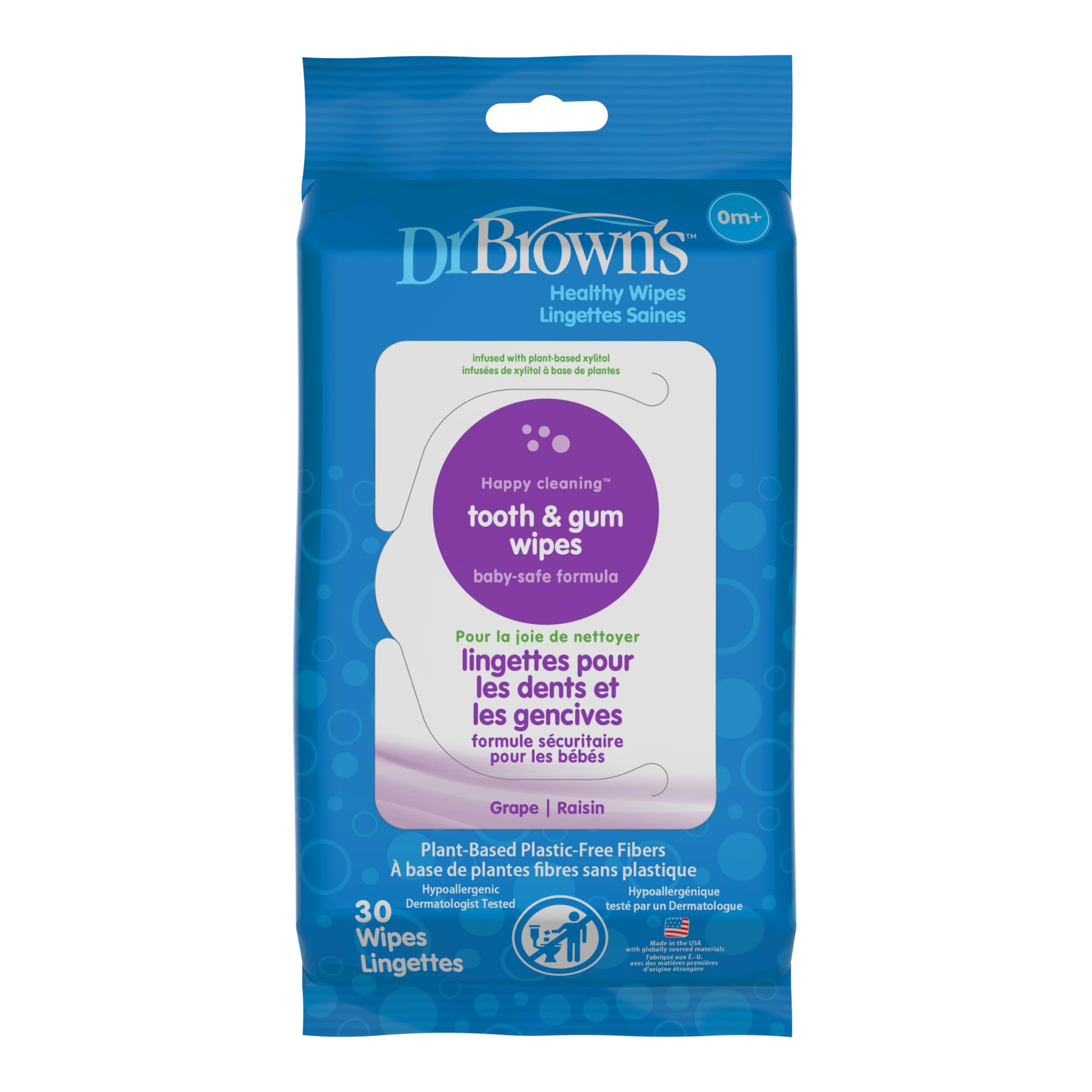 This option works well for babies who fuss during mouth cleaning and respond better to a mild flavor.
Pros
- Grape flavor may encourage cooperation during cleaning
- Plastic-free, plant-based fibers
- Hypoallergenic and dermatologist tested
- Thrush in Babies Mouth
Cons
- Contains added flavoring, which some parents may prefer to avoid for newborns
- A few reviewers mention leaking packets
- Not as minimal an ingredient list as unflavored options
Dr. Brown’s wipes use plant-based xylitol along with a small list of preservatives and flavoring agents. The fluoride-free formula is built for use after feedings, helping to reduce milk residue that can contribute to bottle mouth. Many caregivers report the grape flavor makes gum cleaning less of a struggle, especially with older infants who have started resisting the process.
dearlomum Upgraded Baby Tongue Cleaner
 This gauze cleaner is sized for newborns whose mouths are too small for standard tongue cleaners.
Pros
- Smaller head designed specifically for newborn mouths
- Double-stitched gauze resists coming apart
- Individually vacuum-packed for sanitary storage
Cons
- Disposable design means ongoing repurchases
- A few reviewers note occasional loose cotton strings
- Best suited for younger infants, less ideal as babies grow
The reduced head size sets this product apart from standard-size tongue cleaners, which can feel bulky in a newborn’s mouth. The medical-grade gauze wraps around a paper handle designed to reach the tongue, gums, and cheeks. Parents dip it in warm water to soften before use, and the double-suture construction helps keep the material intact during cleaning.
Papablic Baby Tongue Cleaner
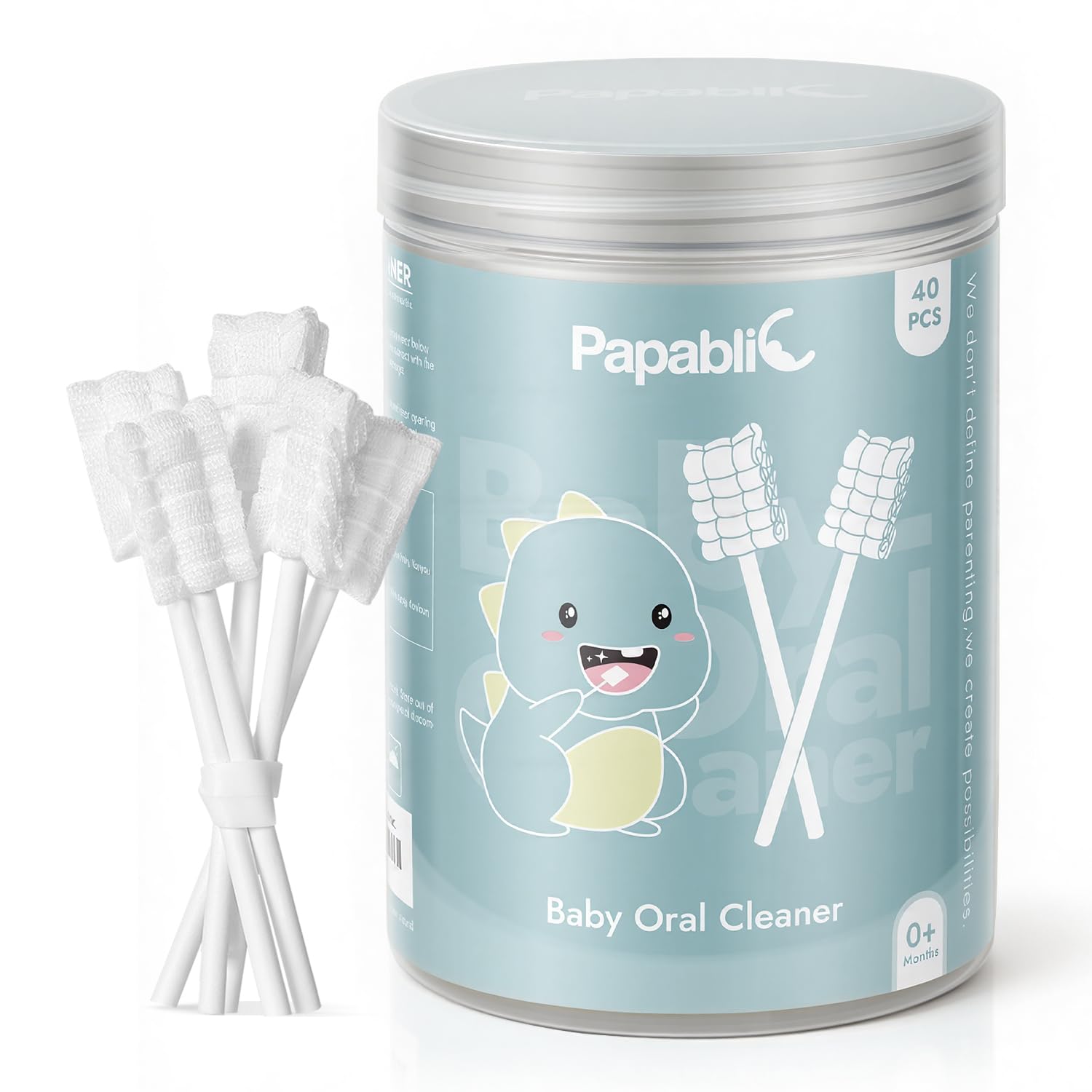 This swab-style cleaner fits well into a post-feeding routine for infants up to two years old.
Pros
- Flexible paper handle reaches all areas of the mouth
- Individually sealed for on-the-go use
- CPSIA certified with double-stitched brush head
Cons
- Handle material is plastic, unlike some paper-only competitors
- Some users note the wipes could offer more moisture
- Packaging has occasionally arrived damaged
Papablic’s swab design differs from flat wipes by offering a rounded, gauze-covered head that can reach the cheeks and gum line more precisely. The company recommends daily use, even before teeth appear, to remove milk and food residue. Reviewers describe the material as soft against sensitive gum tissue, which matters for babies just getting used to mouth cleaning.
Momcozy Baby Tongue Cleaner
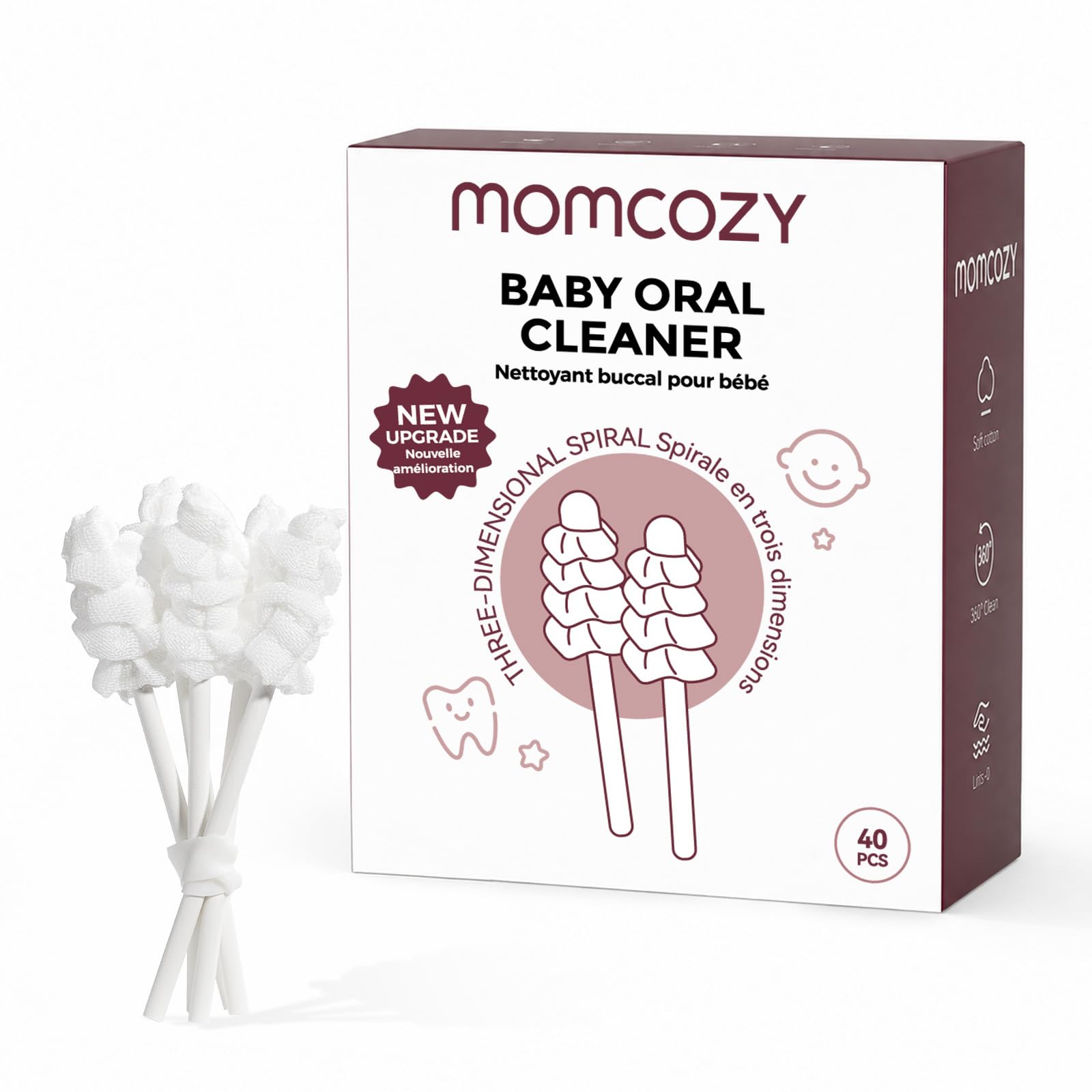 This cleaner suits caregivers who want a 3D brush head that reaches all sides of the mouth in one pass.
Pros
- Wavy 3D brush head designed for 360-degree contact
- Individually wrapped for freshness and portability
- Suitable for ages 0 to 36 months
Cons
- Reusability is listed as disposable despite silicone material
- Handle shape may feel different from gauze-based designs
- Some parents wish replacement heads were sold separately
The wave-pattern brush head is built to contact more of the tongue and gum surface with each swipe, which can help during quick cleanings. Momcozy markets this cleaner across a wider age range than many disposable options, making it useful as teeth begin to emerge. Reviewers mention the anti-fracture handle feels secure even when a baby bites down.
EASICUTI Baby Tongue Cleaner
 This bulk pack gives caregivers a large supply of gauze cleaners plus a bonus finger toothbrush.
Pros
- Large 42-count pack offers strong value
- Includes a free silicone finger toothbrush with case
- Rectangle brush head designed for full mouth coverage
Cons
- Some reviewers report bristle pull-out with vigorous use
- Packaging has arrived damaged for a few buyers
- Paper handle may feel less sturdy than plastic alternatives
EASICUTI’s gauze cleaner uses a double-stitched, lattice-style head meant to hold up under a wiggling baby’s movements. The bundled finger toothbrush gives parents a reusable option to pair with the disposable wipes. Many reviewers describe the set as useful for both newborn gum cleaning and early toddler brushing routines.
Tongueclear Dry Wipes
 This dry wipe design works for caregivers who prefer to add moisture themselves rather than use a pre-wetted product.
Pros
- Can be used dry or dampened with warm water
- Ring buckle helps secure the wipe to a finger
- Large 60-count pack for extended use
Cons
- Some babies may resist the dry texture at first
- A few reviewers found it difficult to fit into smaller mouths
- No flavor added, which may not suit babies used to flavored wipes
Tongueclear’s finger-ring design aims to keep the wipe from slipping during use, which can help with squirming babies. The dry format gives parents flexibility to adjust moisture level based on comfort. Reviewers mention it took some babies a few tries to get used to the sensation before accepting the cleaning routine.
Little Fox Baby Oral Cleaner Set
 This set gives parents both disposable gauze cleaners and reusable finger toothbrushes in one purchase.
Pros
- Includes 60 disposable cleaners plus 2 finger toothbrushes with cases
- Made from medical-grade gauze and food-grade paper
- Individually vacuum-sealed for hygiene
Cons
- Larger bundle may be more than some families need
- Extra components mean more parts to store
- Finger toothbrushes require separate cleaning and care
This bundle pairs single-use gauze swabs with washable finger toothbrushes, giving caregivers options as a baby grows. Parents managing suspected thrush symptoms sometimes use the disposable swabs for daily cleaning between pediatrician visits. The included cases help keep the reusable brushes sanitary during travel or storage between uses.
PandaEar 3 Pack Silicone Toothbrushes
 This reusable set fits families who want washable tools instead of ongoing disposable purchases.
Pros
- Three brush shapes cover ages 0 to 18 months
- Reusable silicone reduces waste compared to disposable wipes
- Comes with a travel storage case
Cons
- Requires regular washing between uses
- Silicone bristles may feel firmer than gauze for very young infants
- Not individually sealed like disposable options
PandaEar’s set changes shape as a baby grows, starting with a tongue scraper for the earliest months and moving to a U-shaped brush, then a standard first toothbrush. The silicone material can be rinsed and reused, which appeals to parents wanting to cut down on daily waste. Reviewers say the travel case doubles as a rinse cup, which adds convenience for outings.
Dr. Brown’s Baby Oral Cleaners, 60 Count
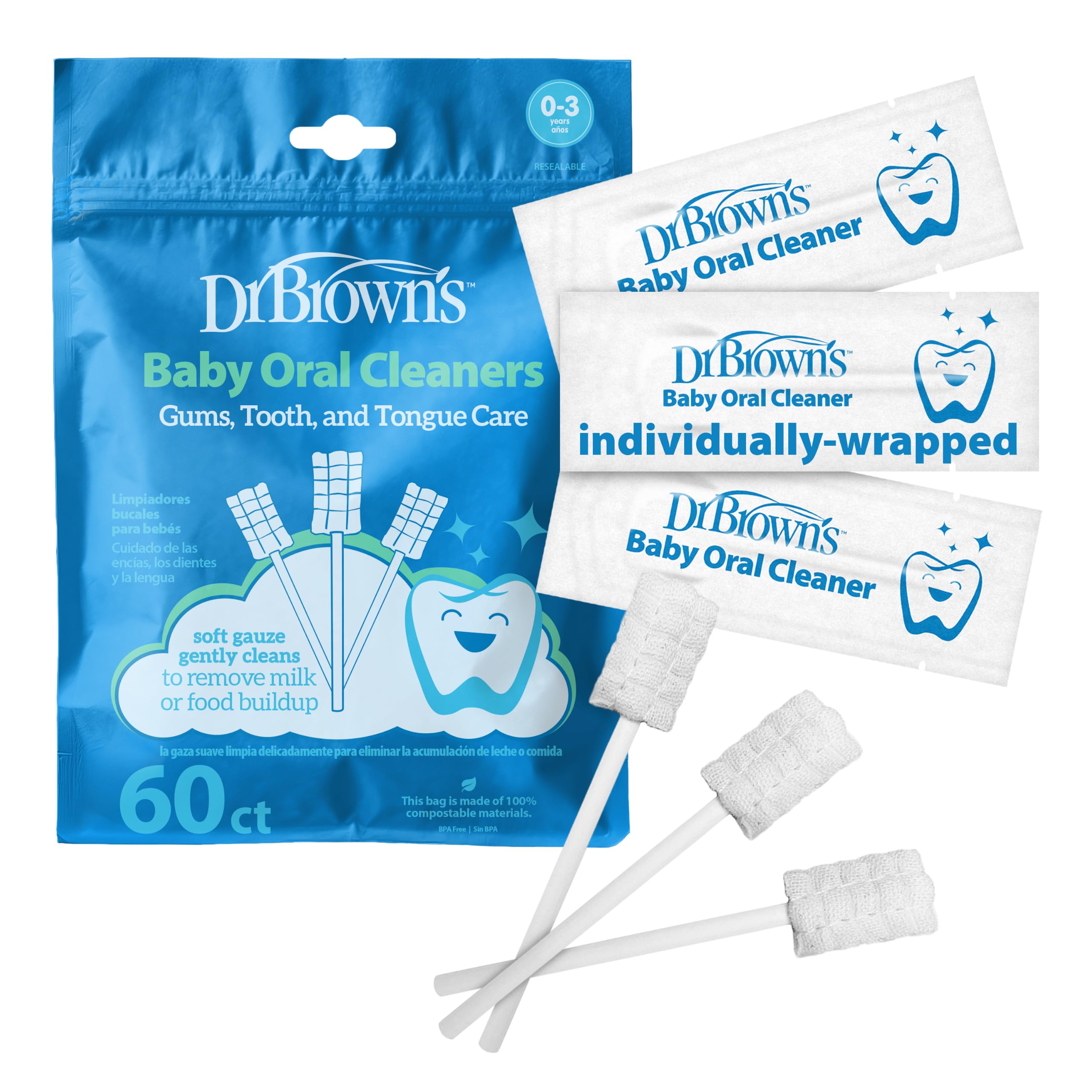 This cleaner appeals to parents who want a compostable, gauze-based option from a well-known infant care brand.
Pros
- Compostable materials reduce environmental impact
- 3D wave-pattern brush head for effective contact
- Can be used wet or dry depending on preference
Cons
- Smaller number of reviews compared to other picks
- Disposable design means regular restocking
- Paper handle may feel less durable than silicone options
Dr. Brown’s gauze cleaner is built around a wave-textured brush head meant to lift milk residue from the tongue and gums. The compostable materials set it apart from plastic-handled alternatives on this list. Caregivers describe it as gentle enough for newborns while still offering enough texture to feel effective during daily wipe-downs.
Buying Guide
Match the Tool to Baby’s Age and Mouth Size
Newborns need smaller, softer heads than older infants with emerging teeth. A tongue cleaner sized for a six-month-old may feel too large for a two-week-old’s mouth. Check the manufacturer’s age range before buying, and size down if a baby seems uncomfortable with a standard product.
Compare Ingredient Lists Carefully
Some wipes contain only water and xylitol, while others add flavoring, preservatives, or citrus extracts. Parents who want the simplest formula for a newborn should look for products with the shortest ingredient list. Flavored wipes may help with older babies who resist cleaning but are not necessary for basic hygiene.
| Feature | Unflavored/Minimal | Flavored | Silicone Reusable |
|---|---|---|---|
| Best for | Newborns, sensitive mouths | Babies who resist cleaning | Families wanting less waste |
| Ingredients | Water, xylitol | Water, xylitol, flavor/aroma | None (rinse only) |
| Disposable | Yes | Yes | No |
Disposable Versus Reusable Designs
Disposable wipes and gauze swabs offer single-use hygiene, which some parents prefer during suspected thrush to avoid reusing a cloth or brush that could hold onto yeast. Reusable silicone brushes need thorough washing and drying between uses. Either option can work as part of a daily routine, but reusable tools require more consistent cleaning habits.
Moisture Level and Texture
Pre-moistened wipes are ready to use right away, while dry gauze cleaners let parents control moisture by dipping in warm water. A dry cleaner gives more flexibility for babies who dislike a very wet sensation. A pre-moistened wipe saves a step during a quick cleanup after feeding.
Packaging and Portability
Individually wrapped wipes and swabs stay sanitary until use and travel well in a diaper bag. Bulk bags without individual wrapping cost less per unit but expose the remaining pieces to air and handling. Parents who travel often may prefer the individually sealed format despite a slightly higher cost per wipe.
When to Contact a Pediatrician
White patches that do not wipe away easily, spread across the cheeks or roof of the mouth, or come with fussiness during feeding may signal thrush. None of the products in this guide are medicated or intended to treat a yeast infection. A pediatrician can confirm a diagnosis and recommend an antifungal treatment if needed, and cleaning routines should continue only as advised alongside that treatment.