

Most babies begin lifting their head briefly during tummy time by around 6 to 8 weeks, and by 4 months many can hold their head steady and upright without support. Full head control, including smooth movement while sitting or being carried, usually develops between 4 and 6 months. Every baby moves through this at a different pace, and premature birth, tummy time frequency, and individual muscle development all play a role. When Should Infants Hold Their Head Up
Parents often ask what they can do to support this stage safely. The most useful answer is supervised floor time on a firm, flat surface, paired with toys and mats that give a baby a reason to lift and turn their head. Gear can add visual interest or gentle positioning support, but none of it replaces active tummy time or a caregiver watching close by.
Choosing the right products means understanding what each one actually does. Some items, like high-contrast books and water mats, encourage a baby to practice lifting and turning their head. Others, like support pillows or head protectors, offer positioning help or fall protection rather than active muscle-building. Knowing the difference helps parents pick gear that matches their baby’s current stage instead of assuming every product builds strength the same way.
Best for encouraging longer tummy time sessions: Infinno Inflatable Tummy Time Water Mat
Best for newborn visual tracking practice: Infinno High Contrast Baby Book
Best for babies transitioning from tummy time to sitting: Lovvie & Joy 2-in-1 Mat & Seated Pillow
Best for chest support during early tummy time: Taf Toys Ergonomic Tummy Time Support
Best for portable sensory play on the go: ZICOTO Soft Tummy Time Book
Best for budget-friendly high-contrast play: Cawgug Black and White Baby Book
Best for supervised head support in bouncers and strollers: Babymoov Lovenest Head Support
Best for fall protection during early walking and crawling: JunNeng Baby Head Protector Backpack
Best for girls’ nursery-themed tummy time and sitting practice: Topsochir Caterpillar 2-in-1 Playmat
Best for practicing independent sitting: KEST NEST Plush Sit Up Floor Seat
Infinno Inflatable Tummy Time Water Mat
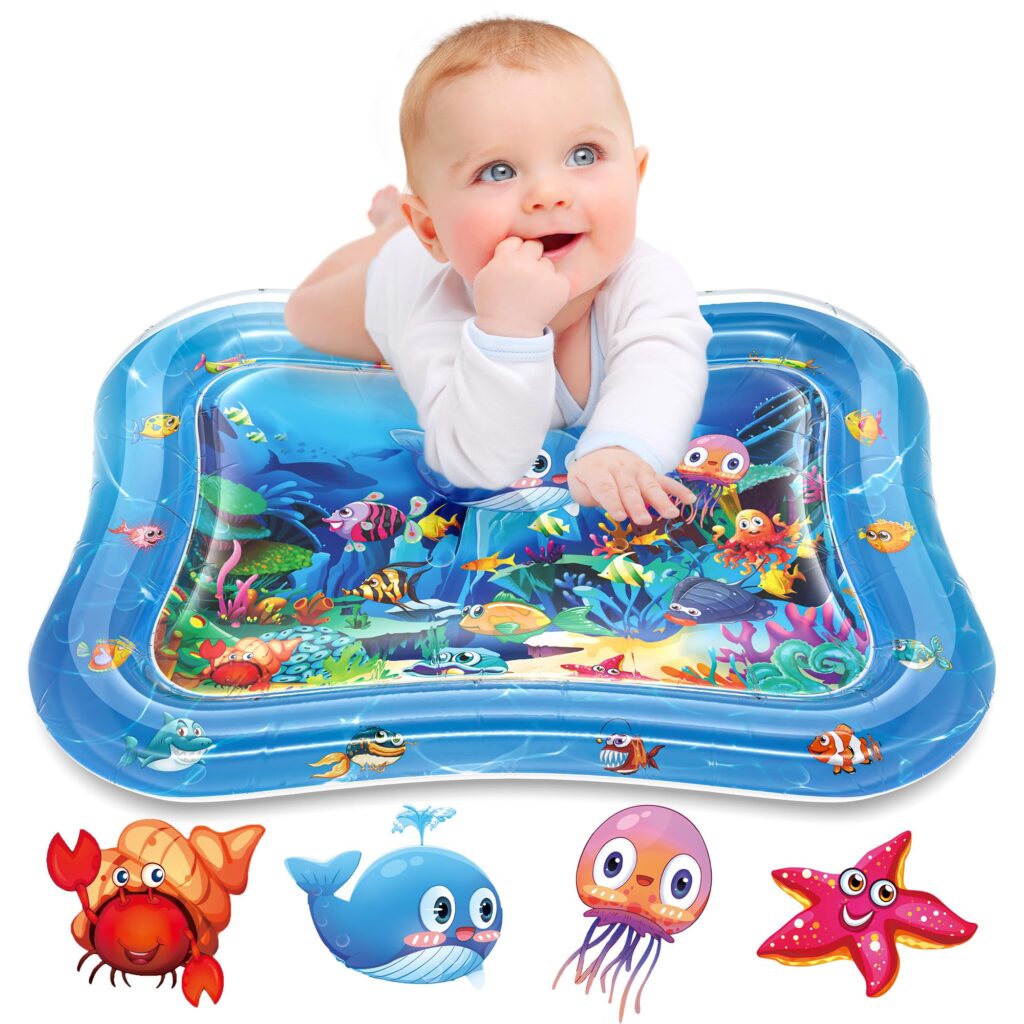
This water mat gives babies a reason to lift and turn their head during tummy time, making it a strong pick for parents working on neck and shoulder strength.
Pros
- Floating sea animals encourage visual tracking and reaching
- Leakproof design keeps babies dry during play
- Folds flat for storage or travel
Cons
- Some parents note algae growth without added vinegar or bleach
- Requires setup time to fill with water and air
- Not a substitute for floor-based tummy time
Babies push against the surface to watch the sea creatures shift, which naturally encourages head lifting and upper body movement. The mat suits babies from about 3 months onward, once they can safely support brief tummy time sessions. Supervision remains necessary throughout play, since the mat is soft and not a resting surface. When Should Infants Hold Their Head Up
Infinno High Contrast Baby Book
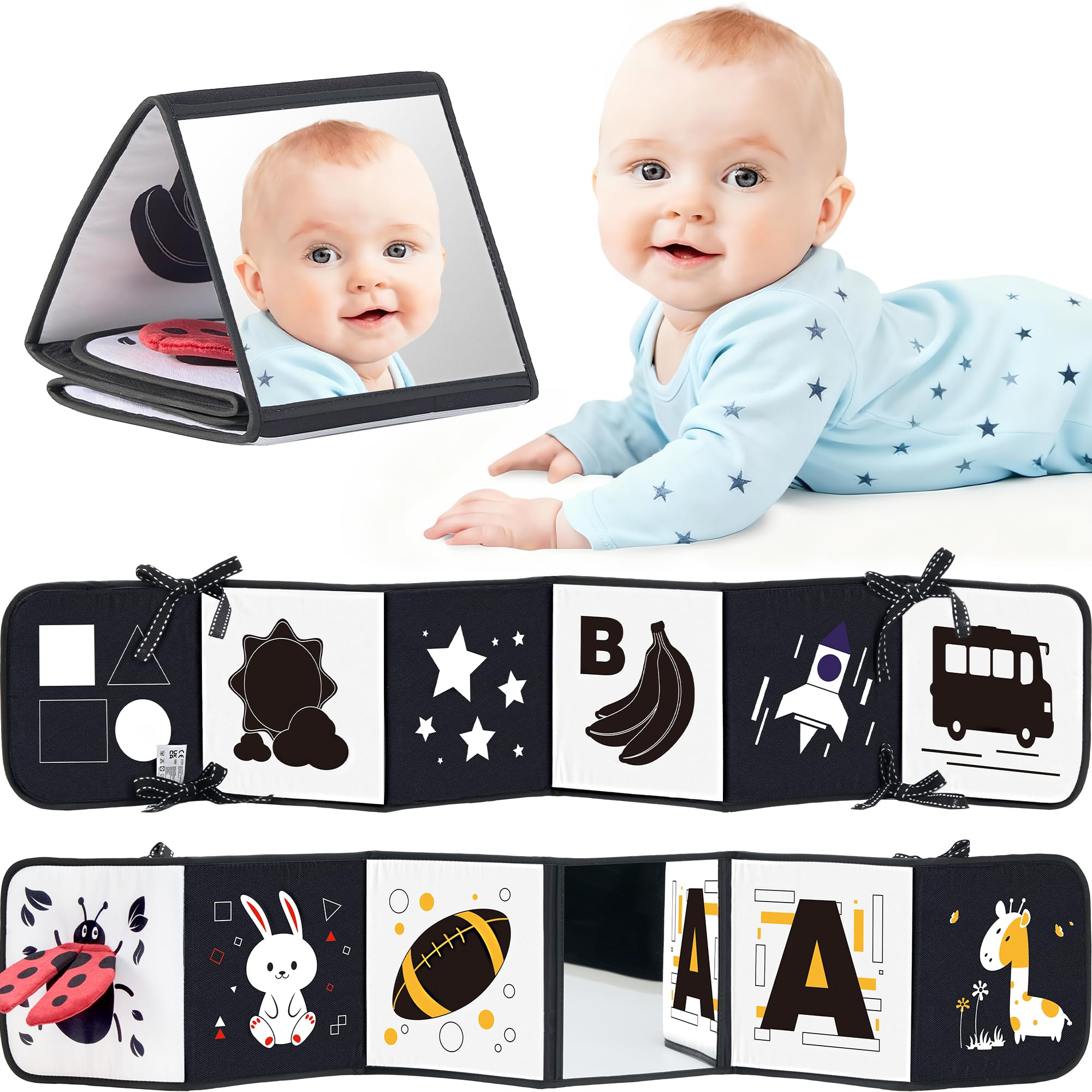
This high-contrast book gives newborns a reason to focus and lift their head during early tummy time, since bold black-and-white patterns are easiest for young eyes to see.
Pros
- High-contrast pages support early visual development
- Stands upright on its own during tummy time
- Ties allow attachment to a crib or stroller
Cons
- Best suited to younger infants; older babies may outgrow interest
- Crinkle cloth is polyester, not cotton, which surprises some buyers
- Mirror image can appear slightly distorted
Newborns see contrast and shapes more clearly than color in the first weeks of life, which is why the black-and-white side works well for early tummy time. The embedded mirror adds a reason to keep lifting the head to look. Parents should stay nearby, since the book’s ties are meant for supervised use, not unattended crib hanging.
Lovvie & Joy 2-in-1 Mat & Seated Pillow

This 2-in-1 pillow set works for babies moving from tummy time into early sitting practice, offering two developmental stages in one product.
Pros
- Converts between tummy time mat and seated support
- Includes a teether and crinkle toy for sensory play
- Soft cushioning may ease resistance to tummy time
Cons
- Some parents report the connecting straps feel loose
- Not firm enough to teach independent sitting on its own
- Best for babies who already have some trunk control
The seated configuration works as a support seat rather than a training tool, so it fits babies who can already sit with light assistance. The tummy time side offers a gentler incline for babies who resist flat-surface tummy time. Adult supervision is required in both configurations, since the pillow does not restrain movement.
Taf Toys Ergonomic Tummy Time Support
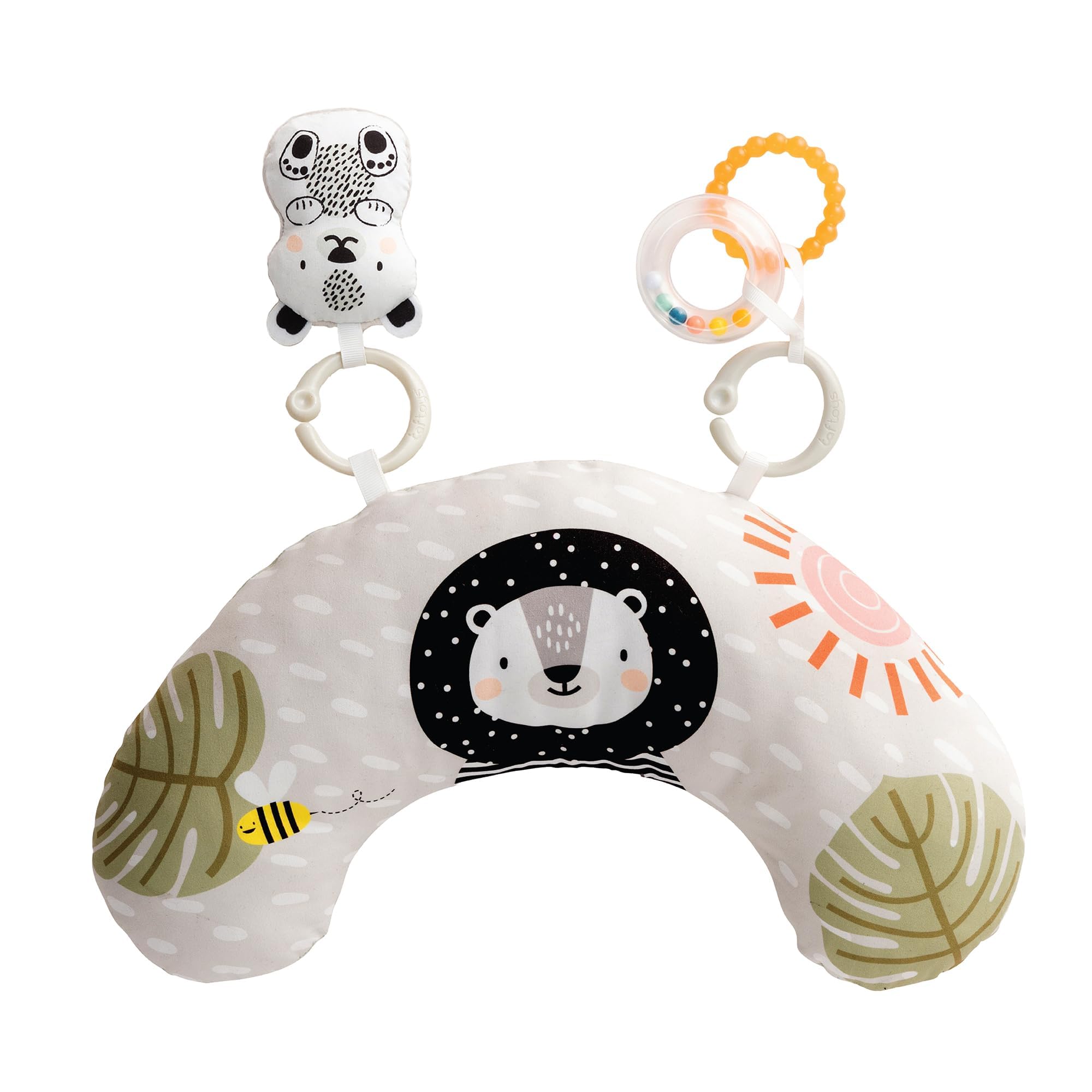
This angled chest support helps very young infants manage tummy time by lifting their upper body slightly, which can make head lifting easier to practice.
Pros
- Angled shape supports the chest and frees the arms to move
- Attached rattle and teether add sensory engagement
- Soft fabric is gentle on delicate skin
Cons
- Runs smaller than some parents expect
- Not a stiff support, so baby still balances some weight
- A few buyers note inconsistent build quality
The design targets newborns and young infants who are just starting to practice lifting their head against gravity. Because it’s soft rather than rigid, it offers gentle support without doing the muscle work for the baby. This makes it a supplement to floor time, not a stand-in for it.
ZICOTO Soft Tummy Time Book
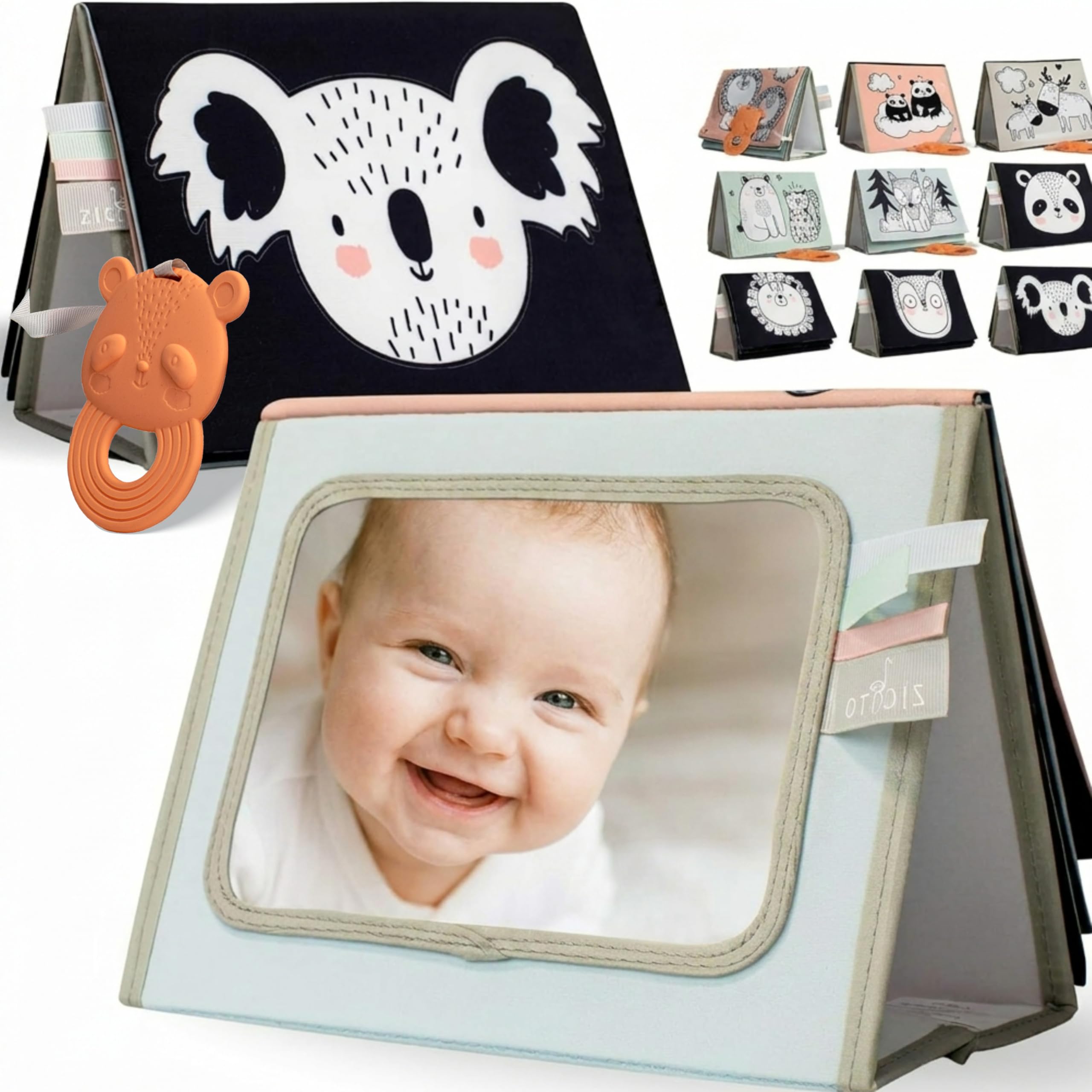
This two-stage soft book grows with a baby from newborn visual tracking to early grasping and texture exploration around 3 months and up.
Pros
- Two-sided design supports two developmental stages
- Crinkle sound and mirror add sensory variety
- Compact size fits easily in a diaper bag
Cons
- Some animal illustrations look similar and hard to distinguish
- Mirror reflection can appear a bit distorted
- Silicone teether adds bulk some babies ignore
The book stands on its own, giving babies a reason to hold their head up and look toward it during supervised floor time. Its small size makes it convenient for outings, though it works best as a short-session tool rather than an extended entertainment source. Regular wiping keeps the soft material clean between uses.
Cawgug Black and White Baby Book
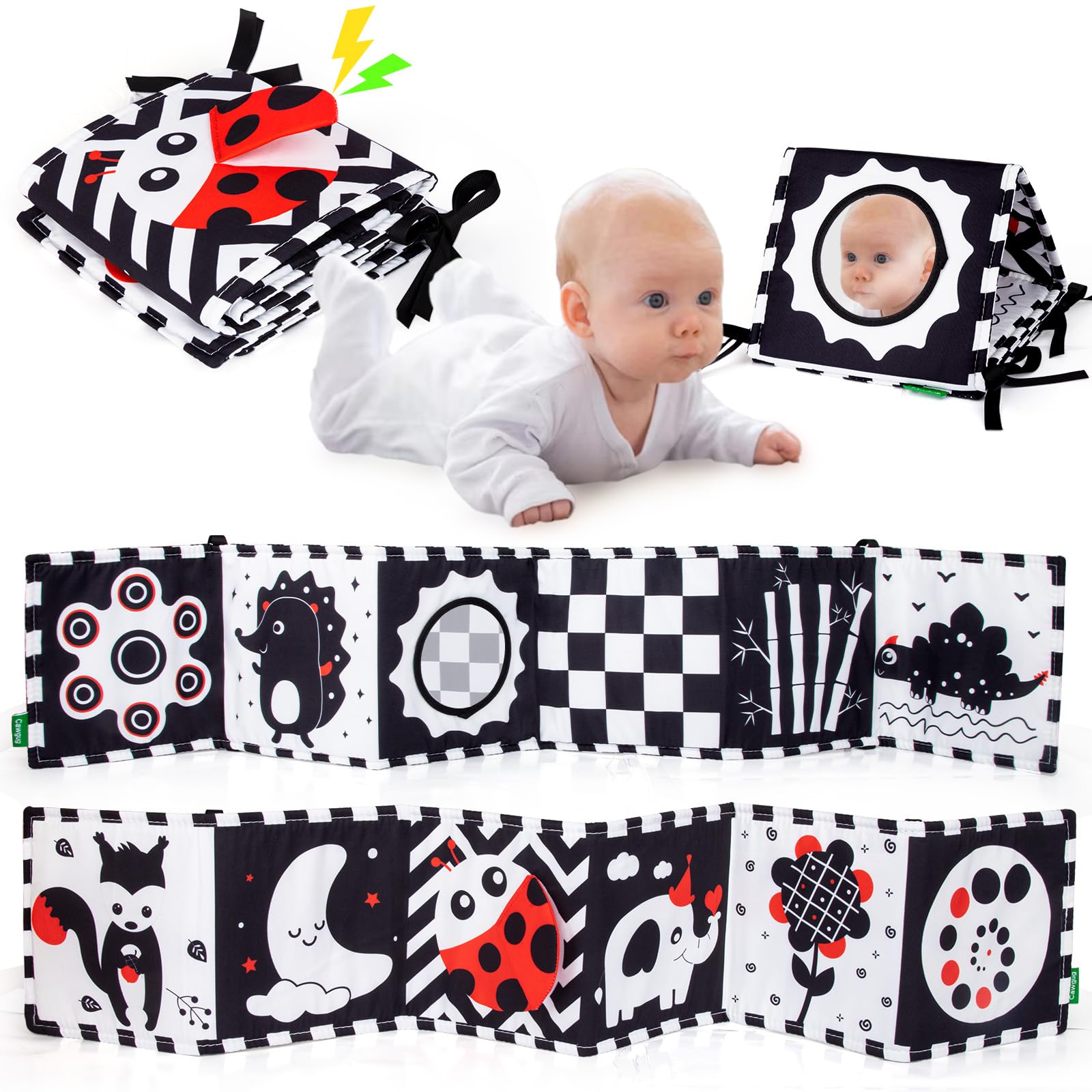
This budget-friendly high-contrast book offers 12 patterns and a built-in mirror, giving infants plenty of visual variety during tummy time.
Pros
- Multiple patterns keep visual interest over time
- Washable fabric handles spit-up and reflux messes well
- Ties allow hanging on a stroller, crib, or fence
Cons
- Fabric feels softer and less stiff than pictured
- May not stand upright as easily as expected
- Best suited to younger infants still developing focus
Bold black, white, and red patterns are chosen specifically because young infants see high-contrast colors more clearly than pastels. The soft build lets babies grab and mouth the book safely, though this also means it may not always stay propped up on its own. It works well as an affordable option for parents introducing tummy time engagement early.
Babymoov Lovenest Head Support
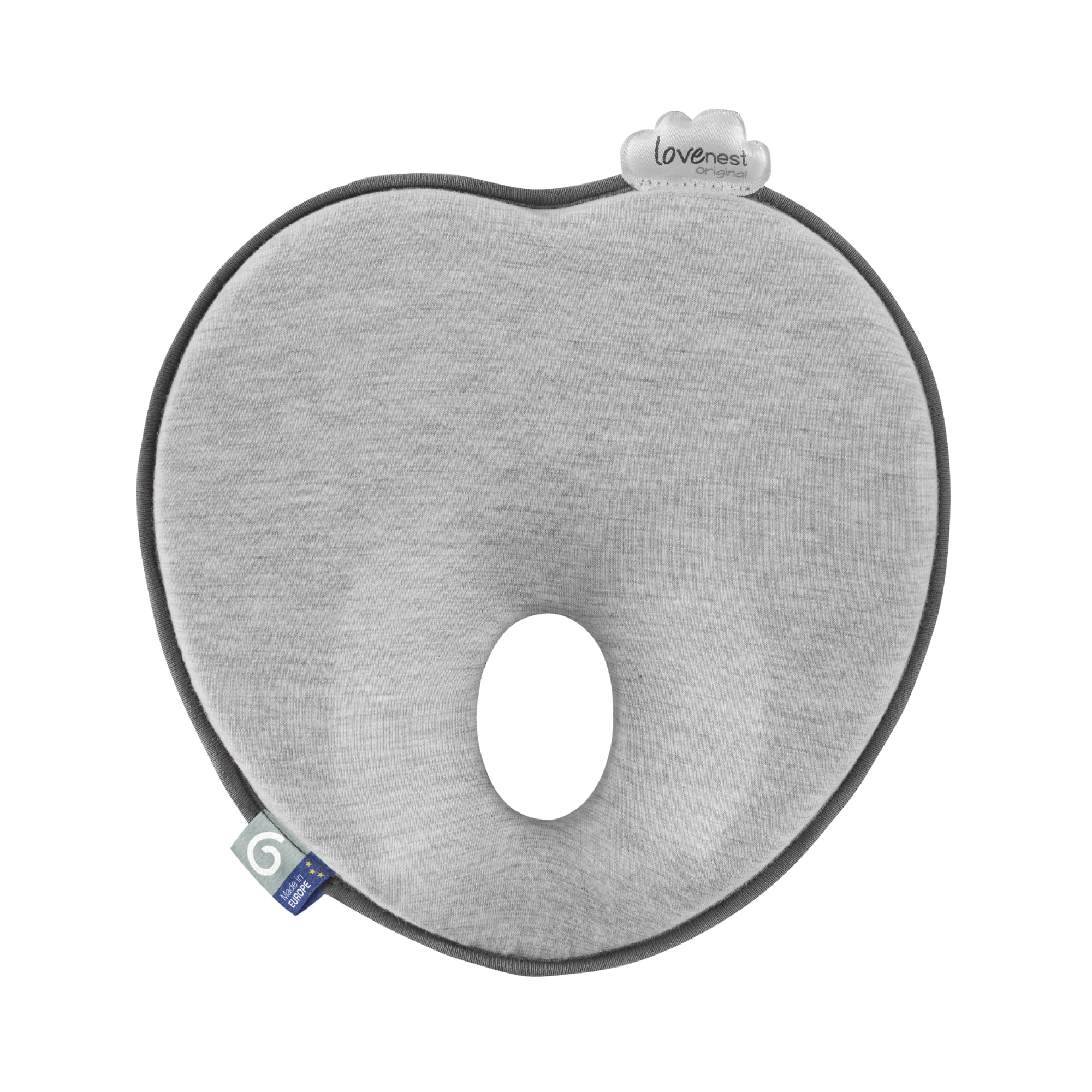
This lightweight head support cushions a baby’s head during supervised awake time in a bouncer, swing, or stroller, rather than building neck strength directly.
Pros
- Lightweight and easy to move between gear
- Breathable, machine-washable cover
- Fits most bouncers, swings, and strollers
Cons
- Some parents feel it does not add strong head support
- Not designed or approved for unsupervised sleep
- Effect on head shape varies by baby
This product is a positioning aid, not a strength-building tool. It’s meant to steady a baby’s head while they sit in gear during waking hours, always under direct adult supervision. It should never be placed in a crib or bassinet for sleep, since it is not designed as a sleep product.
JunNeng Baby Head Protector Backpack
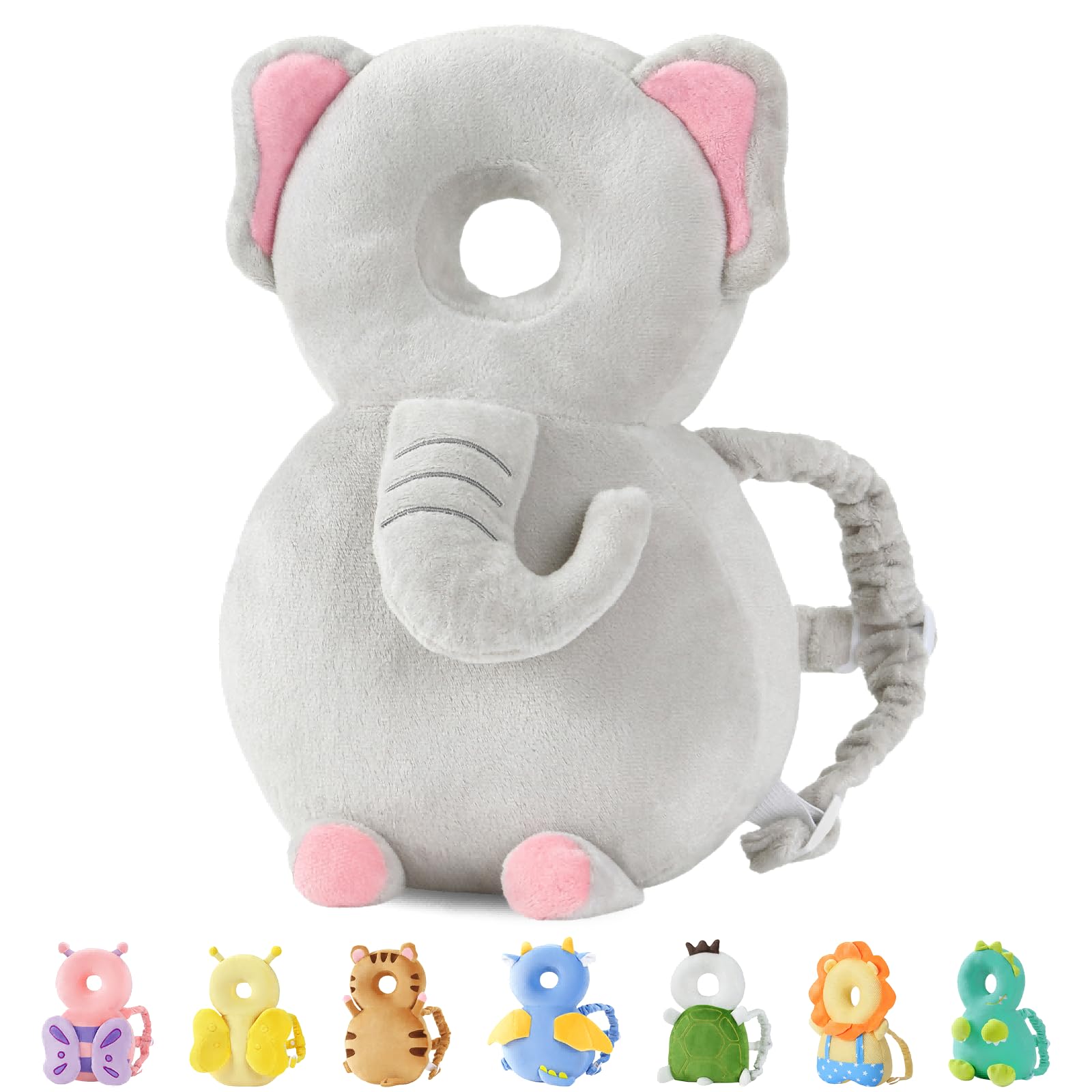
This padded backpack cushions falls for babies who are already crawling, cruising, or learning to walk, making it a fall-protection tool rather than a head-control aid.
Pros
- Cushions backward falls during early walking and crawling
- Adjustable straps fit growing babies
- Machine washable for easy cleaning
Cons
- Some parents find it runs small or thin
- Fit needs regular adjustment as baby grows
- Does not prevent all types of falls
This product suits babies past the head-control stage who are actively moving around and at risk of backward tumbles. It does not build muscle strength or support head control directly. Parents should still supervise closely, since padding reduces impact but does not eliminate fall risk.
Topsochir Caterpillar 2-in-1 Playmat
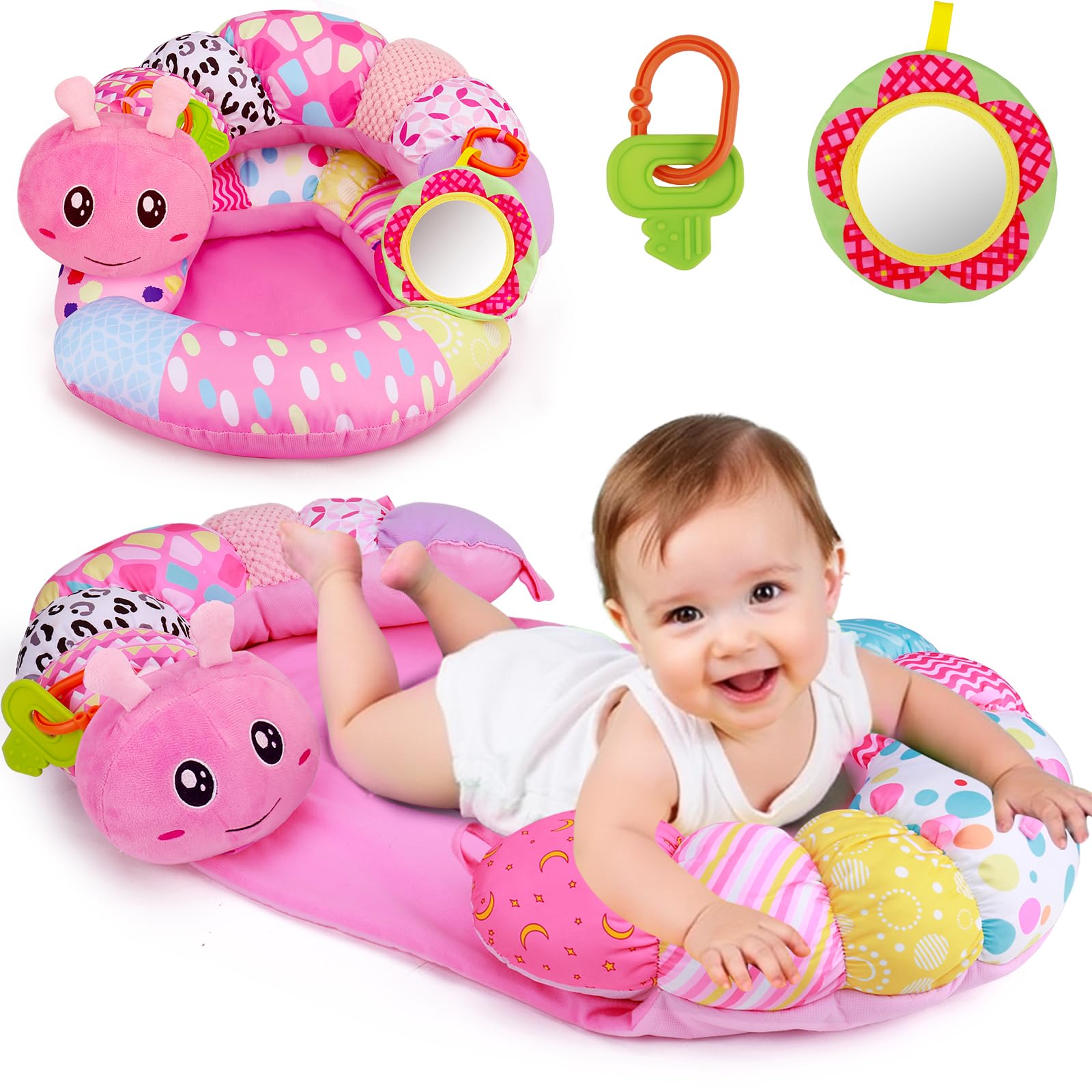
This caterpillar-themed set combines a tummy time mat with a seated support pillow, giving parents a two-stage tool as their baby grows from lying to sitting.
Pros
- Adjustable pieces create different support shapes
- Mirror and crinkle textures add sensory variety
- Doubles as tummy time mat and seated support
Cons
- Some parents find it less sturdy than expected for lounging
- Limited support if baby cannot yet sit independently
- Fewer interactive attachments than some competitors
The mat’s textured caterpillar segments give babies something to reach for and focus on during tummy time, which can encourage head lifting. The seated configuration works best once a baby has some sitting ability already, rather than as a training tool for babies who cannot yet sit. As with all positioning products, supervision is necessary throughout use.
KEST NEST Plush Sit Up Floor Seat
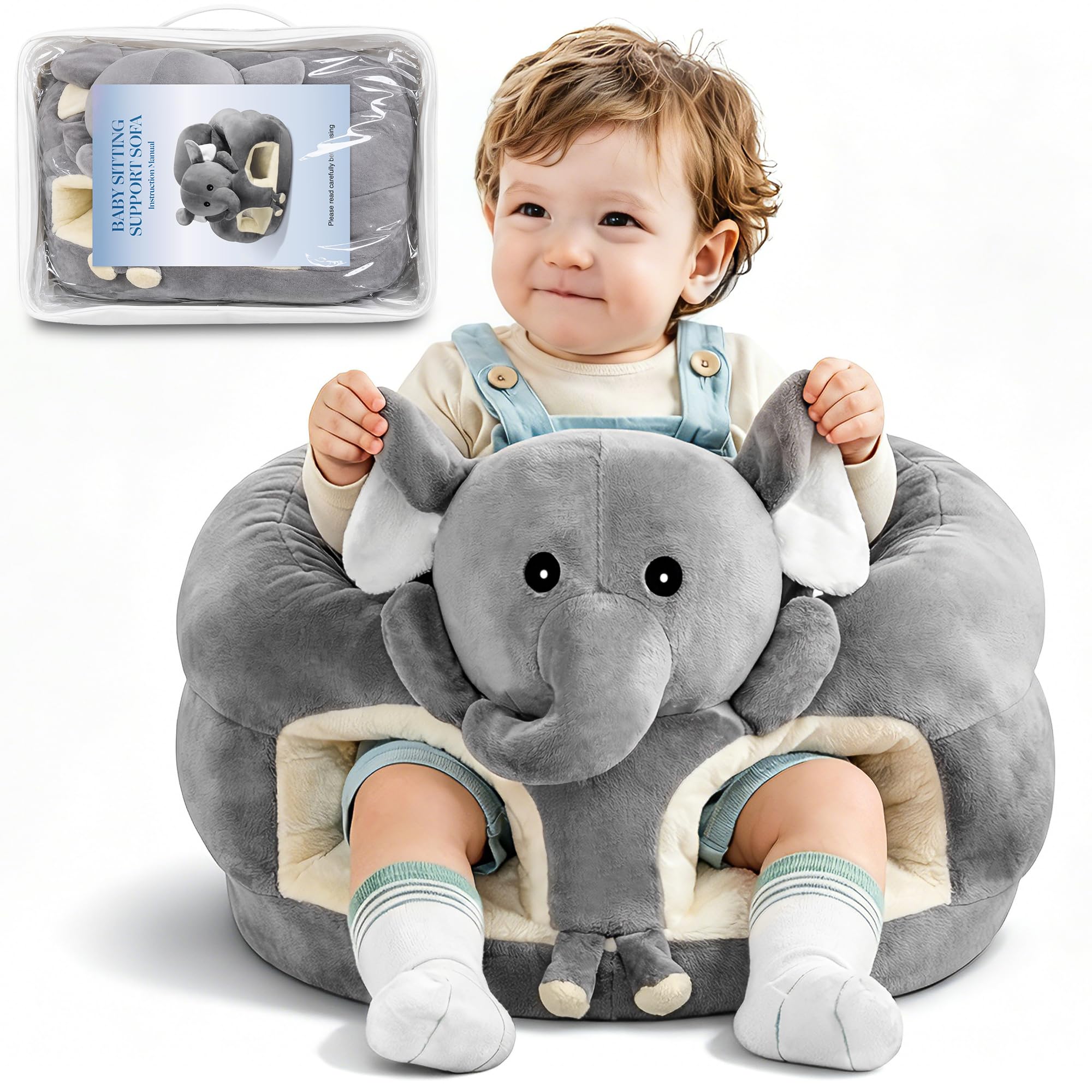
This plush floor seat offers light support for babies who already have some head and trunk control and are practicing independent sitting.
Pros
- Ergonomic shape follows natural spine curvature
- Non-slip base helps reduce sliding on hard floors
- Soft, washable fabric is gentle on skin
Cons
- Not appropriate for babies without neck and torso strength
- Can tip backward if baby pushes or leans hard
- Sizing runs loose for smaller infants
Manufacturer guidance covers ages 3 to 24 months, but parents should only use this seat once a baby shows real head control and some trunk stability. It is not designed to teach sitting to babies who cannot yet manage it, and several reviews mention tipping risk with active babies. Constant supervision on a flat, carpeted surface reduces the chance of injury from a fall.
Buying Guide
Match the Product to the Developmental Stage
Head control develops gradually, so gear should match a baby’s current ability rather than push them ahead of it. Products fall into distinct categories:
| Category | What It Does | Typical Age Range |
|---|---|---|
| Visual engagement toys | Encourage head lifting and eye tracking | 0-6 months |
| Tummy time support | Cushions chest or provides an incline | 0-4 months |
| Seated support pillows | Assist babies who already have some sitting ability | 4-9 months |
| Head/fall protection | Cushions impact during crawling or walking | 8-18 months |
| Positioning cushions for gear | Steadies head during supervised awake time in bouncers or strollers | 0-6 months |
Choosing gear from the wrong category can create false expectations about what it will accomplish.
Safety Comes Before Features
No mat, pillow, or cushion should ever be used for unsupervised sleep. Products marketed for “awake time,” bouncers, or tummy time are not sleep products, even if they look soft enough for a nap. The American Academy of Pediatrics recommends babies sleep on a firm, flat surface with nothing else in the sleep space.
Watch for these safety details before buying:
- Firmness: Sitting and lounging supports should resist sagging so a baby does not sink or tip.
- Non-slip base: Reduces sliding on hardwood or tile floors.
- Machine washability: Infants spit up and drool often, so removable, washable covers matter.
- Size accuracy: Several reviewers note products running smaller or looser than expected, so checking dimensions against a baby’s current size helps.
Materials and Cleanability
Look for BPA-free, non-toxic materials, especially for anything a baby might mouth or chew. Soft fabric books and teethers should list safe materials clearly. Water-filled mats need regular cleaning to prevent mold or algae buildup, and manufacturers often recommend a small amount of vinegar in the water for this reason.
When to Talk to a Pediatrician
Most babies reach head control milestones within a wide, normal range. A baby who cannot briefly lift their head by 4 months, or who shows persistent floppiness when held upright, may benefit from a pediatrician’s evaluation. Gear can support practice time, but it cannot diagnose or resolve developmental delays.