

Baby walking usually starts with standing, cruising, and balance practice before independent steps. The safest support is a babyproofed space, supervised floor time, and gear that matches your child’s actual stage.
Baby walking usually begins with a long “pre-walking” phase: pulling up, cruising, standing, and then taking those first independent steps. In most homes, the smartest approach is not to rush it, but to create a safe, open space and choose simple support tools that match your baby’s stage.
This guide explains what baby walking looks like, how to tell when your child is ready, and which types of gear are worth considering without overcomplicating the process.
- Stage matters: Pulling up and cruising matter more than age alone.
- Safety first: Avoid seated walkers and follow CPSC and manufacturer guidance.
- Best support: Stable floor space and simple push toys usually help most.
- Fit counts: Choose gear based on stability, height, and your home’s flooring.
- Check regularly: Inspect for wear, loose parts, and recalls before use.
Baby Walking: What It Is and When It Usually Starts
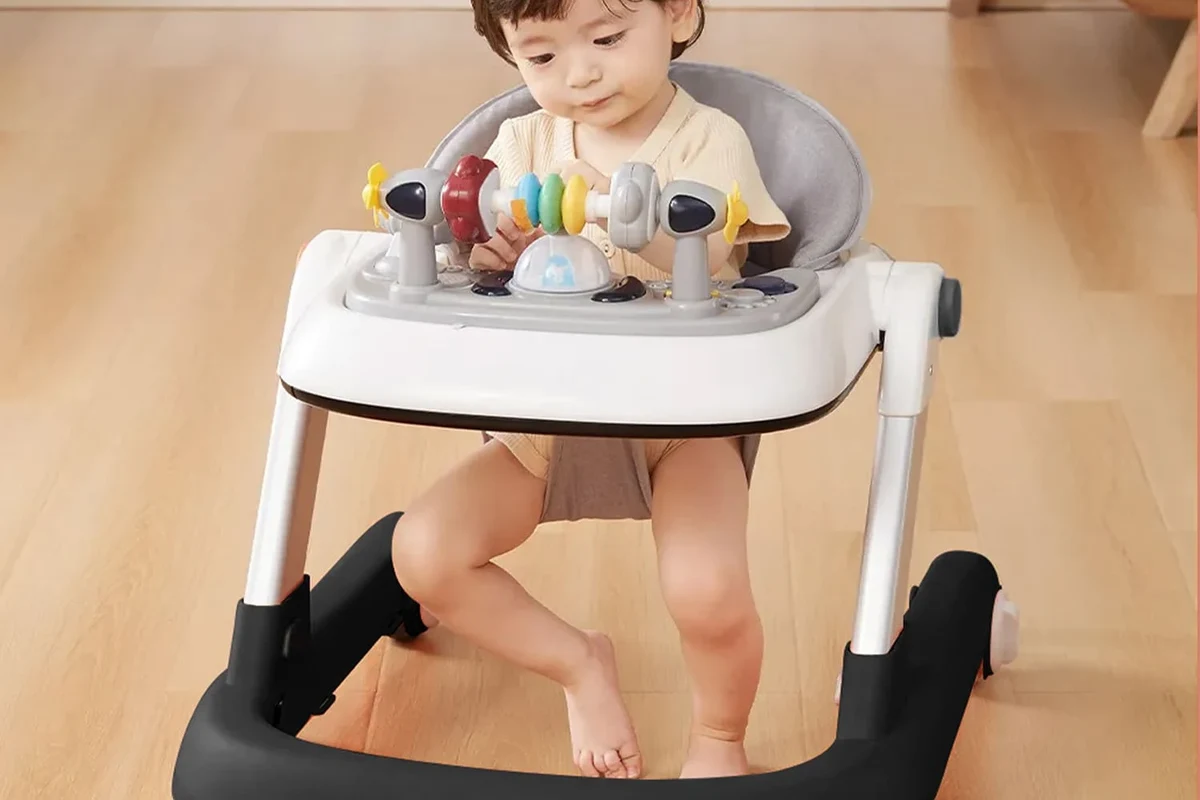
“Baby walking” does not usually happen all at once. It is a progression that starts with stronger core control and leg strength, then moves into standing, cruising along furniture, and finally independent steps. Many children begin walking sometime in the second half of the first year through the second year, but the exact timing varies widely.
Typical age range and developmental stages
Most babies move through several stages before they walk on their own. First comes head and trunk control, then rolling, sitting, crawling or another form of floor mobility, pulling to stand, and cruising. Some babies skip crawling and still walk later on a normal timeline, while others crawl for a long time before taking off.
Many developmental experts describe walking as a milestone with a broad normal range, not a single exact age.
If you want to think about it in stages, start with balance and posture rather than “steps.” A baby who can stand while holding on, shift weight from one foot to the other, and move sideways along furniture is building the control needed for walking.
Why “walking” looks different from baby to baby
Some babies are cautious and take a long time to let go. Others are bold and take early, wobbly steps before they seem fully stable. Body size, temperament, floor surfaces, daily opportunities to move, and even whether a child prefers crawling or cruising can all change the pace.
It also helps to remember that walking style is not identical from child to child. Wide stances, tiptoe steps, and frequent sitting breaks can all be part of early practice. The main question is whether your baby is steadily gaining control over time.
How to Tell If Your Baby Is Ready to Walk
Readiness is less about age and more about physical signs. A baby who is getting ready to walk usually shows better balance, stronger legs, and more confidence moving between positions.
Physical signs of readiness
Look for a baby who can bear weight on both legs, pull up to standing, and stand briefly while holding on with one hand. You may also notice less collapsing at the knees and more willingness to shift weight from side to side.
Another good sign is controlled lowering. A baby who can sit back down without toppling is learning how to manage balance, which matters as much as standing up.
Watch how your baby moves during play, not just during milestone moments. Repeated standing, cruising, and squatting often tell you more than one dramatic step.
Motor skills that usually come before walking
Before walking, babies usually develop several smaller skills: rolling, sitting independently, pivoting on the floor, crawling or scooting, pulling to stand, and cruising. These skills help with coordination, balance, and leg strength.
For parents shopping around for support gear, this stage matters a lot. A product meant for cruising or supported standing is usually a better fit than something marketed as a “walker” for a baby who is not yet steady. If you are comparing footwear for this stage, it may help to review the best baby shoes before walking and the best baby shoes to support walking so the fit matches the child’s actual stage.
When to relax versus when to ask a pediatrician
It is usually reasonable to relax if your baby is making gradual progress, even if the timeline is slower than another child’s. Milestones can vary, and comparison alone is not a reliable measure of development.
It is a good idea to ask a pediatrician or qualified health professional if your baby seems unusually stiff or floppy, uses one side much more than the other, loses skills, or shows little interest in bearing weight over time. If you are unsure, official guidance from the AAP or your local child-health authority is a better reference than internet timelines alone.
Best Ways to Support Baby Walking Safely at Home
At home, the goal is to make movement easy, not to force it. Babies usually benefit most from safe floor time, stable furniture, and enough room to practice getting up, balancing, and cruising.
Floor space, traction, and babyproofing basics
A clear floor area with a non-slip surface makes practice easier. Rugs should lie flat, cords should be out of reach, and hard corners, unstable furniture, and low hazards should be addressed before your baby starts pulling up everywhere.
Good traction matters because slippery socks and slick floors can make early standing frustrating. Bare feet or grippy socks may work better indoors, depending on the surface and your child’s comfort. For more footwear context, see soft sole baby shoes, which are often discussed for early movers who need flexibility more than structure.
Follow recognized child-safety guidance from the CPSC and your manufacturer’s instructions when babyproofing. Also check for recalls on gear, furniture anchors, and any device your child uses for standing or moving.
Helpful activities that encourage standing and cruising
Simple activities often work best. Place a sturdy toy on a low surface so your baby can reach while holding on, encourage side-to-side movement along a couch, and let your child practice squatting to pick up a toy and stand back up.
Short, frequent practice sessions are usually better than long ones. Babies learn through repetition, but they also need breaks, especially when they start to wobble or lose interest.
- Use stable furniture only; avoid anything that rolls or tips easily.
- Keep toys just out of reach to encourage a small step or two.
- Offer practice on different safe surfaces so your baby learns balance changes.
What to avoid: walkers, unsafe shoes, and overuse of devices
Traditional seated baby walkers are widely discouraged by child-safety experts because they can move quickly, create fall hazards, and give babies access to unsafe areas. They also do not teach walking in the same way as floor-based practice.
Be cautious with stiff, overly structured shoes that make it harder for a baby to feel the floor. In many cases, shoes are more about protection outdoors than helping a child learn to walk indoors. Also avoid leaning too heavily on devices that keep a baby upright for long periods, since floor time is where most movement skills develop.
Baby Walking Aids and Gear: What’s Worth Considering
Not every product labeled for walking is equally helpful. The best choices tend to be the ones that support balance, encourage movement, and match your baby’s current stage without creating new safety problems.
Push toys, activity centers, and ride-on toys
Push toys can be useful once a baby is ready to stand and take steps while holding on. They give forward support without putting the child in a seated walker position. Activity centers can keep a baby engaged, but they are not the same as walking support and should not replace floor practice.
Ride-on toys usually fit later, after a child has better balance and coordination. For parents comparing walking-focused products, it helps to separate toys that encourage movement from products that simply entertain.
Best for babies who are already pulling up or cruising and need a little confidence moving forward. The main limitation is that they work best only when the child is developmentally ready.
Best for families who want the lowest-cost, most flexible approach. This option depends more on supervision and home setup than on gear.
Key features to look for: stability, height, materials, and adjustability
Look for a wide base, smooth-rolling but controlled movement, and a handle height that lets your child stand comfortably without hunching. Materials should be sturdy, easy to wipe clean, and free of obvious pinch points or loose parts.
Adjustability can be helpful because babies grow quickly, but only if the product remains stable at each setting. If the manufacturer gives age, size, or weight guidance, follow it closely rather than guessing.
Age and stage fit: matching gear to your baby’s development
The right product depends on what your baby can already do. A baby who is still learning to sit or bear weight may need floor play and supervised standing more than any walking aid. A baby who cruises confidently may get more value from a push toy or sturdy activity toy.
Most walking gear is not appropriate. Focus on tummy time, floor play, and safe movement opportunities.
Standing support, cruising practice, and stable toys may help if the child is already bearing weight.
Push toys and simple ride-on toys may fit better once balance and step control improve.
How to Choose the Right Baby Walking Product for Your Home
Home layout matters more than many parents expect. Carpet, hardwood, narrow rooms, and storage space can all change which product is practical day to day.
Best options for small spaces, carpet, and hardwood floors
In small spaces, simpler gear usually wins. A compact push toy or a small activity toy is easier to store and less likely to become clutter. On carpet, a toy may need enough traction and wheel resistance to stay stable. On hardwood, control and grip matter even more so the toy does not slide too fast.
For homes with mixed flooring, test the product’s intended use carefully and confirm it does not move unpredictably on smooth surfaces. If you are also comparing shoe options for different stages, articles like best baby shoes to start walking can help narrow the choices by stage rather than by marketing language.
Travel-friendly versus at-home setups
Travel-friendly gear should be lightweight, easy to wipe down, and simple to pack. At-home setups can be larger and more stable, but they should still be easy to move out of the way when not in use.
If a product will be used in grandparents’ homes or while visiting relatives, consistency matters. A familiar setup can help a baby feel more confident, but only if the product meets the same safety expectations in every location.
Budget, durability, and long-term value
Budget should be tied to usefulness, not just price. A lower-cost item may be the better value if it is stable, easy to clean, and usable across several stages. A more expensive product may make sense only if it truly matches your home and your child’s development.
Durability is especially important for gear that will be pushed, leaned on, or stored often. Check seams, wheel quality, and the sturdiness of any adjustable parts before deciding.
Common Baby Walking Mistakes Parents Make
Most mistakes happen when adults try to speed up the milestone or choose gear that looks helpful but does not match the child’s stage. A calmer, safer approach usually works better.
Rushing the process or comparing milestones too closely
It is easy to compare babies, especially when one child walks early and another takes more time. But milestone timing alone does not tell the full story. What matters more is steady progress and overall movement quality.
Rushing can also make babies frustrated. If a child is tired or not ready, more pressure usually leads to less practice, not more.
Using unsafe or poorly fitted walking products
A product that is too tall, too loose, too light, or too unstable can make early walking harder. Poor fit can also increase the chance of tipping or awkward posture.
Stop using any item that is cracked, loose, recalled, or past its recommended age or weight limit, and follow the manufacturer’s safety guidance.
Before using any gear, confirm that the assembly is complete and the parts lock the way they should. If a product seems wobbly or unstable, do not assume your baby will simply “grow into it.”
Ignoring signs of fatigue, frustration, or imbalance
Babies often show when they are done. Fussing, repeated falls, arching away, or refusing to stand can mean the session is over for now.
Short sessions with rest in between are usually more productive than forcing more practice. That is true for floor play, cruising, and toy use alike.
Care, Cleaning, and Safety Maintenance for Walking Gear
Walking gear gets handled often, dragged across floors, and exposed to drool, crumbs, and everyday mess. Keeping it clean and intact is part of keeping it useful.
Material care: plastic, fabric, wood, and foam surfaces
Plastic parts are usually the easiest to wipe down with mild soap and water, then dry fully. Fabric covers may need spot cleaning or machine washing, depending on the label. Wood should be cleaned gently so the finish does not wear down, and foam surfaces should be checked for tears or crumbling.
Always follow the manufacturer’s care instructions first, especially if the product includes electronics, batteries, or specialty finishes. If instructions are missing, use the least aggressive cleaning method that still removes dirt safely.
Routine checks for stability, wear, and loose parts
Make it a habit to check wheels, handles, screws, clips, and joints before use. If anything shifts, bends, or sounds loose, pause and inspect it more closely.
- Confirm the intended age or stage range and any weight guidance.
- Check for recalls, missing parts, and stable construction.
- Make sure the surface and handle height fit your home and your child.
For any gear with moving parts, routine checks are more important than occasional deep cleaning. A product can look fine on the outside and still need attention at the joints or base.
Storage and hygiene tips for daily use
Store walking gear where it will not be crushed, bent, or left in a damp area. Dry items fully before putting them away, especially fabric or foam pieces.
If several children use the same toy, clean high-touch areas more often. Handles and grips tend to collect the most grime because little hands stay there the longest.
Final Recommendation: The Smartest Approach to Baby Walking in 2026
The best approach in 2026 is still the simplest one: give your baby safe floor time, watch for readiness signs, and choose only the lightest support that matches the current stage. For many families, that means stable furniture for cruising, a well-chosen push toy later on, and no rush to buy anything elaborate.
Best overall strategy by stage and family lifestyle
If your baby is still early in development, focus on open floor space, babyproofing, and supervised practice. If your baby is already standing and cruising, a stable push toy may be worth considering. If your home is small or you travel often, simplicity and easy cleaning may matter more than extra features.
When to prioritize supervision, simplicity, and developmental support
Supervision should come first whenever a baby is practicing standing or stepping. Simplicity is usually safer than complicated gear, and developmental support means matching the tool to the child rather than forcing a milestone.
If you are still deciding between product types, compare stage fit, stability, and cleaning ease before anything else. That approach gives you the best chance of choosing something useful without adding unnecessary clutter or risk.
Common Questions
Baby walking is the process of moving from standing and cruising to independent steps. It usually develops gradually rather than all at once.
Pulling to stand, cruising, balancing, and controlled sitting back down usually come first. Crawling or scooting may also come before walking.
Traditional seated baby walkers are generally not recommended. Safer options are floor play, stable furniture, and push toys used at the right stage.
Give your baby supervised floor time, stable surfaces to hold, and plenty of room to move. Keep the area babyproofed and free of hazards.
Ask if your baby seems very stiff, very floppy, uses one side much more than the other, or is not making progress over time. A pediatrician can help you judge whether the pattern needs attention.
Frequently Asked Questions
The best age depends on the child’s stage, not just the calendar. Toys that support standing or pushing are usually better once a baby is already bearing weight and cruising.
They can offer practice, but they do not guarantee earlier walking. Floor play, balance, and supervised movement are still the main drivers of development.
Check stability, handle height, material quality, and whether the product fits your baby’s stage. Also confirm any age, size, or weight guidance from the manufacturer.
Follow the care label or instruction manual first. In general, wipe hard surfaces, clean fabrics gently, and let everything dry fully before storing it.
Common mistakes include choosing a product too early, using unstable gear, and relying on devices too much. Another mistake is ignoring signs that the baby is tired or frustrated.
Look for complete assembly, stable construction, and age-appropriate use. Check for recalls and stop using anything that is cracked, loose, or outside the maker’s instructions.