

ASL for parents works best when you start with a few useful signs and use them in everyday routines. Keep the tone clear, calm, and respectful so the habit feels natural for the whole family.
ASL for parents can be a simple, practical way to make everyday family communication clearer. It can also reduce frustration during busy moments, whether you are at home, in the car, or trying to get everyone out the door on time.
- Start small: Begin with a few high-use signs like more, help, and all done.
- Use routines: Practice during meals, bedtime, and transitions.
- Stay clear: Keep hands visible, pace steady, and expression readable.
- Be respectful: Treat ASL as a real language, not a novelty.
Why ASL for Parents Is a Smart, Funny, and Practical Starting Point
Parents often look for communication tools that are easy to use in real life, not just in theory. ASL can fit that need because it gives families a visual way to connect before children have the words, or when noise makes spoken communication harder.
It also helps adults stay consistent. A sign for “more” or “all done” can be easier to remember in a chaotic morning than a long explanation that nobody has time to hear.
What readers are really looking for: connection, communication, and confidence
Most parents do not start signing because they want a perfect system. They start because they want fewer misunderstandings, calmer routines, and a better way to support a child who is still learning language.
That is especially true for toddlers, but older kids can benefit too. Simple signs can support attention, reduce repeat questions, and give children a more confident way to participate in family routines.
Why 2026 parents are turning to signing for everyday family life
Many families want tools that work across different settings: home, school, daycare, and family events. ASL can be useful in all of those places because it is visual, compact, and easy to pair with spoken language.
If you are also looking for family-friendly ways to keep communication light and memorable, you may already enjoy resources like clean space jokes captions or funny space jokes for school. The same idea applies here: simple, clear, repeatable messages tend to work best.
Getting Started with ASL at Home Without Making It Feel Like Homework
The easiest way to begin is to choose a few high-use signs and use them often. You do not need to teach a full vocabulary set on day one.
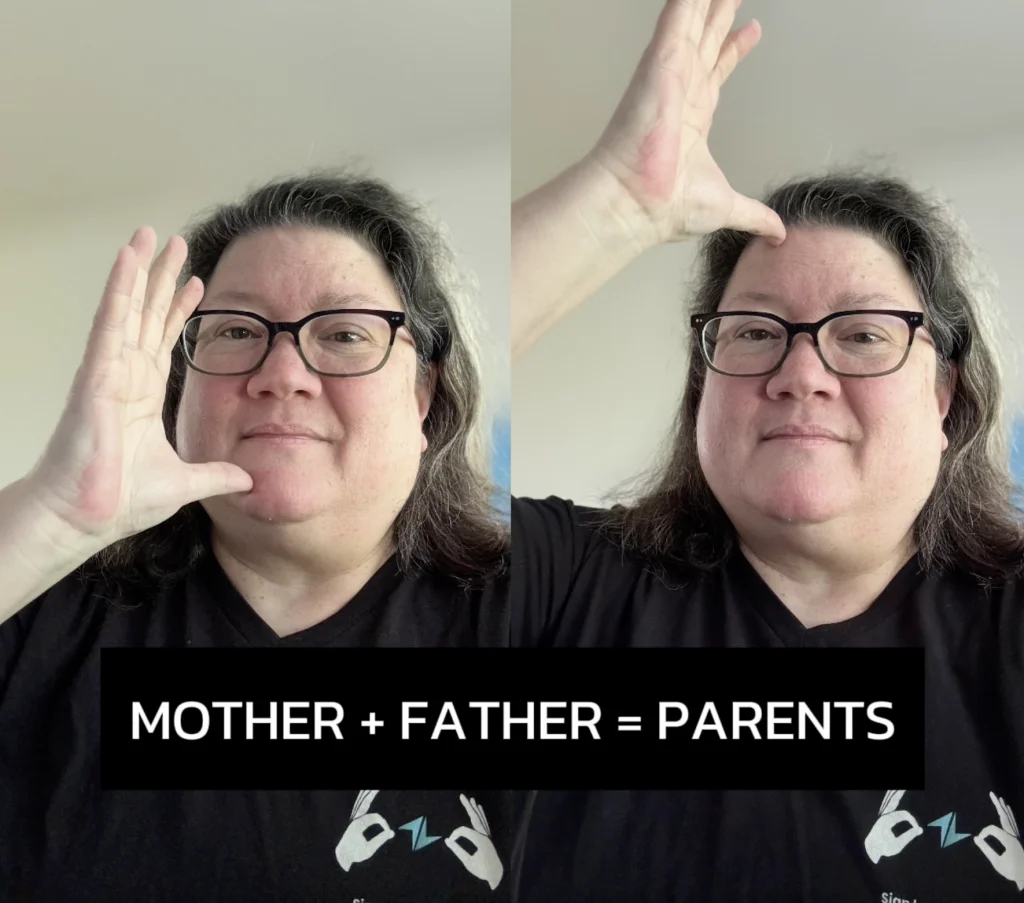
Think of ASL as part of your routine, not a lesson block. If the sign shows up in normal life, it is more likely to stick.
Begin with high-use signs: more, help, eat, drink, all done, thank you
These signs are practical because they match the moments that happen every day. A child asking for “more” at snack time, or signaling “help” when a toy is stuck, gets an immediate payoff from the sign.
Start with one or two signs at a time. Repeat them in the same context, and pair the sign with the spoken word so children connect both forms of communication.
Choose signs that solve a real problem in your house first. The more useful the sign, the faster your family is likely to remember it.
Simple routines that make signing stick during meals, bedtime, and playtime
Meals are a natural place to practice because the same requests come up again and again. “More,” “drink,” and “all done” fit neatly into breakfast, lunch, and dinner without extra effort.
Bedtime can work too. Signs like “sleep,” “bath,” and “book” can become part of a calm routine that feels predictable instead of rushed.
Playtime is another good window because children often respond well when signs are linked to actions. If you hand over a toy while signing “thank you,” you are reinforcing the meaning in a simple, concrete way.
How to keep expectations realistic for toddlers, kids, and busy adults
Toddlers may use signs before they can say the word clearly, but they may also mix signs with gestures or partial movements. That is normal and still useful.
Older children may learn signs more quickly, but they may also need a reason to keep using them. Make the signs practical, not performative, and you are more likely to keep their interest.
Adults should give themselves permission to be imperfect. If you forget a sign or use spoken language instead, that does not mean the habit has failed.
ASL for Parents in Real-Life Settings: School Pickups, Playdates, and Family Gatherings
ASL is not just for quiet one-on-one moments. It can be useful in public settings where children need quick, clear cues and adults want to avoid repeating themselves five times in a row.
That said, it works best when the setting is a natural fit. A small sign at pickup time can be helpful; a full signing routine in a loud, crowded event may be harder to maintain.
Using signs to support routines in classrooms, assemblies, and after-school events
Many children already see visual cues at school, so simple signing can complement what teachers and caregivers are doing. Signs like “line up,” “wait,” or “sit” can reinforce routine language when used appropriately.
For assemblies or after-school events, the goal is not to replace spoken instructions. It is to give a child another way to understand what is happening when the room is noisy or distracting.
When signing helps reduce noise, confusion, and repeated instructions
Signing can be especially helpful when a child is overwhelmed or when a parent needs to communicate quietly. A visual cue can cut down on the need to raise your voice across a playground or through a car window.
It can also reduce confusion when several instructions are happening at once. A simple sign paired with a short sentence is often easier for children to process than a long verbal explanation.
Choosing moments where ASL feels natural instead of forced
Use signing where it adds clarity, not where it creates pressure. If you are in a situation where no one can see your hands, or where the moment is too fast, spoken language may be the better choice.
Natural use matters more than perfect use. Families tend to stick with habits that feel helpful and low-stress. [Source: Britannica]
ASL should support communication, not become a test. If a setting is too formal, too crowded, or too rushed, keep the message simple and use the tools that work best in that moment.
Jamie Reed’s Family Humor Tips: Making Signs Feel Playful, Not Performative
Humor can make a sign easier to remember, but it should never take over the message. The best family humor is small, clear, and attached to the moment rather than turned into a whole performance.
That matters because children remember what feels useful. If the joke gets in the way of the sign, the lesson can disappear.
How a small joke or goofy expression can make a sign more memorable
A mild change in expression, a tiny pause, or a familiar family phrase can help a sign stand out. The point is not to be silly for its own sake; it is to create a memory cue.
For example, if a child learns a sign during snack time and every adult uses the same calm expression, the routine becomes easier to recognize. Consistency is often more effective than volume.
Using light humor to encourage kids without turning signing into a bit
Light humor works best when it supports the child’s confidence. A warm smile or a gentle “you got it” can encourage participation without making the child feel like they are on display.
That is especially important when children are shy or still learning. If the atmosphere feels too performative, they may stop trying.
Age-appropriate playfulness for preschoolers, grade-schoolers, and teens
Preschoolers usually respond well to simple repetition, facial expression, and playful routines. Keep it short and concrete.
Grade-school children may appreciate a bit more independence, such as being asked to teach a sign back to a sibling. Teens usually prefer practical usefulness over anything that feels childish, so keep the tone respectful and matter-of-fact.
Do not use humor to mock a child’s attempt at signing. Even mild teasing can make children less willing to practice, especially if they already feel unsure.
Delivery Advice: How to Sign Clearly and Keep the Message Easy to Read
Clear signing is not about speed. It is about making the message visible, understandable, and easy to follow.
Beginners often worry about doing it “right,” but the basics matter more than perfection. A clear sign with a calm face usually communicates better than a rushed, half-hidden one.
Face, hands, and pacing: the basics of clear signing for beginners
Keep your hands in view and at a comfortable height. If your hands are hidden by a table, bag, or coat, the sign may be missed.
Pace matters too. Move slowly enough for a child to notice the shape of the sign, but not so slowly that the moment feels awkward or confusing.
Why eye contact and expression matter as much as the sign itself
Children read faces as well as hands. Eye contact helps them know the sign is meant for them, and expression helps them understand the tone of the message.
This is one reason ASL can be so effective in parenting: it combines language with attention. The child sees both the word and the intent behind it.
How to avoid rushing, overexplaining, or hiding your hands
Parents sometimes overcompensate by explaining the sign too much. That can overwhelm younger children and make the moment less useful.
Instead, say the word, sign it once or twice, and move on. The repetition over time is what teaches the habit.
In family communication, clarity usually beats cleverness. A simple, repeatable cue is easier to remember than a funny line that changes every time.
Common Humor Mistakes Parents Make When Introducing ASL
Humor can help families relax, but it can also get in the way when it becomes the focus. The biggest mistakes usually happen when adults try too hard to make the moment entertaining.
That is especially true with young children, who may not separate the joke from the lesson.
Jokes that distract from learning or make kids self-conscious
If the child is already trying to focus, a big joke can pull attention away from the sign. Some children may laugh and move on without actually learning anything.
Others may feel watched or corrected, which can make them less likely to try again. Keep the energy calm and supportive.
Using sarcasm, teasing, or “fake signing” in ways that confuse the message
Sarcasm is risky because children often take language literally, especially when they are young. Teasing can also blur the line between communication and criticism.
“Fake signing” may seem funny to adults, but it can confuse children who are trying to learn the real sign. If you want the family to build trust in the system, keep the signal clear. [Source: Education.com]
Knowing when to keep the moment sincere instead of trying to be funny
Some moments call for warmth, not humor. If a child is upset, tired, or overwhelmed, the most effective approach is often calm and direct.
Signing can be comforting because it feels steady and predictable. That value is easy to lose if the adult keeps trying to turn every moment into a joke.
- Simple signs paired with spoken words
- Warm facial expression and steady pacing
- Small, supportive humor that does not distract
- Teasing a child for getting a sign wrong
- Overexplaining every movement
- Turning signing into a performance
Age-Appropriateness and Respect: Signing with Kids, Tweens, and the Whole Family
ASL can work across ages, but the approach should change as children grow. A toddler, a tween, and an adult learner do not need the same teaching style.
Respect also matters. Families can learn casually at home while still treating ASL as a real language, not a novelty.
What works best for toddlers versus older children
Toddlers do best with repetition, routine, and immediate usefulness. Use signs that match their daily needs and keep the teaching short.
Older children may enjoy learning more signs if they can use them in meaningful situations, such as helping younger siblings, talking during noisy events, or supporting a family routine.
How to model respect for Deaf culture while learning casually at home
Learning ASL is not just about memorizing hand shapes. It also means recognizing that ASL is a full language with a cultural history and a community behind it.
Parents do not need to become experts overnight, but they should avoid treating the language like a party trick. A respectful, curious attitude is the right place to start.
When to involve teachers, caregivers, or relatives in the learning process
If your child uses signs regularly, it can help to let caregivers or teachers know which ones you are using at home. That creates consistency and reduces confusion.
Relatives can also be included if they are willing to learn a few basics. Even a small shared vocabulary can make family gatherings smoother and more inclusive.
If you are learning casually, keep the focus on communication and respect. You do not need to be fluent to be thoughtful, consistent, and helpful.
Final Recap: Simple ASL Habits Parents Can Start Today
The easiest way to begin with ASL for parents is to keep it small, useful, and consistent. Start with a few high-frequency signs, use them in real routines, and repeat them without pressure.
When signing feels natural, children are more likely to notice it and use it. When it feels forced, the habit tends to fade.
The easiest first signs to practice this week
Begin with “more,” “help,” “eat,” “drink,” “all done,” and “thank you.” These signs are practical, easy to weave into daily life, and useful across different ages.
If your family already enjoys simple, clear communication cues, you may also appreciate the same straightforward style used in topics like space jokes 2026 or funny space jokes for students. The common thread is clarity: the message works best when it is easy to recognize and repeat.
How to make ASL part of family routines without pressure
Use signs during meals, bedtime, and transitions like leaving the house or getting into the car. These moments already repeat, which makes them ideal for learning.
Keep the tone calm and practical. A sign used consistently in a real routine is more valuable than a perfect sign used once.
A quick reminder from Jamie Reed on keeping it helpful, kind, and lightly funny
The best family communication tools are the ones people will actually use. ASL can do that when it stays helpful, respectful, and simple enough for busy households.
And while a little humor can make learning easier to remember, the real goal is connection. Keep it kind, keep it clear, and let the signs do the work.
- Start with a few high-use signs that solve everyday needs.
- Practice during meals, bedtime, and other repeat routines.
- Keep signing clear, calm, and easy to read.
- Use humor lightly, only when it supports learning.
- Show respect for ASL as a real language and culture.
Frequently Asked Questions
Start with a few high-use signs like more, help, eat, drink, and all done. Use them in the same daily routines so your child sees them often.
Yes, toddlers can learn simple signs at home, especially when the signs connect to food, play, and routines. Keep the teaching short and repeat the same signs often.
No, parents do not need to be fluent to begin using basic signs. A small, consistent vocabulary can still support communication and reduce frustration.
ASL can help during meals, bedtime, school pickups, playdates, and noisy family gatherings. It is most useful when spoken communication is harder to hear or process.
Use signs during normal routines instead of setting aside formal lesson time. The more natural the moment, the easier it is for children to remember.
Keep humor small and supportive, like a warm expression or a light family cue. Avoid teasing, sarcasm, or anything that makes a child self-conscious.