

Mosquito bites are more than a nuisance for insect repellent for newborns
skin is thinner and more sensitive than adult skin, and pediatricians generally advise against using most insect repellents on infants younger than two months old. That makes shopping for protection a little more complicated than grabbing the first spray on the shelf.
Parents have several categories to choose from, including topical lotions, sprays, and wearable options like clips, bracelets, and stickers. Each works differently. Lotions and sprays with plant-based oils, picaridin, or DEET are applied to skin or clothing and need reapplication, while wearable repellents rely on scent diffusion in the air around a child and do not touch the skin at all.
The right product depends heavily on a child’s age, the active ingredient, and how and where it will be used, so checking the label against a pediatrician’s guidance matters more than picking a product by its marketing claims. Look closely at minimum age recommendations, active ingredients, water resistance if sun exposure is a factor, and whether the formula is meant for skin or clothing. The following roundup compares eight options for babies and toddlers, from plant-based lotions to wearable citronella clips.
Best for sun and bug protection in one step: Babyganics Mosquito Repellent Lotion
Best for sensitive skin without added fragrance: OFF! Kids Plant-Based Bug Spray
Best for longer outdoor stretches with the whole family: OFF! Adults & Kids Picaridin Lotion
Best for quick spray-and-go application: Babyganics Continuous Spray
Best for stroller and diaper bag attachment: Dr. Talbot’s Mosquito Clips
Best for travel and short outdoor errands: Cliganic Mosquito Repellent Bracelets
Best for clothing-based protection without skin contact: Cliganic Mosquito Repellent Stickers
Best for high-mosquito-risk areas with older kids: OFF! Family Care DEET Spray
Babyganics Mosquito Repellent Lotion
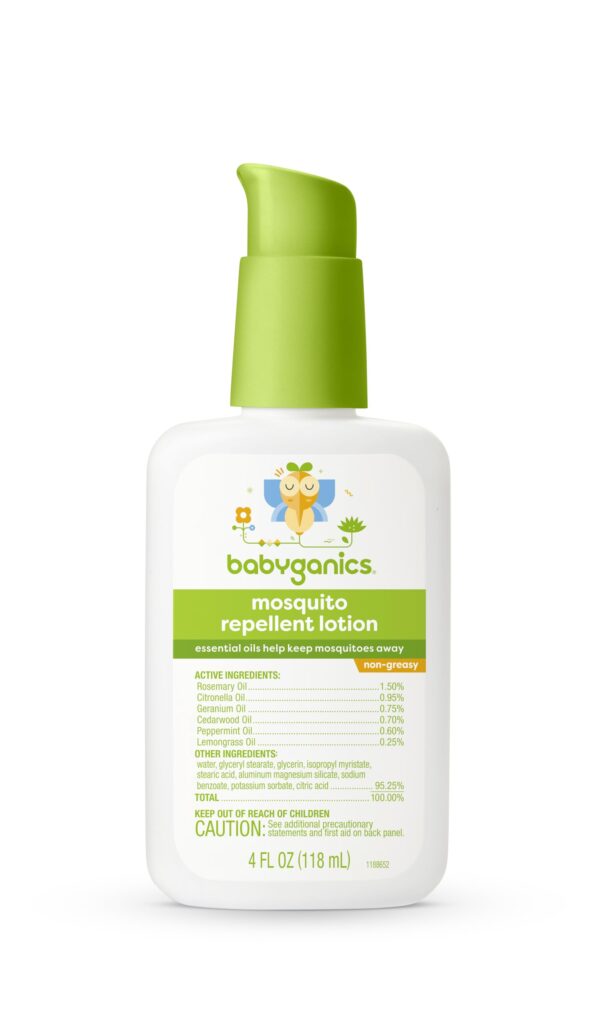
This lotion suits parents who want sun protection and mosquito-deterring plant oils in a single product for daytime outings with older babies and toddlers.
Pros
- Combines broad spectrum SPF 50 with plant-derived essential oils
- Free of parabens, sulfates, phthalates, and synthetic fragrances
- Non-greasy formula that rubs in easily
Cons
- Not labeled for use on newborns under two months
- Essential oil scent may not appeal to every child or parent
- Reapplication needed after swimming or heavy sweating
The blend of citronella, lemongrass, rosemary, and geranium oils gives this lotion a plant-based profile that avoids some synthetic additives found in older repellent formulas. Parents managing sun exposure and mosquito bites during the same outing find the two-in-one function convenient. Always check the label’s minimum age guidance before applying it to a baby, since SPF and essential oil products carry different infant use recommendations. A pediatrician can confirm whether it fits a specific child’s age and skin sensitivity.
OFF! Kids Plant-Based Bug Spray

This spray works well for parents who want a fragrance-free, plant-based option labeled for children six months and older.
Pros
- Labeled safe for children six months and up when used as directed
- No added fragrance or dyes
- Simple pump spray for fast application
Cons
- Not intended for infants younger than six months
- Some users report a slightly oily residue
- Protection window is shorter than DEET-based sprays
The botanically inspired formula skips added fragrance, which some parents prefer for babies with sensitive skin. Reviewers mention the pump spray applies evenly without feeling heavy, though a few note a mild greasy feel after use. The stated protection window runs shorter than some picaridin or DEET options, so plan reapplication during long outdoor stretches. Because it’s formulated with a minimum age of six months, it’s not appropriate for newborns.
OFF! Adults & Kids Picaridin Lotion

This lotion fits families who want one repellent that works for both children age six months and up and adults, using picaridin instead of DEET or essential oils.
Pros
- Formulated with picaridin, an alternative to DEET
- Fragrance-free and lightweight on skin
- Suitable for children six months and older when used as directed
Cons
- Not labeled for infants under six months
- Picaridin products require checking concentration and reapplication timing
- Not a wearable option for parents who prefer no skin contact
Picaridin has become a common alternative to DEET in pediatric-labeled repellents because it tends to have a milder odor and lighter feel on skin. This lotion’s fragrance-free formula and non-sticky texture make it easy to apply to active toddlers. Several reviewers with skin sensitivities note it caused no irritation. As with any repellent containing active ingredients, confirm minimum age guidance on the label before use.
Babyganics Continuous Spray
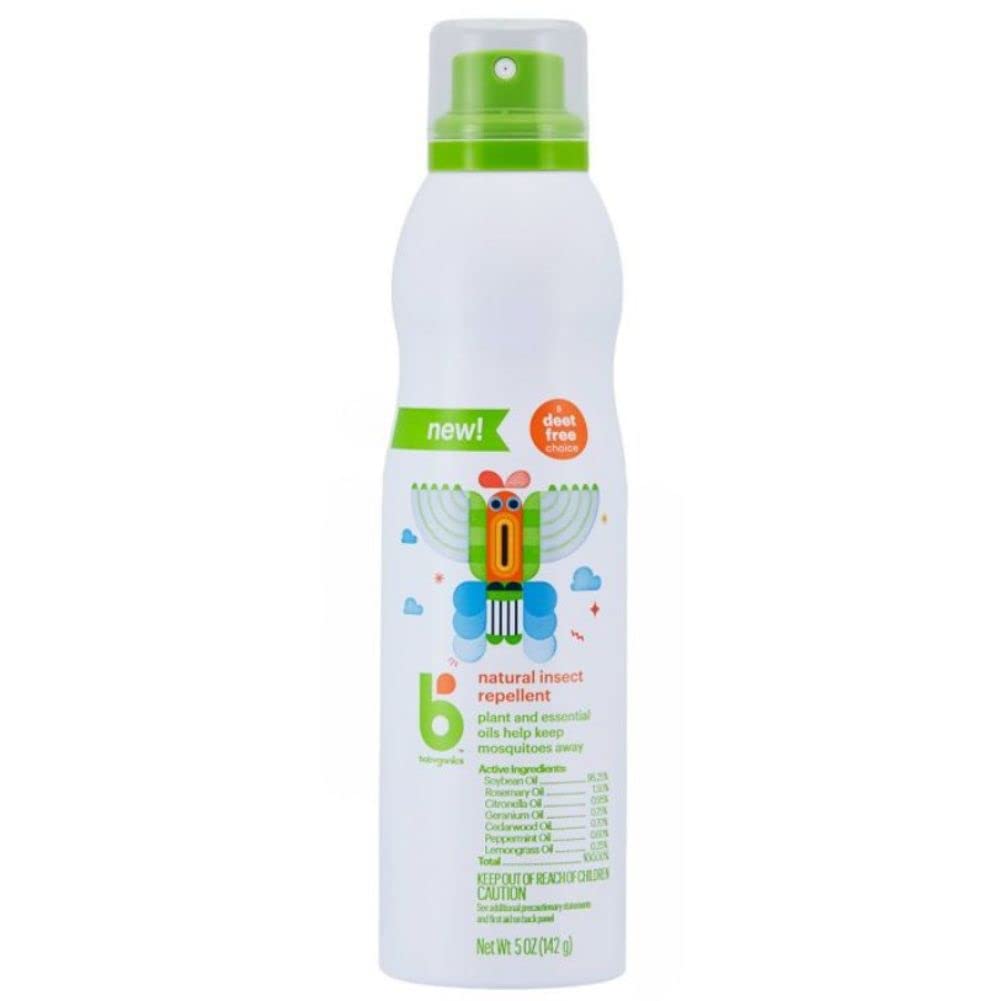
This continuous spray suits parents who want fast, hands-free application using plant-based oils instead of DEET.
Pros
- DEET-free formula using citronella, lemongrass, and rosemary oils
- Continuous spray nozzle covers skin quickly
- No synthetic fragrances, parabens, or dyes
Cons
- Several reviewers describe the formula as greasy
- Strong lemongrass scent may bother some children
- Spray output can run heavier than a fine mist
The continuous spray nozzle makes application faster than a lotion, which helps with wiggly toddlers who won’t sit still. Reviewers report a noticeable scent and a residue that feels heavier than typical lotions. Some parents choose to spray it onto clothing rather than skin to avoid the greasy feel. Check the label for age guidance, since plant-oil sprays are typically not recommended for newborns.
Read more: insect repellent for newborns
Dr. Talbot’s Mosquito Clips
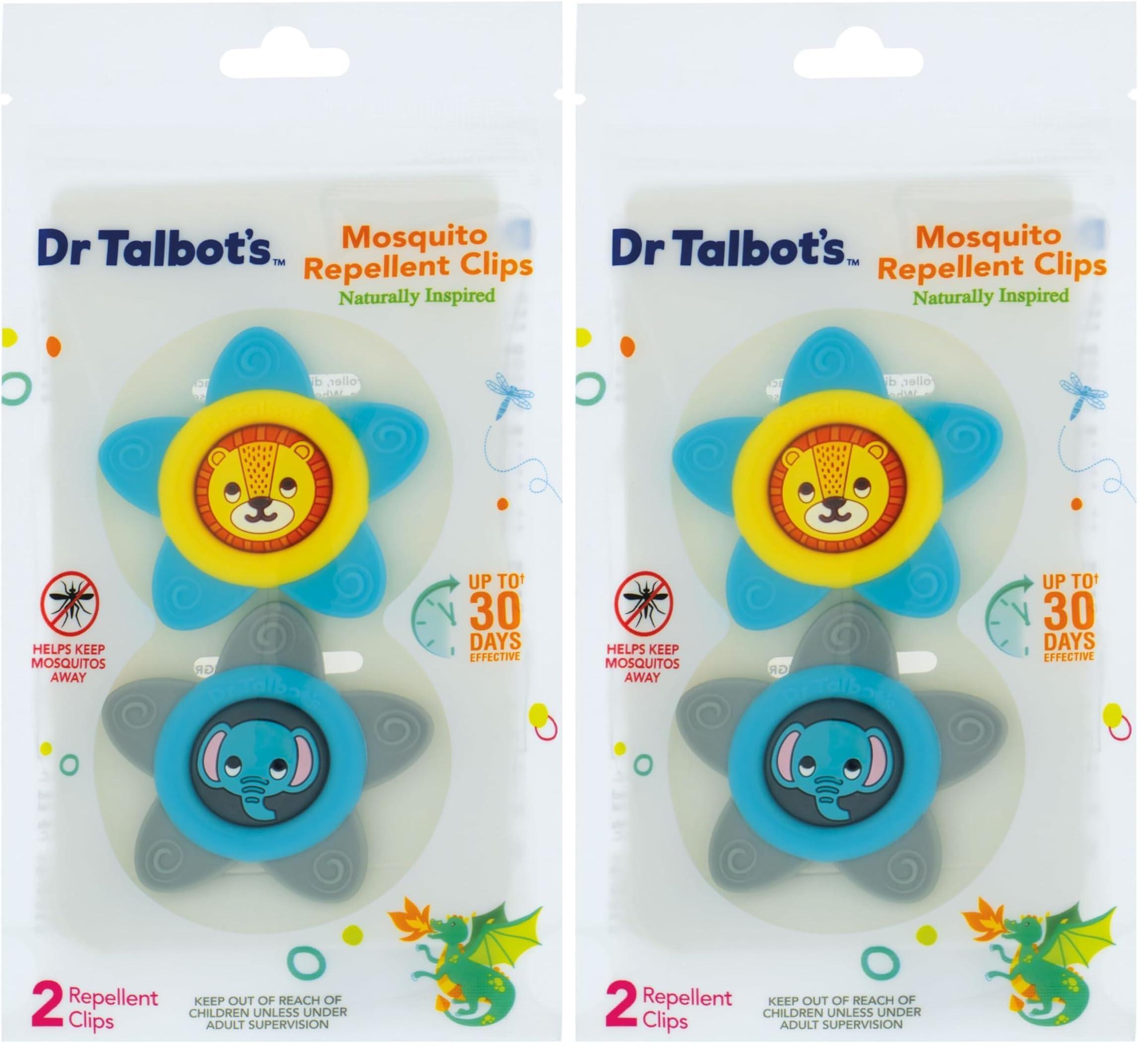
These clips offer a no-skin-contact option for strollers, car seats, and diaper bags using citronella and lemongrass scent.
Pros
- No skin contact required
- Clips onto strollers, bags, or clothing
- Comes with a resalable bag to preserve unused clips
Cons
- Effectiveness depends on airflow and proximity to the child
- Some users report the clip mechanism loosening over time
- Scent fades before the stated 30-day window for some users
Because these clips work by releasing scent into the surrounding air rather than being applied to skin, they carry a different risk profile than topical repellents. That makes them worth considering for a stroller or car seat, though coverage is limited to the immediate area around the clip. A few reviewers mention the clip loosening and falling off, so check attachment points regularly during outdoor use. Wearable repellents like this one are generally viewed as a supplement to, not a replacement for, other precautions such as netting or protective clothing.
Cliganic Mosquito Repellent Bracelets

These bracelets work as a portable, skin-contact-free option for brief outdoor errands with kids and adults alike.
Pros
- Individually wrapped for easy travel use
- One size fits most wrists or ankles
- DEET-free, essential oil-based formula
Cons
- Reviewers report shorter effective time than advertised in some cases
- Not a substitute for topical protection during long exposure
- Effectiveness varies by mosquito density and individual reactions
Wearable bands like this one work through scent diffusion around the wearer rather than direct skin absorption, which some parents prefer for babies too young for topical repellents. Reviews are mixed on how long the scent lasts, with some describing multi-day use and others noticing fading within hours. For infants, a bracelet placed on a stroller or car seat rather than directly on the skin may be a more practical use. These work best as one layer of protection alongside netting or timing outdoor activities to avoid peak mosquito hours.
Cliganic Mosquito Repellent Stickers
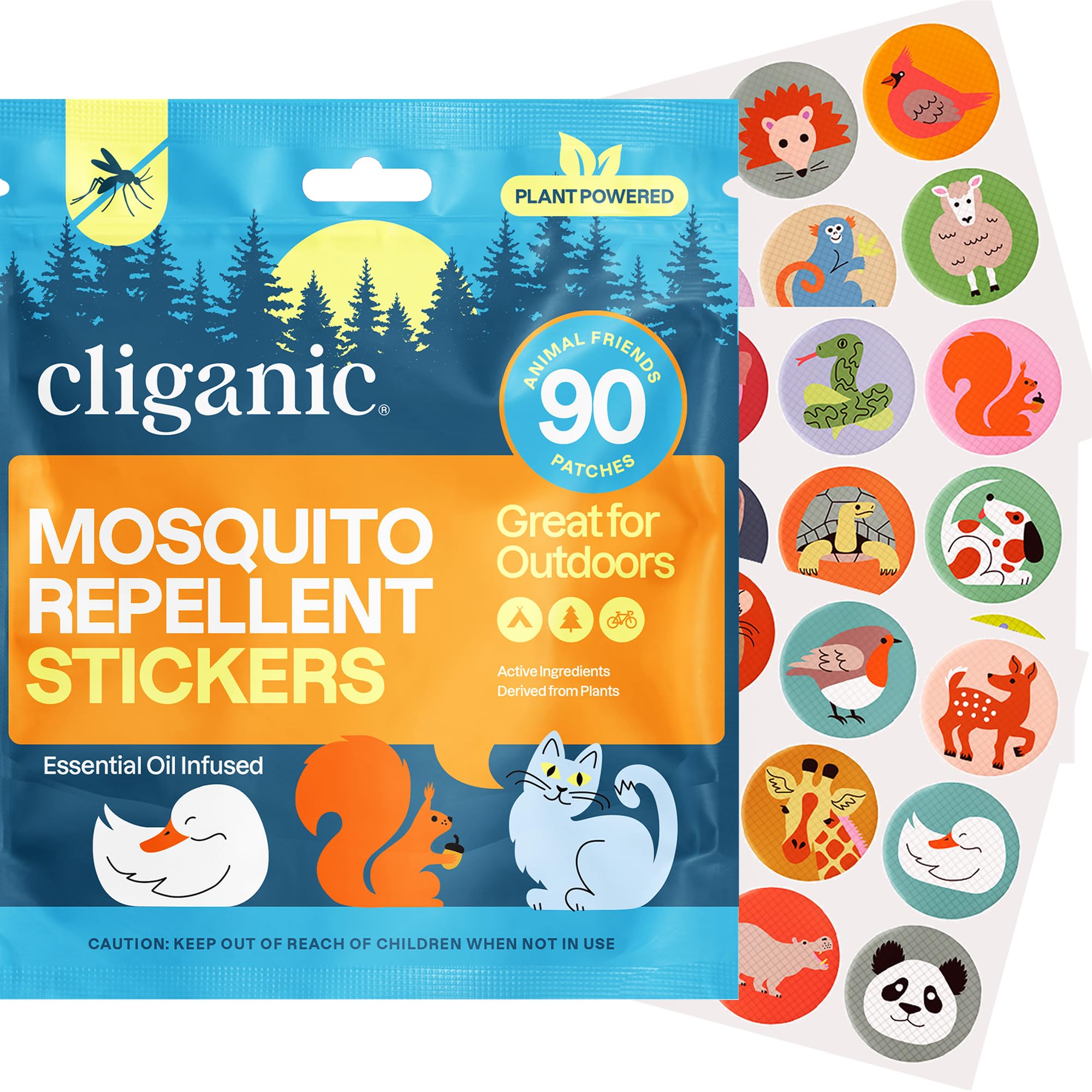
These stickers give parents a way to add scent-based protection to clothing or gear without touching a baby’s skin at all.
Pros
- Designed for clothing and gear, not skin
- Large pack size with kid-friendly designs
- Easy to peel and apply
Cons
- Adhesive can lose grip and fall off clothing
- Some users report residue left behind on fabric
- Coverage area is smaller than a spray or lotion
Because these patches attach to clothing rather than skin, they may appeal to parents looking for an option with no direct skin exposure for a baby. Reviewers note mixed adhesive performance, with some patches falling off during active play or windy conditions. The variety of designs makes them easy for toddlers to accept, though younger infants won’t have input on placement. As with other wearable repellents, they work best paired with other protective measures during high-mosquito exposure.
OFF! Family Care DEET Spray

This spray suits families needing stronger, longer-lasting protection for older children and adults in areas with heavy mosquito or tick activity.
Pros
- Contains 7% DEET for broader insect protection, including ticks and gnats
- Fragrance-free, non-greasy formula
- Safe for use on clothing without damaging cotton, wool, or nylon
Cons
- DEET products carry specific age and application guidance that rules out newborns and young infants
- Requires careful application away from hands, eyes, and mouth
- Stronger active ingredient than plant-based or picaridin options
DEET remains one of the most studied insect repellent ingredients, and this formula’s 7% concentration is on the lower end, intended for shorter outdoor exposure. It protects against a wider range of insects than plant-based sprays, including ticks and biting flies. DEET products are not recommended for infants under a pediatrician-confirmed age, so this option fits older children and adults in a family group rather than newborns or babies. Always follow label instructions on application area and frequency.
Buying Guide
Match The Active Ingredient To Your Child’s Age
Every insect repellent ingredient has a different age recommendation, and checking the label is the first step before any purchase. DEET, picaridin, and plant-based essential oils are handled differently by pediatric guidance, and none of them are recommended for infants younger than two months old regardless of how the marketing describes the formula.
| Ingredient Type | Typical Minimum Age | Notes |
|---|---|---|
| DEET | 2 months and older (check label) | Widely studied; concentration affects duration |
| Picaridin | 6 months and older (varies by product) | Lower odor than DEET; similar effectiveness |
| Plant-based essential oils | Varies widely by product | Labeled “natural” does not mean automatically safer for infants |
| Wearable (clips, bracelets, stickers) | No direct skin contact, but check manufacturer guidance | Works by scent diffusion, not absorption |
Consider Application Method
Topical lotions and sprays touch the skin directly and need to be reapplied based on the label’s stated protection window. Wearable options avoid skin contact but only protect the immediate area around the device, which limits their use for a mobile toddler.
- Lotions offer more even coverage but take longer to apply to a wiggling child.
- Sprays apply quickly but can be harder to control near the face.
- Wearables require no application at all but leave gaps in coverage.
Check Coverage Time And Water Resistance
Protection windows range from under two hours to several hours depending on the ingredient and concentration. If a repellent includes SPF, check the water resistance rating separately from the insect protection claim, since the two features may need reapplication at different intervals.
Avoid Assuming “Natural” Means Safer
Plant-based repellents use essential oils that can still cause skin irritation or allergic reactions in some children. A product’s natural ingredient list does not exempt it from needing a pediatrician check before use on a baby, especially one under six months old.
Talk To A Pediatrician Before First Use
A pediatrician can confirm whether a specific repellent’s ingredients, concentration, and application instructions fit a child’s age and health history. This step matters most for babies under six months, since most repellent labels set that as a minimum age threshold.
