
Safe April Fools pranks for kids are simple, age-appropriate, and easy to reverse. The best ones create surprise first, then end quickly in a shared laugh.
April Fools’ Day can be a good opportunity for families to share a light, low-stakes surprise. The best april fools pranks for parents to play on kids are simple, age-appropriate, easy to reverse, and designed to end in a shared laugh rather than stress.
In child development terms, humor can support flexibility, perspective-taking, and emotional recovery when it is handled carefully. For parents, that means choosing pranks that fit the child’s age, temperament, and comfort level, then revealing the joke quickly enough to keep trust intact.
- Safety first: Avoid pranks that create fear, shame, or real disruption.
- Match the age: Younger kids need instant reveals; older kids can handle slightly smarter setups.
- Keep it reversible: Choose pranks that are easy to undo in seconds.
- Protect trust: Reveal quickly so the joke stays playful, not stressful.
Why April Fools Pranks for Parents to Play on Kids Work So Well in 2026
Family humor works best when the setup is familiar and the surprise is harmless. Children already know their routines, so a small change in breakfast, a backpack, or a morning message can feel unexpectedly funny without requiring a big production.
In 2026, many families also share moments through photos, short videos, or private group chats. That makes it even more important to keep pranks clean, brief, and easy to explain, especially if older siblings or extended family are involved.
What parents are really looking for: safe laughs, low mess, and big reactions
Most parents want a prank that creates a visible reaction without creating cleanup, conflict, or embarrassment. A good family prank should be easy to reset before school, mealtime, or bedtime continues.
That is why simple visual jokes often work better than elaborate tricks. A swapped cereal bowl, a funny note, or a harmless object in the wrong place can deliver a strong effect with very little risk.
The most effective parent-child pranks are usually the ones that end quickly. The longer a child stays confused, the more likely the moment shifts from fun to frustration.
How family humor supports child development, trust, and resilience
When humor is safe and predictable in the end, it can help children practice emotional recovery. They get a chance to feel surprised, then realize the situation is harmless and laugh it off.
That matters because children learn from the tone parents use. A prank that stays warm and respectful teaches that surprise does not always mean danger, and that mistakes or odd moments can be handled calmly.
Family pranks work best when the child is laughing with the parent by the end, not trying to figure out whether they did something wrong.
Choosing the Right Prank for Your Child’s Age, Personality, and Temperament
Age matters, but temperament matters too. Some children enjoy surprise and novelty, while others need more predictability and a slower reveal.
Before planning a prank, think about whether your child tends to enjoy being the center of attention, whether they dislike sensory surprises, and whether they may worry about getting in trouble.
Toddler and preschool ideas: simple visual jokes with instant reveal
For toddlers and preschoolers, keep the joke extremely simple. A banana wearing sunglasses, a stuffed animal “reading” a book, or shoes placed neatly in the refrigerator can be enough to get a reaction.
These children do best with pranks that resolve immediately. If the child seems confused, the parent should reveal the joke right away and name the object or change in a calm voice.
Do not use pranks that rely on fear, loud sounds, or a long wait with very young children. At this age, surprise can feel overwhelming instead of funny.
Elementary-age pranks: playful surprises that stay easy to undo
Elementary-age children can usually handle a little more setup. A milk carton labeled as something silly, a lunchbox note with a harmless switch, or a breakfast plate arranged in a surprising way can land well.
At this age, children often enjoy figuring out the trick. That means the prank can include a slightly longer setup, as long as the reveal is still quick and the parent does not let the joke drag on.
Tweens and teens: smarter setups that avoid embarrassment or social fallout
Tweens and teens may prefer pranks that feel clever rather than childish. A fake “family meeting” that turns out to be a harmless announcement, or a switched screen wallpaper on a private device, may fit better than obvious toy-style tricks.
Be careful not to create embarrassment, especially if the prank could be seen by friends, classmates, or group chats. Older kids are often more sensitive to social perception than younger children.
- Simple visual surprises
- Quick reveal
- Private, family-only joke
- Public embarrassment
- Long confusion
- Anything that feels like punishment
Best Settings for Parent-Child Pranks: Home, School Drop-Off, Lunchbox, and Online Moments
Context matters as much as the prank itself. A joke that works at the kitchen table may not work in a car line, a classroom, or a shared family group chat.
Parents should choose settings where the child can safely react, recover, and move on without disrupting a formal event or feeling singled out.
Morning routine pranks that fit busy family schedules
Morning routines are ideal because they are familiar and predictable. A swapped cereal bowl, a “today’s breakfast menu” written on a sticky note, or a toothbrush placed beside a funny but harmless item can create a quick surprise.
Keep these jokes short because mornings are already busy. The prank should add a moment of delight, not delay the school run.
If the morning is already rushed, choose a prank that takes less than 30 seconds to reveal. Short jokes are easier to enjoy when everyone is half awake.
School-safe pranks that won’t disrupt class or embarrass kids
School-safe pranks should stay private and simple. A lunchbox note, a funny napkin drawing, or a harmless sticker inside a pencil case can be enough.
Avoid anything that could distract a teacher or draw attention from classmates. If a child is sensitive about standing out, keep the prank for home instead of school drop-off.
TikTok-ready or newsletter-worthy prank moments for modern family sharing
Some families like to record the reveal for a private video or family newsletter. That can work well if the child agrees and the moment stays respectful. [Source: Healthline]
If you plan to share online, be selective. A prank should not expose a child to public embarrassment or pressure them to perform a reaction for the camera.
Many of the most shareable family prank moments are the simplest ones, because the reaction feels natural instead of staged.
Classic April Fools Pranks Parents Can Pull Without Crossing the Line
Classic pranks work because they are familiar, easy to explain, and usually harmless. The key is to keep them reversible and age-appropriate.
Parents can borrow from common prank formats, but should always filter them through the child’s age and emotional sensitivity.
Breakfast switcheroos and food illusions that look convincing but stay harmless
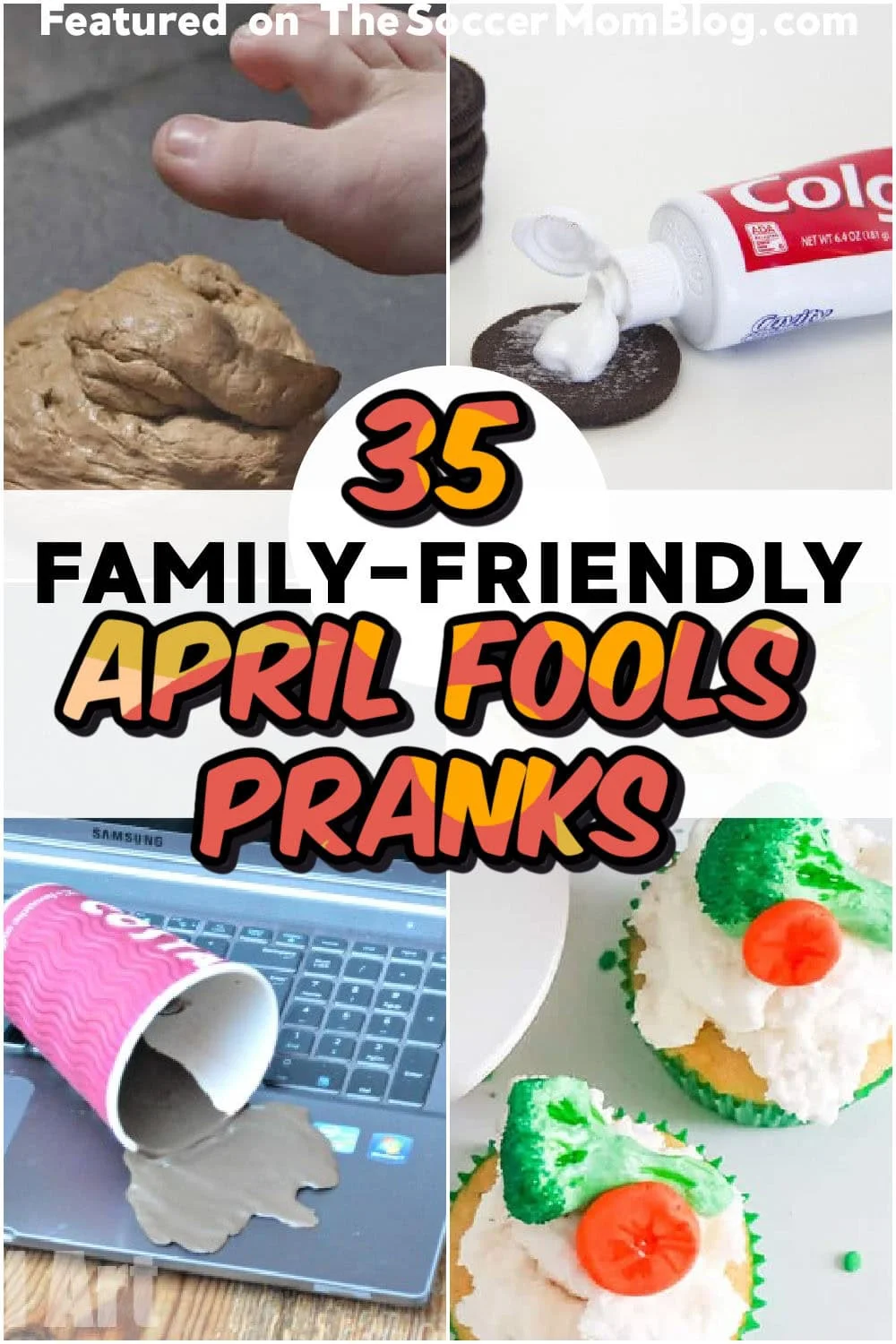
Food pranks are popular because children notice them immediately. You can serve yogurt in a cereal bowl, place a peeled orange in a cupcake liner, or offer “juice” that is actually colored water in a clearly labeled family setting.
For safety, avoid anything that changes allergens, ingredients, or meal expectations in a way that could cause distress. The joke should be visual, not deceptive about real food needs.
Do not prank a child with food if they have allergies, sensory sensitivities, or a strong need for predictable meals. In those cases, the joke can backfire quickly.
Bathroom, bedroom, and backpack pranks with quick cleanup
Bathroom and bedroom pranks should stay mild. A mirror note, a toy placed in a surprising but harmless spot, or a backpack filled with only soft, safe items can work well.
These pranks are best when they leave no mess and can be undone in seconds. If the setup takes longer to clean than to enjoy, it is probably too complicated.
Device and screen jokes that feel clever without causing panic
Screen jokes can be effective for older children, but they should never interfere with real access or create panic. A funny wallpaper, a renamed family playlist, or a harmless home screen image can be enough.
Do not change passwords, hide important apps, or create fake emergency alerts. Those moves can damage trust and create unnecessary stress.
- Use food, room, and screen pranks only when they stay harmless.
- Keep all setup reversible and fast to reset.
- Avoid anything that touches safety, access, or real needs.
Joke Craft Tips from Jamie Reed: How to Build a Better Family Prank
A good family prank has structure. It needs a setup, a believable detail, and a clean reveal that gives the child permission to laugh.
The goal is not to fool a child for as long as possible. The goal is to create a brief moment of surprise that feels safe once the joke is understood.
Use misdirection, timing, and a believable setup
Misdirection works when the child expects one thing and sees another. A lunchbox note, a changed label, or a familiar object in an unexpected place can do this well.
Timing matters too. The best moment is often when the child is alert enough to notice the switch but not so rushed that they cannot process it.
Keep the prank focused on a single object or moment.
Use something the child already expects to see in that setting.
End the joke before confusion turns into frustration.
Keep the reveal short, cheerful, and child-centered
The reveal should be immediate and calm. A parent can simply say that it is April Fools’ Day and point out the harmless trick.
Children usually respond better when the parent stays warm and matter-of-fact. A long speech can make the joke feel like a lecture instead of a shared moment.
Why the best pranks create surprise, not stress
Surprise is the spark; stress is the problem. If a child’s face shifts from confusion to worry, the prank should end right away.
That is especially important for children who are anxious, highly sensitive, or prone to taking things literally. For those children, a softer joke is often the better choice.
In family humor, the child’s emotional recovery matters more than the prank’s cleverness. A prank that ends in relief is usually a better developmental fit than one that drags on for effect.
Delivery Advice: How Parents Should Act the Prank for Maximum Delight
Delivery can make or break a family prank. Even a simple setup can fall flat if the parent acts too aggressively or gives away the joke too early.
The best delivery style is steady, believable, and calm. That helps the child focus on the surprise itself instead of on the parent’s performance.
Staying in character without overacting
Parents do not need to overplay the joke. In fact, exaggerated acting can make children suspicious before the prank lands. [Source: WebMD]
Stay natural. If the situation is supposed to seem ordinary, keep your tone ordinary until the reveal.
Reading your child’s reaction and knowing when to reveal
Watch for the difference between curiosity and distress. Curiosity usually looks like squinting, smiling, or asking questions. Distress can show up as silence, tension, or a worried expression.
If the reaction moves toward worry, reveal the prank immediately. That protects trust and keeps the experience positive.
Turning the prank into a shared laugh instead of a power move
The healthiest family pranks feel collaborative after the reveal. The child should feel that they were included in a moment, not targeted by it.
That means parents should avoid gloating or repeating the joke too many times. A quick laugh, a reset, and a return to normal routine usually works best.
If the child can retell the prank with a smile five minutes later, the joke probably landed in the right zone.
Common Humor Mistakes Parents Should Avoid on April Fools’ Day
Not every joke is a good family joke. Some pranks create fear, embarrassment, or sibling tension instead of delight.
Parents can avoid most problems by checking whether the prank is reversible, age-appropriate, and respectful of the child’s emotional limits.
Pranks that trigger fear, shame, or sibling conflict
A prank should never make a child think they are in trouble, unsafe, or excluded. It should also not turn siblings against each other or encourage teasing.
If a joke depends on humiliation, it is the wrong joke for family use. Humiliation may get a reaction, but it does not build trust.
Avoid pranks that involve fake emergencies, fake punishments, or pretending a child has broken something important. Those ideas can create lasting anxiety.
Overcomplicated setups that fail before the punchline
Big setups often collapse because they require too many props, too much timing, or too many people keeping the secret. If the prank is hard to explain, it is probably too hard to execute.
Simple pranks are more reliable and easier to clean up. They also let the parent focus on delivery instead of logistics.
Using pranks that depend on lying too long or breaking trust
April Fools’ Day works best when the lie is brief and clearly bounded. If a parent keeps the joke going for too long, the child may feel misled rather than amused.
Trust is especially important in child development. A family prank should reinforce closeness, not test whether the child can endure confusion.
- Is the prank safe and reversible?
- Does it fit your child’s age and temperament?
- Can you reveal it quickly if your child looks upset?
- Will it stay private if needed?
- Does it end in a shared laugh?
Final Recap: The Delightful Way to Make April Fools’ Day Fun for the Whole Family
The best april fools pranks for parents to play on kids are small, kind, and easy to undo. They create surprise without fear, and laughter without embarrassment.
When parents choose age-appropriate jokes, keep the reveal short, and protect trust, April Fools’ Day can become a low-pressure family tradition that children actually look forward to.
Quick checklist for safe, age-appropriate, joy-first pranks
Choose one simple setup, keep it private when needed, and avoid anything that affects safety, school, food needs, or emotional security. Then reveal the joke quickly and move on.
Why the best family jokes leave kids feeling included, not fooled
Children enjoy humor more when they feel part of the moment. A good prank says, “We are sharing a playful surprise,” not, “You are the target.”
That small difference is what turns a one-time trick into a family memory worth repeating.
- Keep pranks safe, simple, and reversible.
- Match the joke to your child’s age and temperament.
- Reveal quickly when surprise starts to feel stressful.
- Use April Fools’ Day to build connection, not confusion.
Frequently Asked Questions
The safest pranks are simple visual surprises, like a funny breakfast switch or a harmless note in a lunchbox. Keep them easy to reverse and avoid anything that affects safety, food needs, or school comfort.
Toddlers do best with very simple, instant-reveal jokes such as a toy in an unusual place or a silly object near breakfast. If they look confused, reveal the prank right away.
Watch your child’s reaction closely and end the joke as soon as it shifts from curiosity to worry. The best family pranks are brief, warm, and clearly harmless once revealed.
Yes, if they stay private, quiet, and non-disruptive. A lunchbox note or small backpack surprise is usually better than anything that draws classroom attention.
Only if your child is comfortable and the moment stays respectful. Avoid sharing anything that could embarrass them or make them feel pressured to perform.
Avoid fake emergencies, fake punishments, food pranks involving allergies, and anything that creates shame or fear. Those jokes can damage trust and are not a good fit for family humor.