

A well-stocked baby medicine kit takes the guesswork out of those first months, when a stuffy nose or unexpected fever can happen at 2 a.m. with no warning. New parents often discover that the hospital sends them home with a newborn but not a plan for minor aches, gas, or diaper rash. Building a kit ahead of time means the right tool is on hand before it’s needed, instead of during a stressful late-night search.
Not every item in a baby care kit is medicine. Some products, like saline spray or a nasal aspirator, simply relieve symptoms. Others, like acetaminophen or ibuprofen drops, are medications with specific age limits and dosing instructions that caregivers must follow carefully. Skin protectants, teething gels, and grooming tools round out a well-prepared setup, each solving a different everyday problem.
Age range matters more than almost anything else on this list. Some products are labeled safe from birth, while fever reducers like Motrin have a minimum age of six months. Always check the age guidance and active ingredients on the label, and call a pediatrician before giving any medication to an infant under two months old with a fever. The products below cover the most common needs new parents face, from congestion to diaper rash to teething discomfort.
Best all-in-one starter kit: Little Remedies New Baby Essentials Kit
Best for grooming and travel: Safety 1st Deluxe Baby Healthcare and Grooming Kit
Best for stress-free dosing: Frida Baby Medicine Pacifier Syringe
Best fever reducer for young infants: Infants’ Tylenol Dye-Free
Best for gas and fussiness: MYLICON Gas Relief Drops
Best multipurpose skin protectant: Aquaphor Baby Healing Ointment
Best long-lasting fever relief: Motrin Infants’ Concentrated Drops
Best for cold and cough comfort: Zarbee’s Baby Soothing Chest Rub
Best for teething pain: Orajel Baby Cooling Gels
Best budget grooming set: WXA Baby Grooming Kit
Little Remedies New Baby Essentials Kit

This kit is a strong choice for a first baby medicine kit because it bundles six commonly needed items into one box.
Pros
- Covers congestion, gas, fever, and diaper rash in one purchase
- Free of dyes, saccharin, and artificial flavors
- Well suited as a baby shower gift
Cons
- Labeled for ages 0 to 2 months, so some items may need replacing as the baby grows
- Diaper cream texture gets mixed feedback from parents
The kit includes saline spray and drops, a nasal aspirator, gas relief drops, infant acetaminophen, gripe water, and Boudreaux’s Butt Paste. Each item addresses a distinct newborn symptom rather than duplicating another product in the set. That variety makes it useful for figuring out which formulas work best for a particular baby before buying full-size bottles separately.
Parents should note the acetaminophen dosing must follow the label exactly, and a pediatrician should confirm dosing for infants under two months. The nasal aspirator and saline spray are non-medicated and safe for regular use on stuffy noses.
Safety 1st Deluxe Baby Healthcare and Grooming Kit
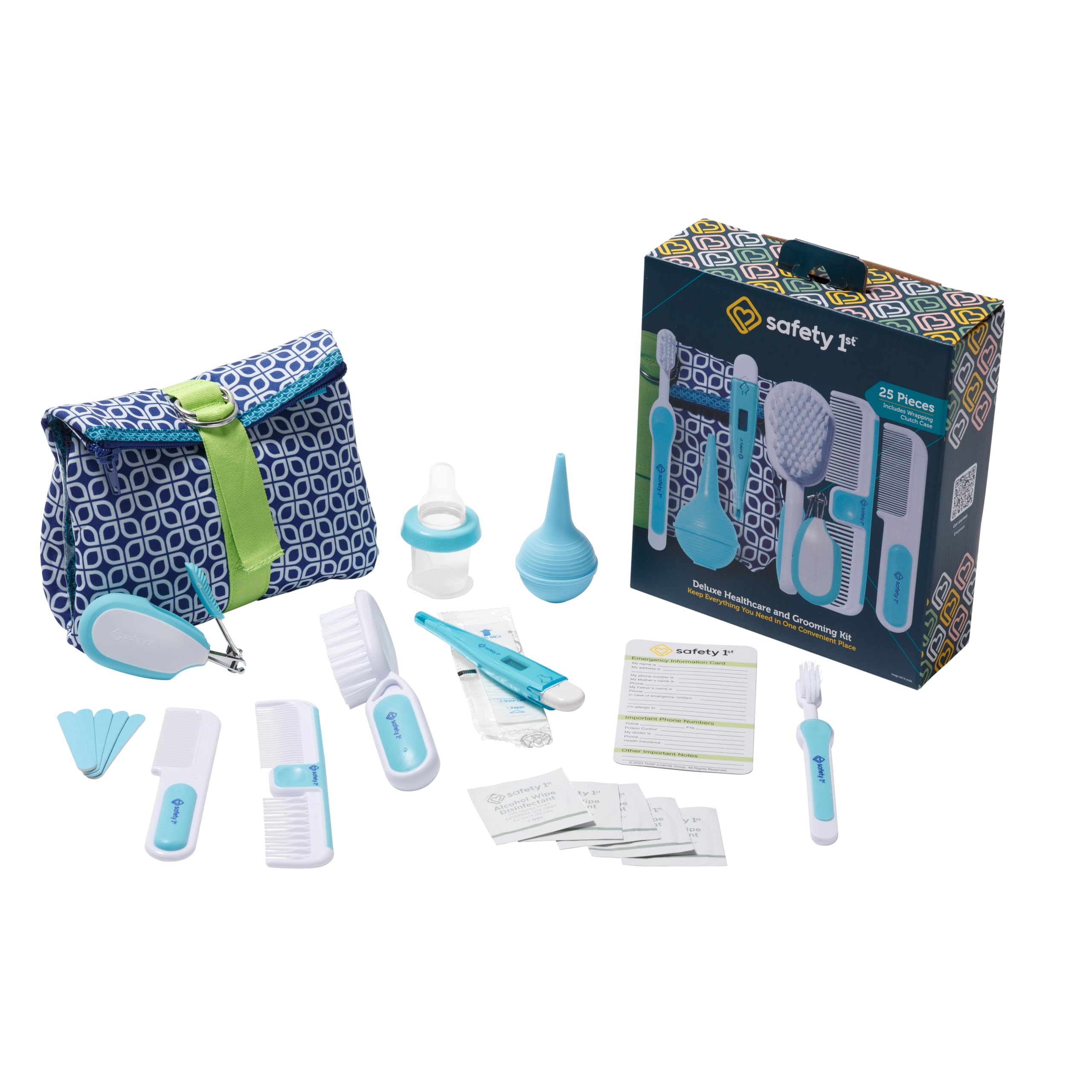
This 25-piece set focuses on grooming and monitoring tools rather than medicine, making it a good companion to a medication-focused kit.
Pros
- Includes a digital thermometer with probe covers
- Compact clutch case keeps tools organized
- Covers hair, nail, and oral care in one set
Cons
- Some buyers report missing pieces like the thermometer or aspirator in certain orders
- Batteries for the thermometer may need early replacement
The set includes a brush and comb, nail clippers, a nasal aspirator, a toddler toothbrush, and a medicine dispenser bottle, along with the thermometer. It works well as a grooming companion to a dedicated medicine kit, since it does not include acetaminophen, ibuprofen, or other active medications. The two-compartment case makes it easy to see what is inside without digging through a diaper bag.
Buyers should verify all listed pieces arrive, since a few reviews mention missing components. The nail clippers and nasal aspirator get consistent praise for gentle, precise use on newborns.
Frida Baby Medicine Pacifier Syringe

This is a dosing tool, not a medicine, and it solves one of the most common struggles new parents face: getting a baby to actually swallow liquid medicine.
Pros
- Pacifier shape feels familiar to babies who already use one
- Syringe delivers medicine to the cheek, reducing spit-up
- Works with gripe water, vitamins, and prescribed liquids
Cons
- Not a substitute for a standard oral syringe in all situations
- Effectiveness depends on whether baby already accepts a pacifier
The design routes liquid to the side of the cheek instead of the back of the throat, which helps prevent gagging and spit-up. Parents managing reflux medication, vitamins, or fever reducers frequently mention it turns a stressful task into a manageable one.
This product does not replace medicine. It is an administration tool, so caregivers still need to measure the correct dose based on the medication’s own instructions or a doctor’s guidance.
Infants’ Tylenol Dye-Free Acetaminophen

This is a fever and pain reducer built around acetaminophen, and it is a reasonable option for infants when dosed according to the label and a pediatrician’s guidance.
Pros
- Dye-free, alcohol-free, and ibuprofen-free formula
- Cherry flavor is generally well accepted by babies
- Includes a SimpleMeasure dosing syringe for accuracy
Cons
- Dosing for children under 2 years requires a doctor’s input
- Small 1-ounce bottle may need frequent replacement
Each 5-mL dose contains 160 mg of acetaminophen, and the label states it can begin easing fever within about 15 minutes. This makes it useful for minor aches from teething, colds, or reactions to vaccines, though caregivers should never guess at dosing based on weight alone.
Acetaminophen and ibuprofen are not interchangeable, and mixing them without medical guidance is not advised. The syringe included helps prevent under- or over-dosing compared to a standard spoon.
MYLICON Gas Relief Drops
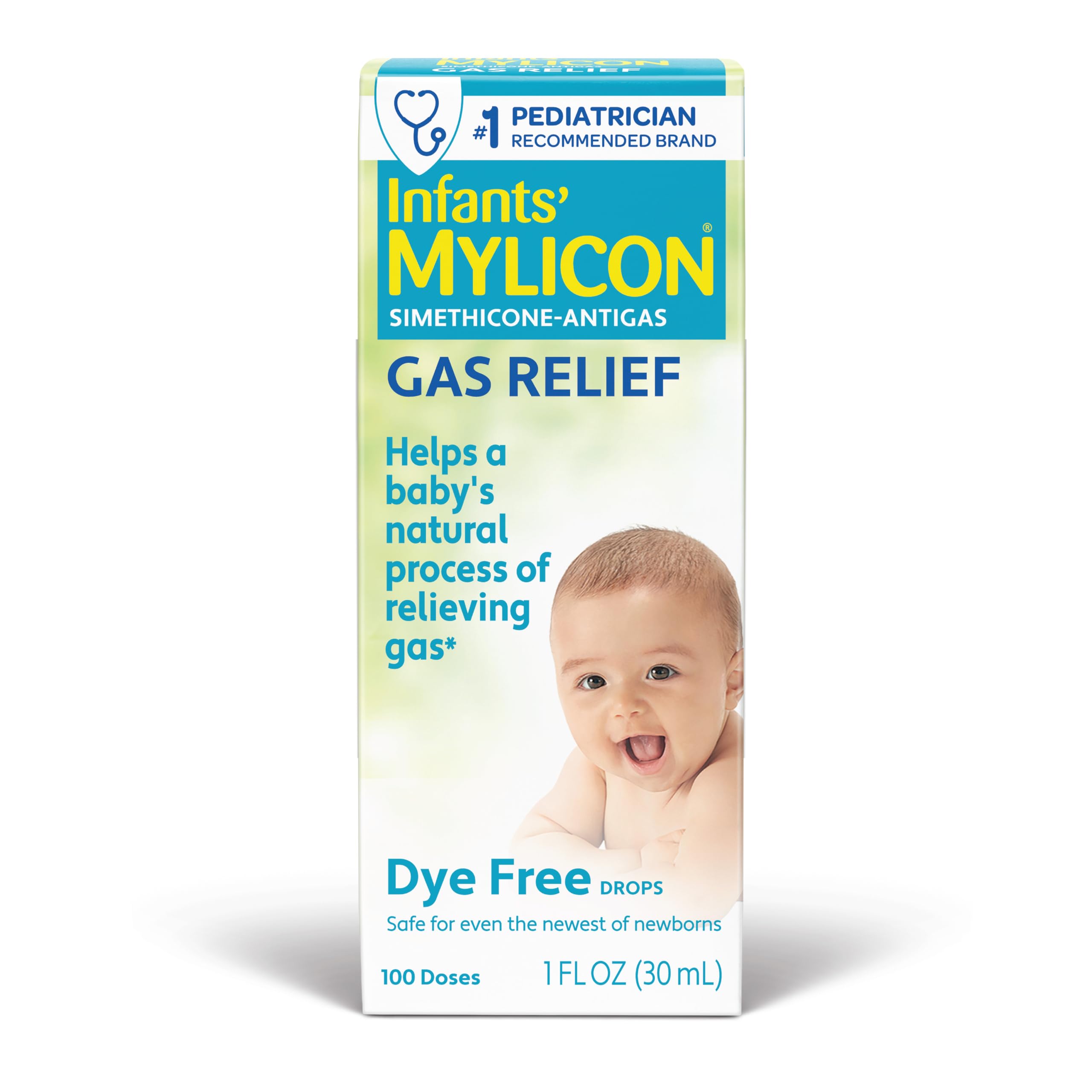
This simethicone-based drop targets gas discomfort rather than pain or fever, and it is one of the most consistently mentioned products for fussy, gassy infants.
Pros
- Can be used at every feeding, up to 12 times a day per label directions
- No saccharin, alcohol, or artificial flavors
- Safe for newborns according to the label
Cons
- Does not address fever, pain, or congestion
- Some parents report needing several uses before seeing consistent results
Simethicone works by helping trapped gas bubbles combine into larger ones that pass more easily, rather than by altering digestion chemically. That makes it a symptom-relief product, not a true medicine in the sense of treating an underlying condition.
Parents managing colic-like fussiness often try this before other remedies since it carries a wide usage allowance and a mild ingredient profile. The bottle includes a dosing syringe for consistent measuring.
Aquaphor Baby Healing Ointment

This ointment is a skin protectant, not a medicated cream, and it works well for general dryness, chafing, and minor skin irritation.
Pros
- Fragrance-free and preservative-free formula
- Multipurpose use for diaper rash, drool rash, and dry skin
- Large 7-ounce tube lasts through frequent use
Cons
- Contains petrolatum, which some parents prefer to avoid
- Not formulated to treat rash caused by infection
The 41% petrolatum base creates a barrier that locks in moisture while still letting the skin breathe, which is why it works for chapped cheeks, cracked heels, and diaper irritation alike. It contains no added fragrance, which reduces the chance of irritating sensitive newborn skin.
This product is a protectant rather than a rash treatment with active medicinal ingredients. Persistent or worsening rashes should be evaluated by a pediatrician rather than treated indefinitely at home.
Motrin Infants’ Concentrated Drops

This ibuprofen-based fever reducer is intended for infants 6 to 23 months old, and it offers longer-lasting relief than acetaminophen for some babies.
Pros
- Delivers relief for up to eight hours per dose
- Dye-free and alcohol-free formula
- Includes a marked dosing syringe
Cons
- Not approved for infants under 6 months without medical guidance
- Applicator can get sticky with residue after repeated use
Each 1.25-mL dose contains 50 mg of ibuprofen, an NSAID (nonsteroidal anti-inflammatory drug) that reduces fever and eases pain differently than acetaminophen. Some parents find it works better for their child, though response varies by baby.
Because this medication carries a strict minimum age requirement, it should never be given to infants younger than 6 months without a doctor’s direction. The berry flavor is generally well tolerated, and the syringe supports accurate dosing.
Zarbee’s Baby Soothing Chest Rub

This balm is a comfort product for cold symptoms, not a medicine, and it is formulated for babies 2 months and older.
Pros
- Petroleum-free base made with beeswax and shea butter
- No artificial fragrances or dyes
- Can be applied to chest, back, neck, and feet
Cons
- Texture can feel sticky and harder to spread than some rubs
- Scent, while mild, may not suit every baby
The eucalyptus and lavender blend is meant to soothe rather than treat congestion medically, unlike menthol-heavy adult chest rubs. That distinction matters since infant skin and airways are more sensitive to strong topical ingredients.
Parents managing a stuffy or congested baby often use this alongside saline spray and a nasal aspirator rather than as a replacement for either. It is not intended for infants under 2 months old.
Orajel Baby Cooling Gels for Teething

This two-tube set offers a drug-free option for teething discomfort, with separate daytime and nighttime formulas.
Pros
- Free of benzocaine, a numbing ingredient with safety warnings for infants
- Two formulas cover both daytime fussiness and nighttime settling
- Labeled for babies 3 months and older
Cons
- Effects are described as mild by some parents compared to numbing gels
- Small tube size means it runs out with frequent teething episodes
Because it avoids benzocaine, belladonna, and menthol, this gel fits a more cautious approach to teething relief compared to older medicated formulas that have carried FDA safety warnings for infants. The cooling sensation and chamomile-infused nighttime formula are meant to calm rather than numb.
Parents dealing with early teething often pair this with a chilled teething toy for added relief. It is not intended to replace a pediatrician’s advice if teething pain seems severe or persistent.
WXA Baby Grooming Kit
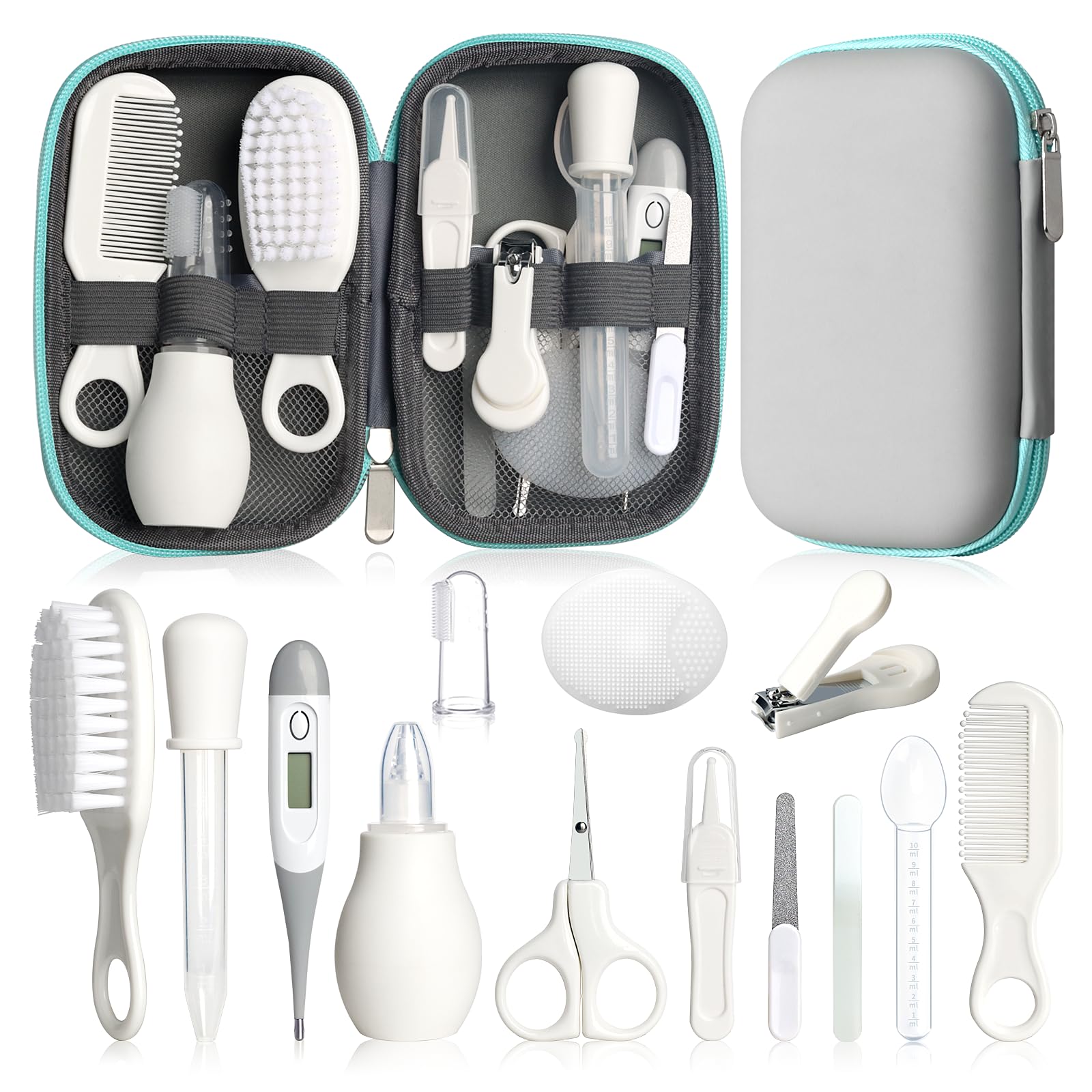
This 14-piece set is a budget-friendly grooming option that complements a medicine kit rather than replacing one.
Pros
- Includes nail file, scissors, tweezers, dropper, and measuring spoons
- Compact EVA travel bag keeps tools together
- Made with BPA-free plastic and stainless steel components
Cons
- Nasal aspirator is described as less effective than dedicated aspirator products
- No thermometer or medication included
The kit bundles grooming basics like a hairbrush, comb, and nail clippers with practical extras such as a medicine dropper and measuring spoons. That combination makes it useful for general newborn upkeep rather than symptom treatment.
Parents who already own a dedicated nasal aspirator may find the included one a weaker backup rather than a primary tool. The low price point makes it a reasonable add-on to a more medically focused kit.
Buying Guide
Know the Difference Between Medicine and Comfort Products
A baby medicine kit usually mixes true medications with comfort and grooming items, and treating them the same way can lead to confusion. Acetaminophen and ibuprofen are drugs with active ingredients, strict age minimums, and dosing charts based on weight and age. Saline spray, chest rubs, and teething gels are comfort products meant to ease symptoms without treating an underlying illness.
Reading the label’s “active ingredients” section is the fastest way to tell the two apart. If a product lists a drug name like acetaminophen or ibuprofen, treat it with the same care as any prescription medication.
Check Age Guidance Before Buying
Age limits vary sharply across baby care products, and using something outside its labeled range can be unsafe. The table below shows how ranges differ by product type.
| Product Type | Typical Age Guidance |
|---|---|
| Saline spray/drops | Birth and up |
| Simethicone gas drops | Birth and up (per label) |
| Skin protectant ointments | Birth and up |
| Chest rub balms | 2 months and up |
| Teething gels (drug-free) | 3 months and up |
| Acetaminophen | Consult doctor under 2 years |
| Ibuprofen | 6 months and up |
Always confirm the exact age cutoff on the package, since formulas and guidance can change between versions of the same product line.
Look for Dye-Free and Fragrance-Free Formulas
Many pediatricians suggest dye-free medicine and fragrance-free skin products for infants, since these additives offer no medical benefit and may irritate sensitive skin. Checking for phrases like “dye-free,” “fragrance-free,” or “preservative-free” on the label can help narrow choices, especially for babies with eczema or reactive skin.
Prioritize Accurate Dosing Tools
A medicine’s safety depends heavily on accurate dosing, not just its ingredients. Look for products that include a marked oral syringe rather than relying on a kitchen spoon, since spoons vary widely in size and lead to inconsistent dosing. Pacifier-style dispensers can help babies accept liquid medicine with less spitting up, which indirectly supports getting a full, accurate dose.
Build a Kit in Layers
Instead of buying one all-in-one kit, consider layering separate categories: fever and pain relief, gas and digestion, skin protection, congestion relief, and grooming tools. This approach lets a caregiver replace or upgrade individual items as a baby grows, rather than being locked into whatever came in a single bundled box.
