

Baby’s sight develops from light and contrast in the newborn stage to depth, color, and recognition by 12 months. The safest visual tools are simple, age-appropriate, easy to clean, and used only during supervised awake time.
Baby’s sight develops quickly in the first year, but it does not look like adult vision at any stage. In 2026, the most useful way to think about baby’s sight is as a gradual progression from detecting light and contrast to recognizing faces, colors, movement, and depth.
- Newborn focus: High-contrast, close-up visuals are usually more useful than bright, busy designs.
- Safety first: Check age grading, loose parts, glare, and recall information before use.
- Best use: Visual tools fit tummy time, playtime, and calm nursery routines better than sleep spaces.
- Cleaning matters: Choose wipe-clean or washable materials based on how often the item will be handled.
Baby’s Sight: What It Is and What Parents Should Expect in 2026
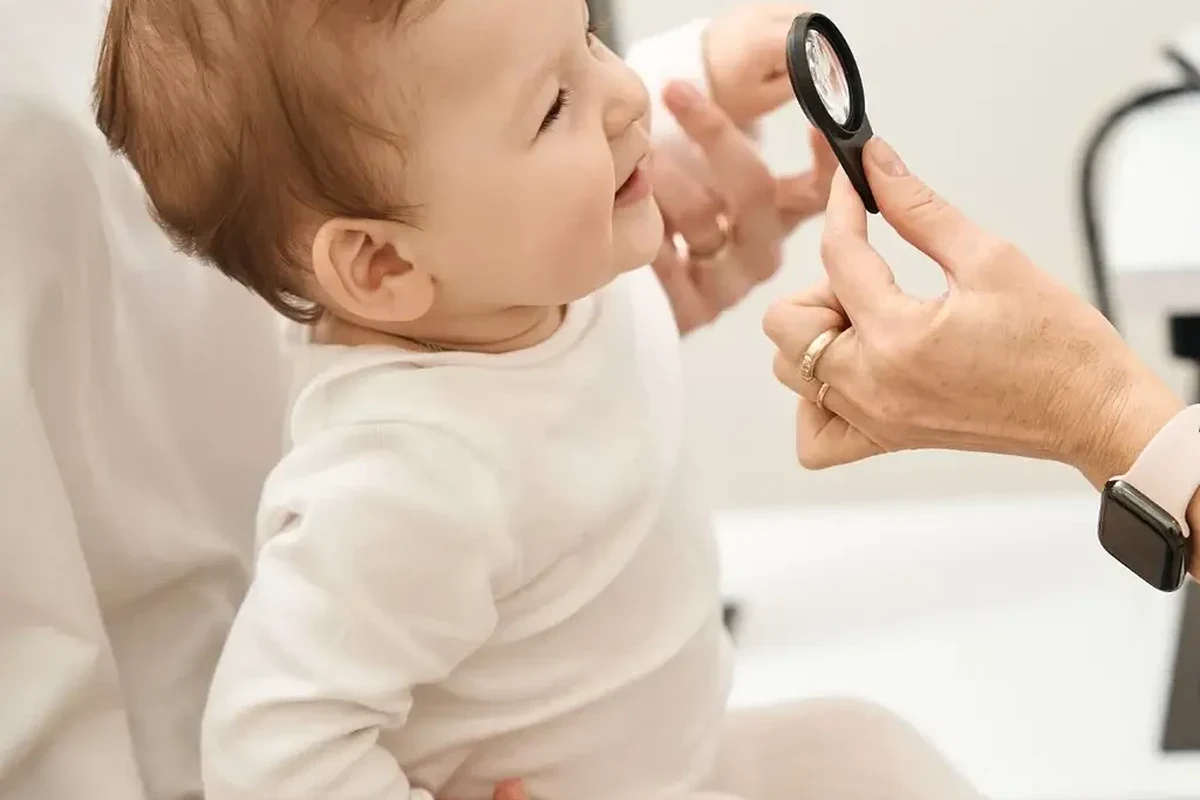
For parents, the key takeaway is simple: newborn vision is limited, normal changes happen month by month, and age-appropriate visual stimulation can support everyday development without needing fancy gear. What matters most is choosing safe, low-stimulation visuals, placing them correctly, and avoiding anything that could create glare, choking risk, or unsafe sleep conditions.
This guide focuses on how baby’s sight changes in the first year and how to choose visual stimulation tools that fit real nursery routines, safety guidance, and everyday parenting needs.
How Baby’s Vision Develops by Age: Newborn to 12 Months
Vision develops alongside the brain, so what a baby can see depends on age, alertness, distance, contrast, and lighting. If you want a broader look at early infant routines that pair with visual development, PunRealm also covers practical nursery topics like how to support baby’s head in a car seat and whether you need a baby bathtub for everyday care.
0 to 3 months: light, contrast, and short-range focus
In the first weeks, babies are usually most responsive to light, bold contrast, and faces held close. Their focus is short-range, so high-contrast black-and-white patterns, simple face-to-face interaction, and soft movement in the near field tend to be more useful than busy colors or complex scenes.
This is also the stage where parents may notice brief eye contact, tracking a face for a short distance, or looking toward a window or lamp. That does not mean the baby “sees clearly” yet; it means the visual system is starting to organize itself.
4 to 6 months: tracking movement and hand-eye coordination
By mid-infancy, many babies become better at following moving objects and coordinating what they see with what their hands do. This is the age when simple rattles, soft books, hanging toys, and floor play can become more interesting because the baby can better notice motion and reach toward it.
Parents often find this is a good time to pair visual play with tummy time and supervised floor time. If you are setting up a bathing or changing routine around a calmer nursery, visual clutter matters too; a simpler setup can help babies stay engaged without becoming overstimulated.
7 to 12 months: depth perception, color, and object recognition
During the second half of the first year, depth perception improves, color vision becomes more useful, and object recognition gets stronger. Babies may start looking for partially hidden toys, noticing familiar faces from farther away, and paying attention to more detailed pictures in board books.
At this stage, visual stimulation should still be age-appropriate. Busy patterns, flashing lights, or overly stimulating toys are not automatically better. In many homes, simpler visuals paired with talking, singing, and safe floor play are more helpful than a crowded nursery full of competing sounds and colors.
When in doubt, choose one clear visual target at a time. A simple high-contrast card, soft book page, or hanging toy is usually easier for a baby to process than multiple bright items placed close together.
What to Look For in Baby-Safe Visual Stimulation Products
“Baby’s sight” products can mean high-contrast cards, soft books, crib toys, play gym attachments, or nursery decor designed to give babies something safe and age-appropriate to look at. The best option is not the most colorful one; it is the one that matches your baby’s age, your room setup, and recognized safety guidance.
High-contrast patterns and age-appropriate visuals
For newborns, bold contrast and simple shapes usually make more sense than detailed illustrations. As babies grow, visuals can become more complex, but the design should still be easy to understand at the intended distance.
Look for clear patterns, faces, basic shapes, and simple object images. Avoid products that cram too many tiny details into one page or panel, especially if the goal is early visual engagement rather than decoration.
Safe materials, non-toxic finishes, and durable construction
Because babies explore with their mouths as well as their eyes, material quality matters. Soft books, cards, hanging toys, and nursery panels should use baby-safe materials, secure stitching or fastening, and finishes that are appropriate for infant use.
Check manufacturer labeling for age grading and care instructions. If a product includes paint, ink, or surface coating, confirm that the brand clearly states it is intended for infant use and follow the care directions closely.
Stop using any item that is cracked, loose, peeling, recalled, or missing parts. For any baby product, follow the manufacturer’s instructions and check recall notices through official safety sources such as the U.S. Consumer Product Safety Commission.
Size, placement, and nursery compatibility
Visual tools should fit the room, not dominate it. A large hanging toy may be fine over a play mat but inappropriate near a crib if it creates a fall or entanglement risk. Likewise, a high-contrast wall print can be useful in a nursery, but only if it is mounted securely and not placed where it can become a hazard.
Think about where your baby spends awake time: changing area, tummy time space, play mat, or nursing chair. The same visual product can work well in one spot and poorly in another if it is too close, too high, too reflective, or too distracting.
- Confirm the age grade and intended use
- Check for secure construction and easy-to-clean materials
- Review recall information and manufacturer instructions
- Make sure placement will not interfere with safe sleep or movement
Best Use Cases: Who This Helps Most and When to Start
Visual stimulation tools are most useful when they match a baby’s current stage and daily routine. They are not required for healthy development, but they can make awake time more engaging when used safely and in moderation.
Newborns and early sensory development
Newborns often benefit most from simple, close-up, high-contrast visuals. A card placed within safe viewing distance, a black-and-white soft book, or a caregiver’s face may be more effective than a toy with multiple colors and moving parts.
For parents who want to add a few age-appropriate items early on, the goal is not to “teach” vision but to give the visual system something easy to process. Short sessions are usually enough.
Infants with longer awake windows and tummy time routines
As awake windows get longer, visual tools can help keep tummy time and floor play interesting. A toy that supports tracking, reaching, or looking up can make supervised play more tolerable for babies who get fussy quickly.
That said, the best visual item is often the one that encourages movement and interaction rather than passive staring. A baby that looks, reaches, and turns the head is getting more than just a visual experience.
Parents building a calm, low-stimulation nursery setup
Some families want a nursery that feels calm rather than crowded. In that case, a few carefully chosen visuals can be better than a room full of bright, noisy gadgets. This approach also makes it easier to keep track of what is actually being used and cleaned regularly.
If your nursery is also used for diaper changes or winding down before sleep, keep the visual setup simple. A clutter-free room can make routines easier for both baby and caregiver.
Safety Standards, Certifications, and Common Red Flags
In 2026, safety is still the first filter. Before focusing on colors or developmental value, check whether the product is appropriate for infants, easy to inspect, and aligned with official safety guidance from the CPSC, the AAP, or your local child-safety authority.
What certifications and labeling matter in 2026
For baby products, look for clear age grading, manufacturer identity, care instructions, and any relevant compliance information the brand provides. Some products may reference ASTM standards or JPMA membership, but those terms should be understood as part of a broader safety picture, not a guarantee that every use case is risk-free.
If a product makes vague claims without clear labeling, that is a reason to pause. Real safety information should be specific enough for parents to understand how to use the item correctly.
Choking hazards, glare, loose parts, and overstimulation risks
Small detachable pieces are a major concern for infant items. So are mirrors with sharp edges, hanging parts that can loosen, and glossy surfaces that create glare under nursery lighting.
Overstimulation is another common issue. Some babies become fussy when there is too much visual clutter, too much motion, or too many sounds at once. If your baby seems overwhelmed, simplify the environment rather than adding more stimulation.
- Use age-appropriate, securely made visual items
- Inspect toys regularly for wear or loose parts
- Keep visual play short and supervised
- Hanging unsafe items inside or near a crib
- Using broken, peeling, or recalled products
- Assuming brighter or busier always means better
How to Use Baby’s Sight Tools Correctly at Home
How you use a visual product matters as much as what you buy. A simple item can be helpful when placed correctly and used briefly, while a more expensive one can be ineffective or unsafe if positioned poorly.
Recommended distance, angle, and duration of visual exposure
For newborns, keep visuals close enough to be seen comfortably but not so close that they become overwhelming. As babies grow, you can gradually adjust the distance to match their ability to track and focus.
Angle matters too. Place cards or toys where the baby can see them without straining the neck or twisting awkwardly. Short sessions are usually better than long ones, especially for very young infants who tire quickly.
If a baby looks away, fusses, or seems tired, treat that as a cue to stop. Visual stimulation should fit the baby’s mood and awake window, not override it.
Integrating visuals into tummy time, crib time, and playtime
Visual tools work best during supervised awake time. During tummy time, place a toy or high-contrast object in front of the baby to encourage lifting the head and tracking movement. During playtime, use a soft book or card to support looking and reaching.
For crib time, be careful: safe sleep guidance matters more than entertainment. Do not add loose toys, pillows, or decorative items to a sleep space. If you want more detail on safe routines around infant care, PunRealm’s guide to washing baby’s back in the bathtub also shows how everyday baby tasks benefit from simple, safe setup choices.
Common setup mistakes parents make
One common mistake is placing visual items too high, too low, or too close for the baby’s current stage. Another is using too many items at once, which can make it harder for the baby to focus.
Parents also sometimes forget that lighting changes everything. A shiny toy that looks fine in daylight may create glare at night or under a lamp. Test placement in the actual room before settling on a final setup.
Care, Cleaning, and Long-Term Value
Parents often want baby items that are easy to clean, store, and reuse. That is especially true for visual tools, which may move between the nursery, play mat, diaper area, and travel bag.
Wipe-clean materials versus machine-washable options
Wipe-clean cards, boards, and hard-surface toys are convenient for quick cleanup, especially if they live in a shared room. Soft books and fabric toys may be more comfortable for babies but can require more careful washing and drying.
Choose based on how often the item will be handled, mouthed, or moved around the home. If cleanup is a priority, the easiest product to maintain is often the one that gets used consistently.
Durability, storage, and hand-me-down potential
Durability matters because infant items get dropped, chewed, tugged, and packed away repeatedly. A product with sturdy seams, reinforced corners, or simple construction is more likely to last through the first year and possibly into a second child’s use.
Storage also matters. Flat cards, foldable books, and compact toys are easier to keep organized than oversized nursery decor. If you plan to pass items down later, store them clean, dry, and checked for wear before reuse.
Budget considerations and when premium features are worth it
You do not need premium features to support baby’s sight. In many homes, a few well-chosen basics are enough: high-contrast images, a safe mirror for supervised play, and a soft book or toy that is easy to clean.
Premium features may be worth considering if they improve durability, simplify cleaning, or better fit your nursery layout. But extras like lights, sounds, or app connectivity are not automatically more useful for visual development and may add clutter or overstimulation.
Best for newborns and early infancy when the goal is short-range focus and easy visual tracking. The main limitation is that they offer less variety as the baby grows.
Better for babies who are ready for tummy time, reaching, and movement-based play. It needs careful setup and regular inspection for loose parts.
Final Recommendation: Is Baby’s Sight a Smart Choice for Your Family?
As a category, baby’s sight products can be a smart choice when they are simple, age-appropriate, and used during supervised awake time. The best fit is usually a family that wants a low-stimulation way to support tummy time, early tracking, and calm nursery routines without relying on noisy or overly complex toys.
Best fit by age, lifestyle, and nursery goals
If you have a newborn, start with high-contrast visuals and short sessions. If your baby is older and spending more time on the floor, choose items that support reaching, tracking, and object recognition. If your nursery is designed to stay calm and uncluttered, a few well-placed visuals will usually work better than a large collection of baby gadgets.
Transparent limitations and when to choose an alternative
Baby’s sight tools are not necessary for every family, and they do not replace caregiver interaction, safe sleep practices, or pediatric guidance. If your baby seems overstimulated, if a product is hard to clean, or if it introduces safety concerns, choose a simpler alternative and follow manufacturer and official safety instructions.
Baby’s sight products make the most sense for parents who want simple, safe, age-matched visual stimulation during awake time. Choose low-contrast options for newborns, more interactive visuals as your baby grows, and skip any product that creates glare, loose parts, or sleep-space hazards.
Common Questions
You can start with simple, high-contrast visuals in the newborn stage. Keep sessions short and supervised.
Not usually. Newborns often respond more easily to strong contrast and simple shapes.
Not if they create a sleep hazard. Safe sleep guidance matters more than entertainment in a crib.
Wipe-clean cards or hard-surface toys are usually simplest. Always follow the manufacturer’s cleaning instructions.
Not necessarily. Safety, age fit, and simplicity matter more than premium features.
Frequently Asked Questions
Start with the intended use, correct fit or compatibility, official specifications, safety guidance, and the main limitations.
The best fit depends on experience level, body size, activity, terrain, available space, budget, and how often it will be used.
Confirm the exact model, size chart, dimensions, weight or load limits, included parts, warranty, return policy, and official instructions.
A common mistake is choosing by marketing claims alone instead of checking fit, compatibility, safety requirements, and real-use conditions.
Follow the manufacturer’s cleaning, storage, inspection, and replacement guidance. Stop using equipment that is damaged, unstable, cracked, or no longer fits correctly.
No. Results and risk reduction vary by the product, user, fit, setup, skill, environment, and activity. Protective gear cannot eliminate every risk.
