

The earliest signs are fewer wet diapers, poor feeding, dry mouth, and unusual sleepiness. If severe symptoms appear, seek urgent medical care right away.
If you’re wondering about signs a newborn is dehydrated, the most important clues are fewer wet diapers, poor feeding, unusual sleepiness, and a dry mouth. In a newborn, dehydration can become serious quickly, so call your pediatrician promptly if something seems off and seek urgent care for severe symptoms.
- Early clue: Fewer wet diapers plus weak feeding is one of the most important warning patterns.
- Serious signs: A sunken soft spot, fever, vomiting, fast breathing, or limpness needs prompt care.
- Highest risk: The first 24–72 hours, premature babies, and babies with feeding problems need closer watch.
- What to do: Track feeds and diapers, call the pediatrician the same day, and avoid giving plain.
Signs a Newborn Is Dehydrated: Quick Answer and When to Act
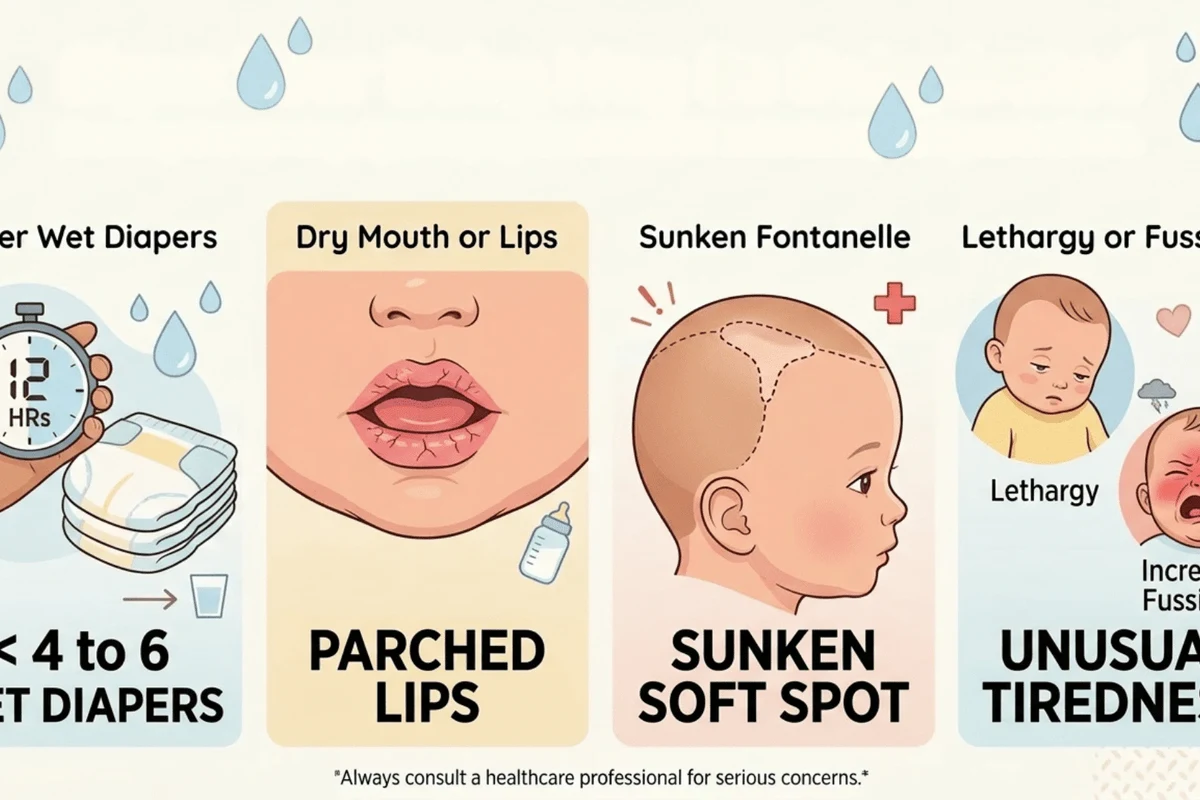
The earliest warning signs are often subtle: a baby may not feed well, may have fewer wet diapers than expected, or may seem harder to wake for feeds. Because newborns have small fluid reserves, it’s safer to get medical guidance early rather than wait for symptoms to worsen.
If your newborn has a sunken soft spot, very dark urine, fast breathing, vomiting, diarrhea, or looks limp, treat it as urgent. For feeding and diaper concerns, official guidance from the newborn bathing basics and other routine-care resources can help with daily care, but dehydration concerns should always be discussed with a clinician.
What Dehydration Means in a Newborn
Dehydration means a baby is losing more fluid than they are taking in, or not getting enough fluid to meet basic needs. In newborns, that can happen from feeding problems, illness, heat exposure, or sometimes from normal early feeding transitions if intake is too low.
Why newborns dehydrate faster than older babies
Newborns are small, so even a short period of poor intake can lead to a meaningful fluid deficit. They also cannot tell you they are thirsty, and they depend completely on caregivers to notice changes in feeding, diapers, and behavior.
Newborns often show dehydration first through diaper changes and feeding behavior, not through obvious thirst.
How age and feeding stage affect risk
The first days after birth are a transition period. Milk supply, latch quality, formula preparation, and baby’s stamina can all affect intake, so the risk of dehydration can vary a lot by age and feeding stage.
For example, a baby in the first 24 to 72 hours may have fewer wet diapers than an older newborn, but the pattern should still be reviewed if feeds are weak or output seems low. If you are also researching everyday infant care, PunRealm’s guides on the best baby bathtub for newborns and whether you need a baby bathtub can help with safe routine care choices, but they do not replace medical advice when dehydration is suspected.
Early Signs of Dehydration to Watch For
Early dehydration signs are usually easier to spot when you track feeding and diaper patterns closely. A single symptom may not mean dehydration, but several together deserve attention.
Fewer wet diapers than expected
One of the clearest signs is a drop in wet diapers. Parents often notice a diaper that feels lighter, less frequent urination, or urine that looks darker than usual.
Keep a simple feed-and-diaper log for the first weeks. It makes it easier to notice patterns and explain concerns clearly to your pediatrician.
Dry mouth, cracked lips, or no tears when crying
A newborn’s mouth should generally look moist, and lips should not look persistently dry or cracked. Lack of tears can also be a clue, though newborn tears may be limited early on, so this sign matters more when it appears alongside other changes.
Sleepiness, weak sucking, or unusual fussiness
Babies who are dehydrated may be harder to wake for feeds, tire quickly at the breast or bottle, or suck less strongly than usual. Some babies become unusually irritable instead of sleepy, so a big behavior change matters either way.
Feeding changes can also happen with jaundice, infection, or latch problems, so behavior alone is not enough to diagnose dehydration.
More Serious Warning Signs That Need Prompt Medical Attention
When dehydration becomes more advanced, the signs are usually more obvious and more concerning. These symptoms should not be watched at home for long.
Sunken soft spot, cool skin, or fast breathing
A sunken fontanelle, or soft spot, can be a sign of low fluid levels, especially if it appears with a dry mouth or poor feeding. Cool, mottled, or unusually pale skin and faster breathing are additional reasons to seek prompt medical care.
Dark urine, poor feeding, or weight loss concerns
Very dark urine or a strong-smelling diaper can point to concentrated urine from low intake. If your baby is feeding poorly or not gaining weight as expected, contact your pediatrician, because weight loss in a newborn can sometimes signal a feeding problem that needs quick attention.
Fever, vomiting, diarrhea, or signs of infection
Illness can dehydrate a newborn quickly. Fever, repeated vomiting, loose stools, or signs of infection should be taken seriously because newborns can decline fast and may need urgent evaluation.
If a newborn seems limp, difficult to wake, has trouble breathing, or has a fever, seek urgent medical care right away rather than waiting for the next feeding.
Who Is Most at Risk: Newborn Age Ranges and Feeding Situations
Some newborns are more likely to become dehydrated because they are still learning to feed or because they have medical or environmental risk factors. Knowing who is most vulnerable can help you act sooner.
First 24–72 hours after birth
The first 24 to 72 hours are often the most confusing for parents because feeding is still getting established. Wet diaper counts may be lower than later in the first month, but the baby should still show interest in feeding and gradually increase intake.
If you are unsure whether output is normal for your baby’s exact age, ask your hospital, midwife, or pediatrician for the expected diaper pattern. That is more useful than comparing your baby to a general internet checklist.
Breastfed, formula-fed, and mixed-fed newborns
Breastfed newborns can become dehydrated if milk transfer is low, latch is ineffective, or supply has not come in yet. Formula-fed babies can also dehydrate if they are not taking enough, or if formula is mixed incorrectly.
Mixed-fed babies may have a little more flexibility, but they are not automatically protected. The key issue is whether the baby is getting enough total fluid and feeding well consistently.
Premature babies and babies with medical concerns
Premature babies, babies with jaundice, babies with cleft palate or other feeding challenges, and babies recovering from illness may have a higher dehydration risk. They may need closer follow-up and more specific feeding guidance from their care team.
Most relevant, since dehydration signs can appear quickly in the first weeks.
Less relevant; toddlers show dehydration differently and usually have more reserve.
Still important, but the warning signs and urgency can differ from newborn care.
What Parents Should Do Right Away
When you suspect dehydration, the goal is to assess quickly, feed safely, and get medical advice at the right time. Don’t wait for every symptom to appear before acting.
How to assess diapers, feeding, and alertness at home
Start by checking the last 24 hours: how many wet diapers, how many feeds, how long each feed lasted, and whether your baby is waking normally. Look at the mouth, lips, urine color, and overall alertness, but keep in mind that one sign alone is less important than the full pattern.
Compare the number of wet diapers with what your pediatrician expects for your baby’s age.
Notice whether your baby latches, sucks, or takes the bottle normally, or tires quickly.
Record unusual sleepiness, fussiness, or difficulty waking, then share those details with a clinician.
When to call the pediatrician versus seek urgent care
Call your pediatrician the same day if your baby has fewer wet diapers than expected, poor feeding, or a dry mouth but is otherwise alert. Seek urgent care right away if your baby is very sleepy, has a sunken soft spot, is breathing fast, has a fever, is vomiting repeatedly, or seems weak or limp.
What not to do: unsafe fluids and delayed treatment
Do not give water, juice, herbal remedies, or any other unsupervised fluids to a newborn unless a clinician specifically instructs you to do so. Also avoid “waiting it out” if your instincts say something is wrong; newborn dehydration can worsen quickly.
- Call your pediatrician promptly with feeding and diaper concerns
- Follow formula-mixing instructions exactly if formula is used
- Track symptoms and feed times so you can report them clearly
- Giving plain water or other non-prescribed fluids
- Assuming sleepiness is normal if feeds and diapers are also off
- Delaying care when several warning signs appear together
Common Causes, Mistakes, and Prevention Tips
Most newborn dehydration is tied to intake problems, illness, or environmental stress. Prevention is mostly about feeding support, close observation, and fast response to early changes.
Feeding issues, latch problems, and missed cues
Latch problems, shallow sucking, sleepy feeds, tongue-tie concerns, or bottle-feeding technique issues can all reduce intake. Parents sometimes miss early hunger cues, especially when they are exhausted, so offering feeds on a regular rhythm in the early weeks can help.
- Ask for lactation support early if breastfeeding feels painful or inefficient.
- Make sure bottle nipples and flow match your baby’s age and feeding ability.
- Watch for active swallowing, not just time spent at the breast or bottle.
Overheating, illness, and environmental factors
Hot rooms, too many layers, fever, diarrhea, and vomiting can all increase fluid loss or reduce intake. Newborns should be kept comfortably warm, not overheated, and any illness symptoms should be discussed with a clinician quickly.
Practical prevention habits for the first weeks
Simple habits help: feed on cue, keep a diaper log, monitor urine color, and schedule newborn follow-up visits on time. If your baby has special feeding needs, ask the care team what output and weight changes should trigger a call.
- Ask whether the feeding plan is appropriate for your baby’s age and weight
- Confirm formula preparation instructions if formula is used
- Know which diaper, feeding, or behavior changes should trigger a same-day call
Safety, Recovery, and Final Recommendation
Most newborn dehydration improves when the underlying feeding problem or illness is identified early and treated correctly. The safest approach is to treat dehydration as a medical concern, not a home-care guess.
How dehydration is treated in newborns
Treatment depends on the cause and severity. A clinician may assess feeding, weight, hydration status, and sometimes recommend supervised feeding changes, lab checks, or hospital treatment if the baby is significantly dehydrated.
What recovery and follow-up may look like
Recovery often includes closer follow-up, repeat weight checks, and a feeding plan that helps the baby take in enough fluid. Parents may also be asked to continue tracking diapers and feeds until the baby is clearly improving.
If your baby has ongoing feeding trouble, repeated vomiting, or poor weight gain, follow up again even after the first visit. Newborns can need more than one check to make sure hydration is truly improving.
Final guidance for parents in 2026
In 2026, the best advice is still the simplest: trust the diaper count, trust feeding changes, and trust your instincts when something seems off. If you notice multiple signs a newborn is dehydrated, contact your pediatrician promptly, and seek urgent care for severe symptoms instead of waiting.
Common Questions
Fewer wet diapers is often the earliest clue. Poor feeding and unusual sleepiness are also common early signs.
Sometimes, but sleepiness plus weak feeding or low diaper output can signal dehydration. That combination should be checked by a pediatrician.
Not always, but it matters when it appears with other symptoms. Dry mouth plus fewer wet diapers is more concerning.
No. Dehydration can happen without fever, and newborn feeding concerns should be taken seriously early.
Yes. They can become dehydrated if they are not taking enough or if formula is mixed incorrectly.
Frequently Asked Questions
The earliest signs are often fewer wet diapers, poor feeding, dry mouth, and unusual sleepiness. Some babies also become fussier or harder to wake.
The expected number depends on your baby’s age and feeding stage, especially in the first few days after birth. Ask your pediatrician or birth team for the diaper pattern they expect for your baby.
Call the same day if your newborn has fewer wet diapers than expected, poor feeding, or a dry mouth. Seek urgent care if your baby seems limp, very sleepy, has a fever, or is breathing fast.
Yes, if milk transfer is low, latch is ineffective, or supply has not come in yet. A lactation consultant or pediatrician can help assess feeding and intake.
No, not unless a clinician specifically tells you to. Newborns should not be given plain water or other unsupervised fluids.
Common causes include feeding problems, illness such as vomiting or diarrhea, and sometimes overheating. Premature babies and babies with medical concerns may be at higher risk.
