

A child’s preference can matter in custody decisions, but there is no universal age when that child automatically chooses. Courts usually consider maturity, safety, consistency, and the child’s best interests.
When people ask when can a child choose which parent to live with, they are usually asking two different questions at once: what the law allows, and what a child feels ready to say. The answer depends on the child’s age, maturity, safety, and the rules in the family’s location.
This guide explains the topic in plain language for parents, educators, and content creators. It is informational only, not legal advice, but it can help you talk about the issue with more care and less confusion.
- No fixed age: Rules vary by location and case.
- Maturity matters: Judges look beyond age alone.
- Safety comes first: Protection can outweigh preference.
- Teens may be heard more: Preference can carry extra weight, not automatic control.
What “When Can a Child Choose Which Parent to Live With” Really Means in 2026
In 2026, this question still comes up because families want a simple answer to a complicated situation. The reality is that a child’s voice may matter, but it is rarely the only factor a court considers.
Clarifying the legal question vs. the emotional question
The legal question is whether a court will consider the child’s preference in a custody or parenting-time decision. The emotional question is whether the child feels safe, heard, and free from pressure when expressing that preference.
Those two questions should not be treated the same. A child can have strong feelings about where to live without being expected to make the final decision.
Many children want to choose based on comfort, routines, or fewer rules, not on a full understanding of long-term stability, school changes, or safety concerns.
Why families, teachers, and kids search this topic on PunRealm
Families often search during separation, divorce, or big custody changes. Teachers and counselors may search because a student mentions wanting to live with one parent, and adults need a careful, age-appropriate way to respond.
On PunRealm, the topic also matters because family humor content can easily become insensitive if it treats custody like a contest. A responsible approach keeps the focus on clarity, respect, and child well-being.
How Courts Usually Treat a Child’s Preference by Age and Maturity
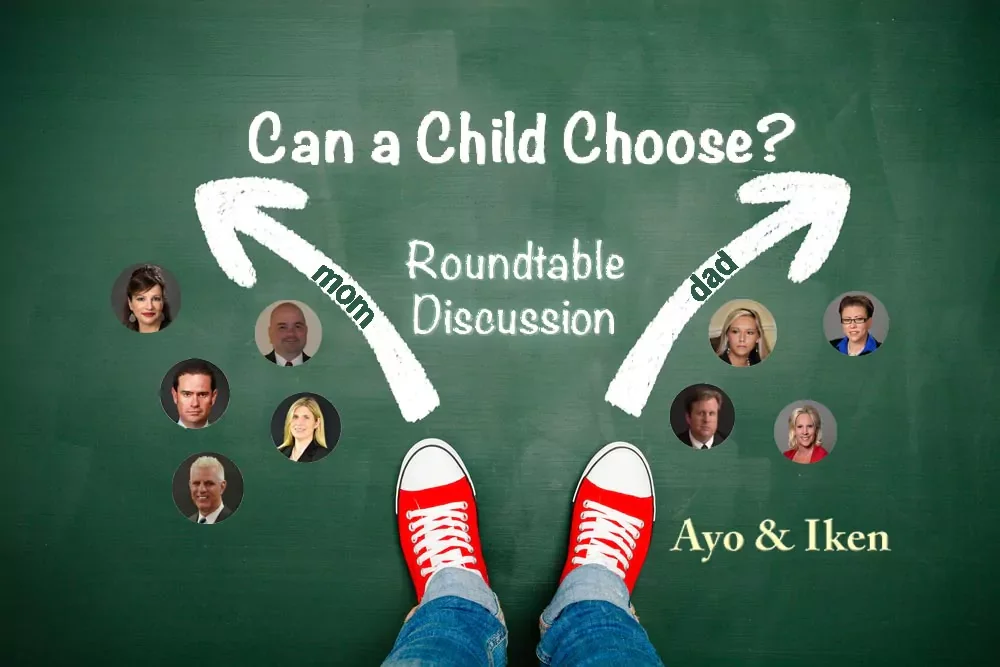
Courts generally do not ask, “How old is the child?” and stop there. They ask whether the child is mature enough to express a reasoned preference and whether that preference fits the child’s overall best interests.
Why there is no single magic age
There is no universal age at which a child automatically gets to choose one parent over another. Different places have different rules, and judges still look at the whole picture.
That means two children of the same age can be treated differently if one is more mature, more consistent, or facing a different family situation. Age matters, but it is only one part of the analysis.
When explaining this to adults, use the phrase “the child’s preference may be considered” instead of “the child decides.” That wording is more accurate and less likely to mislead.
How judges weigh maturity, safety, and consistency
Judges typically look for signs that the child can give a stable, thoughtful explanation. They may consider whether the child understands the situation, whether the preference has stayed consistent, and whether anyone may be influencing the child.
Safety is central. If one home involves conflict, neglect, or other risks, the court may focus more on protection than on preference.
Common age ranges people ask about and what they actually mean
People often ask about “age 12,” “age 14,” or “age 16,” because those numbers are commonly discussed in family law conversations. In practice, those ages usually mark a point where a child’s preference may carry more weight, not a point where the child has full control.
That is an important distinction for parents and educators. A teenager’s opinion can be meaningful without becoming the only factor in the decision.
| Common Question | What It Usually Means | What It Does Not Mean |
|---|---|---|
| Can a younger child choose? | The child may be heard if mature enough. | The child automatically decides. |
| Can a teen choose? | The teen’s preference may carry more weight. | The teen always gets the final say. |
| Does maturity matter? | Yes, very much. | Age alone controls the outcome. |
Where This Question Shows Up: School Talks, Family Conversations, TikTok, and Newsletters
This topic appears in many places outside the courtroom. The way you explain it should change depending on whether you are speaking to children, parents, or a general audience.
How to explain the topic in a classroom or school counseling setting
In a classroom or counseling setting, keep the explanation simple and neutral. You can say that adults and courts try to make living arrangements based on what is safest and healthiest, and that children may be asked for their thoughts if they are old enough and comfortable sharing them.
Avoid asking students to discuss personal custody details in front of peers. If a child brings up a family situation, respond privately and carefully rather than turning it into a group conversation.
Do not frame the issue as a popularity contest between parents. Children can feel blamed, pressured, or disloyal when adults talk that way.
How family humor content should handle it on TikTok or short-form video
Short-form video can help people understand the basics quickly, but it also increases the risk of oversimplifying a serious issue. If you create family humor content, keep the message grounded in facts and avoid implying that a child can freely “pick a side” like a game choice.
For this topic, humor should never punch down at a child, a parent, or a family in conflict. If the content cannot stay respectful in 15 to 30 seconds, it is better to make it informational rather than comedic.
How to adapt the message for a newsletter or community assembly
In a newsletter or assembly, the best approach is calm and direct. Explain that children’s voices matter, but adults must also consider safety, routines, school stability, and emotional well-being. [Source: Mayo Clinic]
If you are writing for a community audience, keep any light language focused on clarity rather than joke-making. That approach helps people read the message without feeling dismissed.
How Jamie Reed Would Tackle the Topic with Respectful Family Humor
From a PunRealm perspective, family humor works best when it reveals a truth without making the subject smaller than it is. The goal is not to laugh at custody decisions, but to help people remember the difference between a child’s preference and a legal outcome.
Joke-craft tips for keeping the tone warm, not flippant
Good family humor uses recognition, not ridicule. A line about a child wanting the room with the best Wi-Fi can work in a casual parent post, but it should never suggest that the child’s living arrangement is trivial.
Warm humor usually lands because it names a familiar detail while leaving the serious part intact. That balance matters even more when the audience may include children or families under stress.
When a topic is emotionally loaded, the safest humor is observational and low-pressure. It should describe the situation, not judge the people in it.
Using light wordplay without making custody sound like a punchline
Wordplay can be useful in social posts, but only if it does not turn a family decision into a clever shortcut. A playful phrase may be fine in a parent-focused caption, yet it should be avoided in school materials, counseling handouts, or anything directed at children.
If you are unsure, choose clarity over cleverness. A clear sentence helps more than a cute line that could be misunderstood.
Balancing empathy, clarity, and a playful PunRealm voice
A PunRealm voice can still be warm and engaging without becoming casual about serious family matters. The best version of that voice is friendly, readable, and careful with emotional context.
That means explaining the legal reality, acknowledging the child’s feelings, and keeping the tone supportive. In practice, that is more useful than trying to force a joke into every paragraph.
Age-Appropriateness Notes for Parents, Educators, and Content Creators
Age-appropriateness matters because children do not all interpret custody discussions the same way. The message should match the child’s developmental stage and the setting where it is shared.
What younger children can understand without legal detail
Younger children usually understand simple ideas like where they sleep, who helps with homework, and what routines stay the same. They do not need legal terminology to understand that adults are working to make safe plans.
For this age group, keep explanations concrete and reassuring. Focus on the child being cared for, rather than on decision-making power.
What tweens and teens may need explained more directly
Tweens and teens often want more direct answers, especially if they have strong feelings about one home versus another. They may need help understanding that being heard is not the same as being responsible for the outcome.
This is also the age where pressure can become a problem. Adults should make it clear that honesty is welcome and that the child does not need to protect one parent’s feelings by hiding the truth.
Children often speak more openly when adults ask about routines, comfort, and safety instead of asking them to “pick” a parent right away.
When humor helps and when it should be avoided entirely
Humor can help adults lower tension when they are discussing a stressful topic privately and respectfully. It should be avoided when speaking to children directly about custody, during legal disputes, or in any setting where a joke could be read as pressure.
As a rule, if the child may feel caught in the middle, skip the humor. Clarity and reassurance are more helpful than wit in those moments.
Common Humor Mistakes to Avoid When Discussing Custody and Choice
Even well-meaning creators can get this topic wrong by trying too hard to be clever. The biggest mistakes usually involve minimizing conflict or making one parent look like a winner and the other like a loser.
Turning a serious family decision into a “winner vs. loser” joke
This framing is harmful because it encourages competition instead of cooperation. Children should never feel that their love or loyalty is being scored.
If your content sounds like a bracket, contest, or rivalry, it is probably not appropriate for this topic. Families need support, not a scoreboard.
A custody joke that sounds harmless to adults can feel deeply personal to a child who is already dealing with stress, uncertainty, or divided loyalties. [Source: Education.com]
Using sarcasm that could confuse or upset children
Sarcasm often depends on tone, and tone is easy to miss in writing or short video. A child may take a sarcastic comment literally, or a worried parent may hear it as dismissal.
If the goal is to educate, sarcasm usually creates more risk than value. Straightforward language is safer and clearer.
Ignoring safety, conflict, or trauma in favor of easy laughs
Custody and living arrangements are not just about preference. They may involve safety concerns, emotional strain, transportation issues, school continuity, or trauma history.
When humor ignores those realities, it can become insensitive very quickly. Respectful content should acknowledge the seriousness of the topic even if the delivery is light.
How to Deliver the Message Clearly and Kindly
The best explanations are calm, specific, and age-aware. They avoid legal jargon when unnecessary and avoid oversimplifying when the situation is more complex.
Best practices for tone, pacing, and phrasing
Use short sentences and one idea at a time. That helps parents, educators, and teens follow the explanation without feeling overwhelmed.
Choose phrases like “the child’s wishes may be considered” or “the court looks at many factors.” Those statements are more accurate than saying the child simply chooses.
How to keep explanations simple without oversimplifying
Simple does not mean shallow. You can say that adults try to decide what is best for the child while also listening to the child’s thoughts when appropriate.
If you need a comparison, compare it to choosing a school schedule with help from adults: the child’s opinion matters, but adults still weigh practical needs and safety.
When writing for mixed audiences, define the term “best interests” in plain language instead of assuming everyone knows what it means.
Practical delivery tips for spoken, written, and social content
In spoken settings, pause after key points so listeners can absorb them. In written content, use headings and short paragraphs so readers can scan quickly.
On social platforms, keep captions factual and avoid overpromising. A useful post answers the question honestly instead of pretending there is one universal rule.
- Clear, calm explanation
- Age-aware wording
- Respect for child feelings
- Custody-as-contest framing
- Sarcasm in child-facing content
- Ignoring safety concerns
Final Recap: The Child’s Voice Matters, But It’s Only One Part of the Picture
There is no single age when a child automatically gets to choose which parent to live with. Courts usually consider the child’s preference alongside maturity, safety, consistency, and the overall best interests of the child.
Key takeaways for understanding choice, maturity, and legal context
A child may be heard, but that does not always mean the child decides. Older children and teens may have more influence, yet the final outcome still depends on the full family situation.
For parents, teachers, and creators, the most responsible approach is to explain the topic clearly and with care. If humor is used at all, it should support understanding, not replace it.
Closing note from PunRealm’s family humor perspective
PunRealm’s family-humor lens works best when it respects the people involved. On this topic, that means keeping the tone steady, the facts clear, and the child’s well-being at the center of the conversation.
Frequently Asked Questions
There is no single age that applies everywhere. Courts usually consider the child’s preference along with maturity, safety, and the child’s best interests.
No. A teenager’s preference may carry more weight, but it is usually only one factor in the final decision.
Yes, if the child is mature enough to express a thoughtful preference. The weight given to that opinion depends on the situation and the local rules.
Judges often consider safety, stability, school routines, each parent’s caregiving, and whether the child’s preference seems consistent and informed.
Usually no. Children should not be pressured to pick sides, because that can create guilt, stress, and loyalty conflicts.
No. It is general informational content only. Families dealing with custody questions should speak with a qualified family law professional in their area.