

Most babies take their first independent steps somewhere between 9 and 18 months, with 12 months being a common average. That range is wide on purpose. Babies build toward walking through a long sequence of skills, including rolling, sitting, crawling, and pulling up to stand, and each child moves through those stages at their own pace. A baby who walks at 10 months and one who waits until 16 months can both be developing normally.
Parents often want to know when should babies start walking, but the more useful question is whether a baby is steadily building the skills that lead to walking. Watching for progress, like standing with support, cruising along furniture, or taking a few unsteady steps, tells parents more than any single date on a calendar. The most important thing caregivers can do is offer plenty of supervised floor time and let babies practice movement at their own pace, since free movement builds the strength and balance walking requires. Products like push walkers, activity centers, and harnesses can support that practice, but none of them teach a baby to walk or speed up readiness.
Choosing the right gear means thinking about safety first. Stability, adjustable height, sturdy bases, and easy cleanup matter more than flashy lights or sounds. Books on movement development can also help parents recognize normal patterns and know when a pediatrician visit makes sense. The picks below cover push walkers, activity centers, guidance books, and assist harnesses, each suited to a different stage of a baby’s movement journey. When Should Babies Start Walking
Best for pulling up and cruising: Fisher-Price Laugh & Learn Smart Stages Learn With Sis Walker
Best for stationary play before walking: Bright Starts Around We Go 2-in-1 Activity Center
Best for growing with a baby’s height: Ingenuity Smooth Strides Activity Walker
Best for understanding physical development: Shaping Your Baby’s Foundation
Best for a natural movement philosophy: On the Way to Walking
Best for reading with a baby: Let’s Move! (Healthy Milestones)
Best for parents starting from tummy time: Tummy Time to Walking
Best for saving a caregiver’s back: Watolt Baby Walking Harness
Best for breathable, warm-weather support: IULONEE Toddler Walking Harness
Best for play-based development guidance: Purposeful Play: From Birth to Walking
Fisher-Price Laugh & Learn Smart Stages Learn With Sis Walker
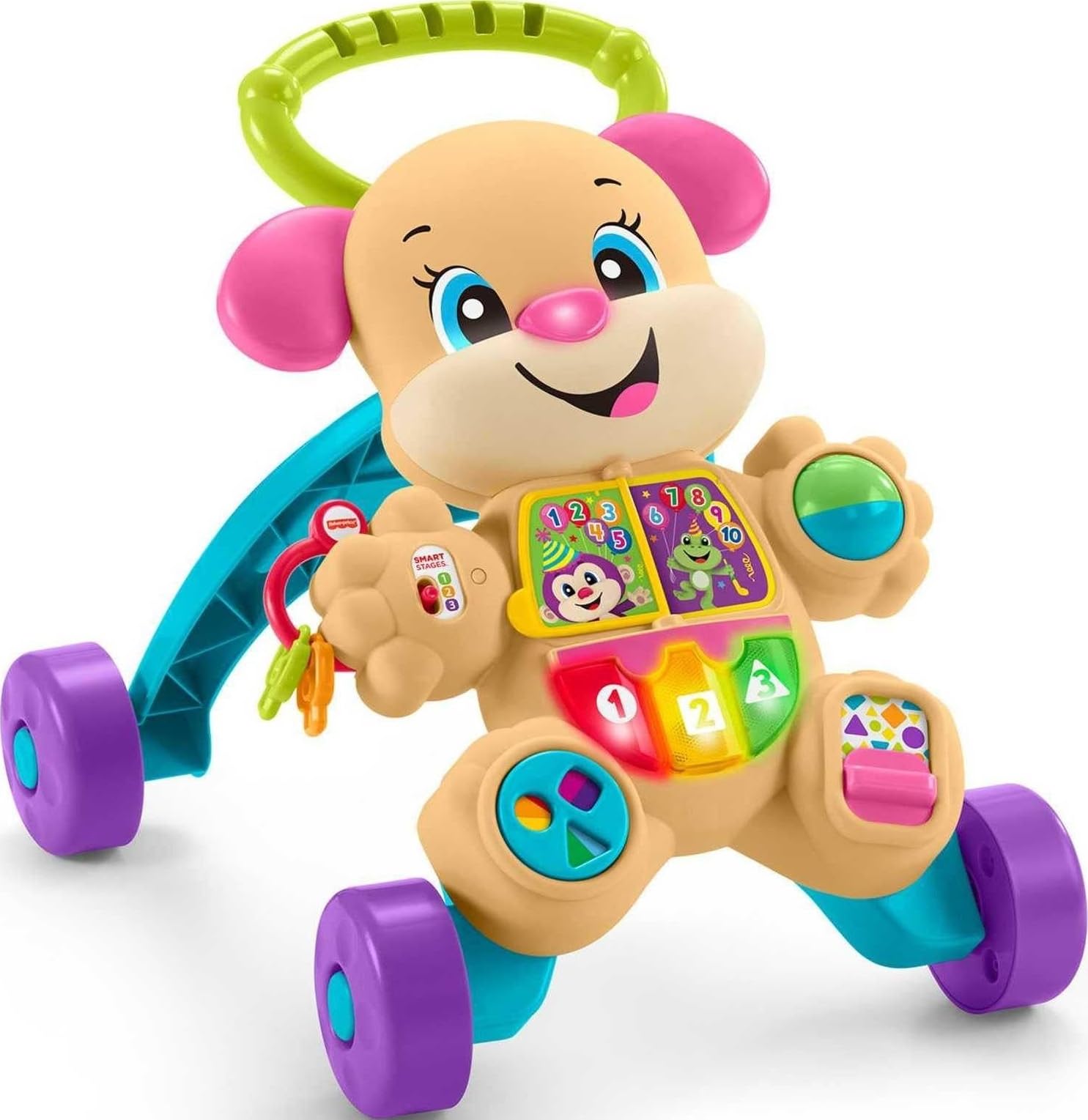
This push walker suits families who want a toy that grows from seated play into standing practice once a baby shows readiness to cruise.
Pros
- Converts from a sit-and-play toy to a stand-behind push walker
- Sturdy four-wheel base offers steady support for early steps
- Three learning stages adjust content as a baby grows
Cons
- Relies on batteries for sound and light features
- Some buyers report electronics wearing out after months of use
- Songs and phrases are English-only, with limited Spanish word content
The seated mode gives younger babies a reason to reach, press, and explore before they’re ready to stand. Once a baby pulls up, the same toy becomes a push walker with a wide, stable base. Parents describe it as sturdy and easy to assemble. This is a support tool for practicing steps already in progress, not something that teaches walking.
Bright Starts Around We Go 2-in-1 Activity Center

This stationary activity center works well for babies who aren’t yet cruising but need a safe, contained spot to build arm and leg strength while sitting or standing.
Pros
- Stationary base means no rolling, which lowers fall risk
- Converts into a toddler activity table later
- 360-degree seat rotation gives access to many toys without moving the whole unit
Cons
- Larger footprint than a simple push walker
- Some small rubber feet reportedly come loose over time
- Requires batteries for sound features
Because the base doesn’t move, this activity center keeps babies in one place while they play, which many parents find reassuring compared to mobile walkers. It works well before a baby is upright and mobile. Once the seat detaches, the table extends its usefulness into the toddler years for stationary play and art.
Ingenuity Smooth Strides Activity Walker
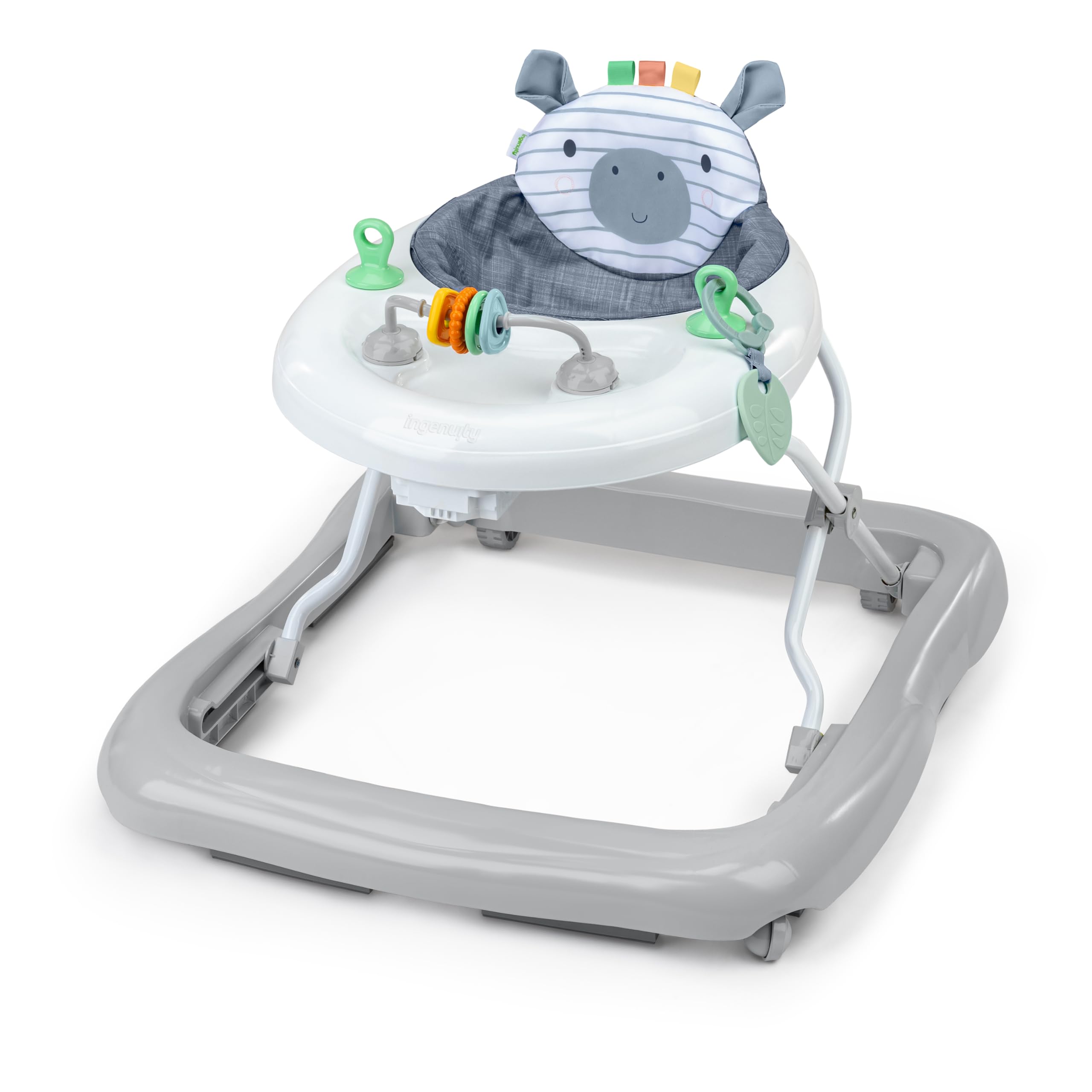
This seated walker fits families who want an adjustable option that keeps pace with a baby’s growth over several months.
Pros
- Three-position height adjustment extends usable time
- Removable, machine-washable seat pad simplifies cleanup
- Folds flat for storage or travel
Cons
- Some units arrive missing a link loop for attaching toys
- Only one bead-chaser toy included out of the box
- Seated walkers of this style raise safety questions some pediatric groups have flagged, so supervision is essential
The adjustable height bar means this walker doesn’t get outgrown after a few weeks. Parents like the washable seat pad, since baby gear gets messy fast. As with any seated walker, close supervision on stairs and uneven flooring matters, since these walkers can move quickly across a room.
Shaping Your Baby’s Foundation
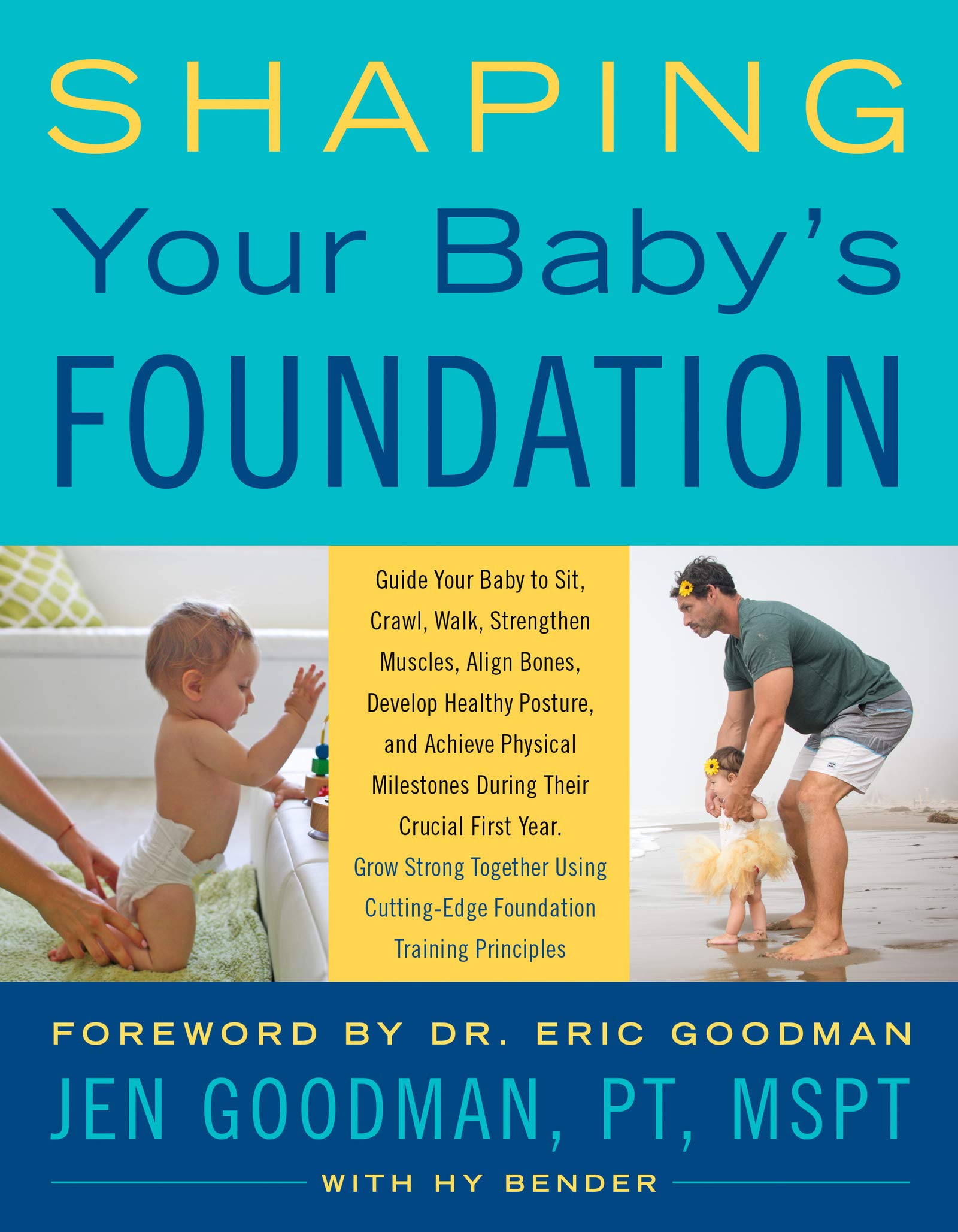
This book suits parents who want a detailed, physical-therapy-informed guide to how babies build strength, alignment, and posture on the way to walking.
Pros
- Written from a physical therapy background with clear illustrations
- Covers sitting, crawling, and walking as a connected sequence
- Well-regarded among parents and pediatric professionals
Cons
- Long length (464 pages) may feel dense for quick reference
- Focuses on foundational theory more than quick troubleshooting tips
- Not a substitute for a pediatrician’s evaluation of a specific baby
Reviewers describe the book as thorough and practical, with images that make body mechanics easier to understand. It treats walking as the end result of many earlier skills working together, which fits the way pediatric therapists actually assess movement. Parents looking for a deeper reference beyond typical milestone charts will get the most from it.
On the Way to Walking

This book fits parents drawn to a natural movement philosophy that favors observation and patience over structured exercises.
Pros
- Grounded in decades of developmental movement experience
- Emphasizes trusting a baby’s own pace
- Praised by parents and professionals working with families
Cons
- Fewer visual aids compared to more clinical guides
- Philosophy-driven approach may not suit parents wanting step-by-step instructions
- Limited availability of reviews makes it a lesser-known pick
Readers describe it as thoughtful and reassuring, with a focus on letting babies lead their own movement development. It works well alongside supervised floor time rather than structured walker use. Parents who prefer less gear and more hands-off observation may connect with this approach.
Let’s Move! (Healthy Milestones)

This board book is a good pick for reading time with babies who are starting to notice their own movement.
Pros
- Interactive flaps and sliders engage little hands
- Sturdy board book pages hold up to repeated use
- Backed by a respected pediatric publisher
Cons
- Short length (18 pages) means limited depth
- Aimed at babies and toddlers, not a parent reference guide
- Interactive parts may need adult supervision to avoid damage
Parents call it colorful and durable, with interactive elements that turn story time into something closer to play. It introduces movement concepts in a simple way babies can relate to. It works better as a bonding and reading tool than as a developmental guide for caregivers.
Tummy Time to Walking

This book helps parents who want to start from the earliest stage, tummy time, and follow the full sequence toward walking.
Pros
- Covers the developmental sequence from birth onward
- Written with input from pediatric physical therapy experience
- Accessible length (158 pages) for busy parents
Cons
- Focuses on typical development, with less detail for complex medical needs
- Newer release means fewer long-term reader reviews
- Best used alongside, not instead of, pediatric guidance for concerns
One reviewer who parented a premature baby found the book reassuring and practical for tracking progress over time. Others describe it as clear and free of overwhelming jargon. It works well for parents who want a full-picture view of motor development starting from a newborn’s earliest movements.
Watolt Baby Walking Harness
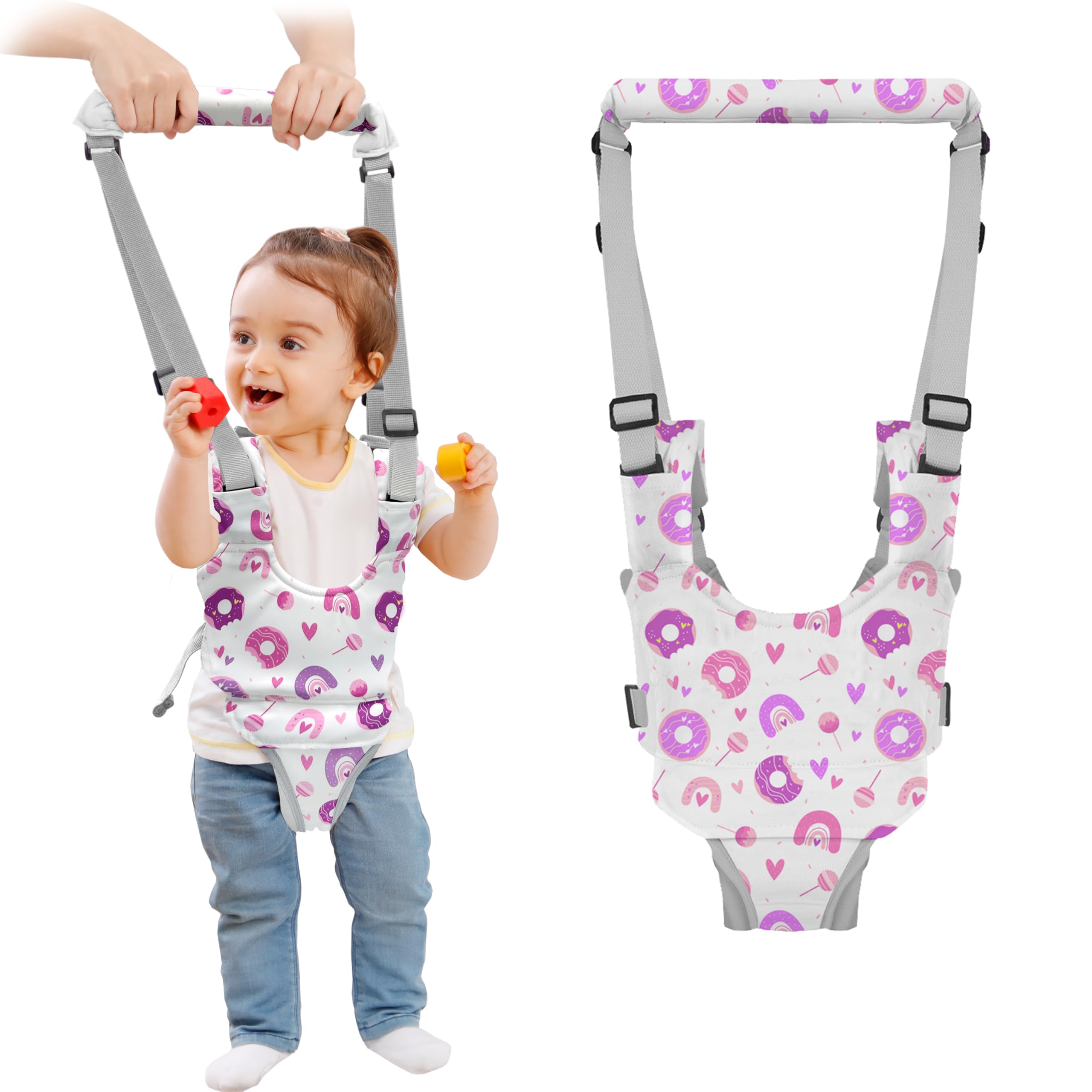
This handheld harness helps caregivers assist babies who are already attempting steps, without the strain of constant bending.
Pros
- Multiple adjustment modes for different stages of walking readiness
- Reduces back strain for the adult holding the baby
- Breathable cotton construction for comfort
Cons
- Requires an adult’s active participation, unlike stationary gear
- Fit adjustments take some trial and error
- Not intended for babies who show no interest in standing yet
Parents describe real relief for their backs, since the harness removes the need to hunch over while holding a baby’s hands. It works best for babies already pulling up and attempting steps, giving them extra balance support during practice. It’s a caregiver-assist tool, not something that pushes a baby toward walking before they’re ready.
IULONEE Toddler Walking Harness

This mesh harness is a solid option for warmer climates or babies who overheat easily during active play.
Pros
- Breathable 3D mesh construction stays cooler than heavier fabrics
- Detachable crotch strap adapts as a baby’s balance improves
- Adjustable straps fit a range of chest sizes
Cons
- Requires the adult to support some of the baby’s weight at first
- A few reviewers found sizing ran differently than expected
- Not all babies take to the harness immediately
Parents mention that the mesh fabric holds up well without trapping heat, which matters during long walking practice sessions. The detachable crotch band lets it adjust as a baby moves from needing full support to walking with light stabilization. Like other harnesses, it’s meant to steady a baby who is already working on walking.
Purposeful Play: From Birth to Walking
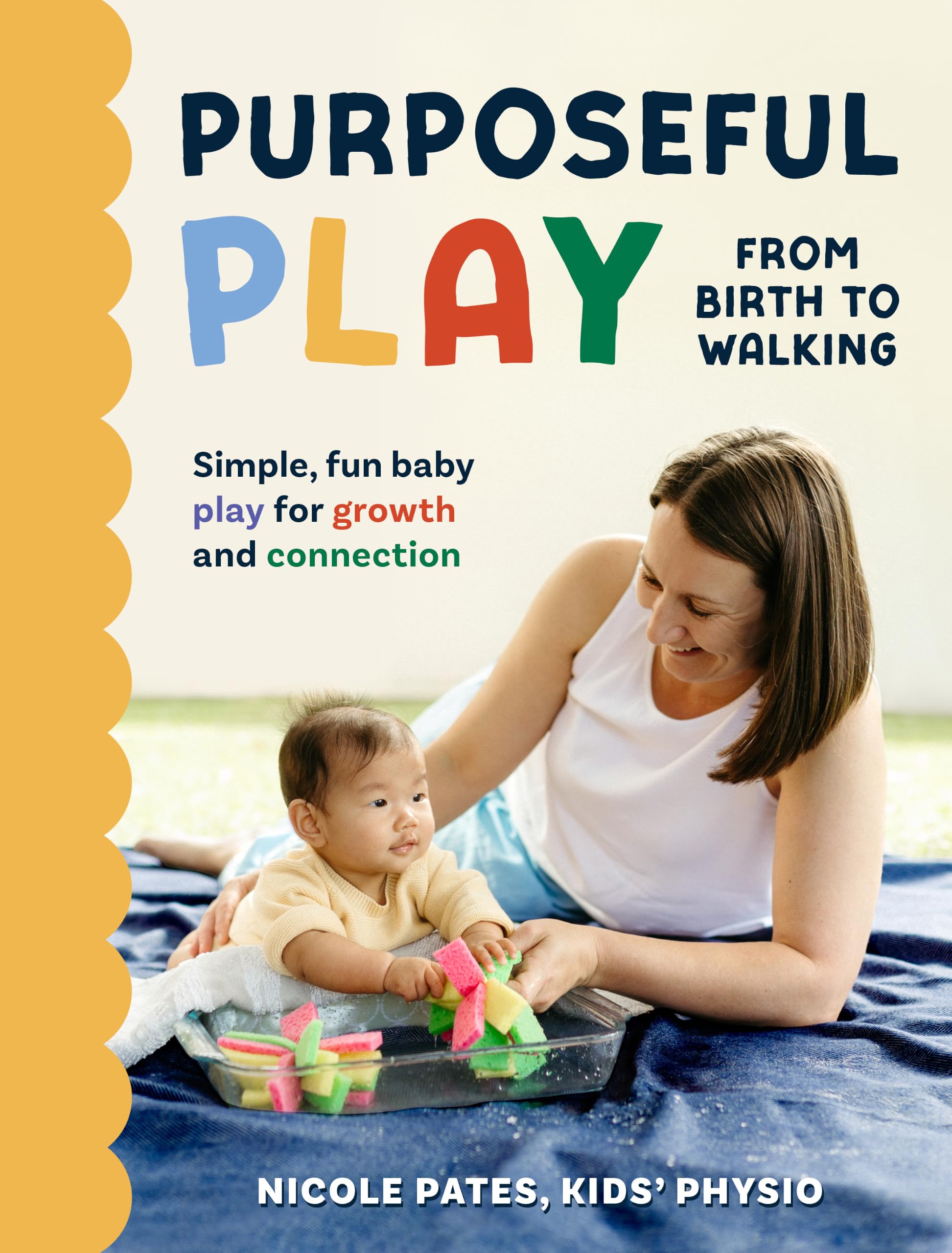
This ebook offers parents simple play ideas that support motor development from birth through the first steps.
Pros
- Organized around a baby’s age and stage
- Digital format makes it easy to reference on a phone during playtime
- Focuses on connection and play rather than structured exercises
Cons
- As a newer release, it has limited reader feedback so far
- Ebook-only format won’t suit parents who prefer print
- Length (537 pages) suggests a broad scope that may require selective reading
The organization by age and stage helps parents find relevant activities without reading the entire book at once. Its focus on play over formal exercise fits current pediatric guidance, which emphasizes free movement over drills. It works as a companion resource for parents who want simple, low-pressure ways to support their baby’s development at home.
Buying Guide
Match the Product to the Stage, Not the Calendar
Babies move through recognizable phases: rolling, sitting, crawling, pulling up, cruising, and finally walking. Choose gear based on which phase a baby is actually in, not their age in months. A push walker helps a baby who already pulls up to stand. It offers little benefit to a baby who isn’t yet sitting well.
Stability and Safety Features
Look closely at the base of any walker or activity center.
| Feature | Why It Matters |
|---|---|
| Wide wheel base or stationary design | Reduces tipping risk on uneven floors |
| Locking wheels or no wheels | Prevents unsupervised rolling toward stairs |
| Rounded edges and secure toy attachments | Lowers pinch and choking hazards |
| Weight limit and age range | Confirms the product matches a baby’s size |
Seated walkers with wheels have been linked to injuries in pediatric safety research, largely from falls down stairs or into hazards. Supervision at all times is non-negotiable with any mobile walker.
Adjustability and Longevity
Products with adjustable height bars or convertible designs last through more growth stages. Look for seat height options, detachable components, and modes that shift as a baby’s skills change. This reduces the number of separate products a family needs to buy.
Cleanup and Portability
Removable, machine-washable seat pads and wipeable plastic surfaces make daily use easier. Foldable frames help with storage in smaller homes and make travel simpler for gear that goes to grandparents’ houses or daycare.
Fit for Harnesses
A walking harness should fit snugly across the chest and shoulders without restricting breathing or arm movement. Adjustable straps accommodate growth and different clothing layers across seasons.
When to Talk to a Pediatrician
Most babies walk somewhere in a wide normal range. Bring it up with a pediatrician if a baby isn’t bearing weight on their legs by 12 months, shows no interest in pulling up to stand by 12 to 15 months, or isn’t walking independently by 18 months. Uneven movement between the left and right side of the body is also worth mentioning at a checkup. These conversations help rule out concerns early and give parents clear next steps.
