
Babies move through stages fast, and their toys need to keep up. A newborn who can barely track a swinging toy will be reaching, kicking, and rolling within weeks, and by six months many babies are sitting up and ready for a different kind of play entirely. Choosing gear that matches where a baby actually is, rather than where they’ll be in a few months, makes a real difference in how much use a family gets out of it. Baby Activity Centers and Toys
Activity centers, play gyms, and floor seats each serve a different purpose. Play gyms and mats support early tummy time and reaching skills for babies who can’t sit up yet. Stationary activity centers and jumpers give babies who can hold their heads up a place to stand, bounce, and swivel. Walkers and toddler toys come in once a baby is cruising or taking first steps. Matching the product to the baby’s current motor skills, not just their age in months, is the single most useful thing a parent can do before buying.
Weight limits, battery needs, and cleanup also matter more than they might seem to at first glance. A few key things to check before buying:
- Weight and height limits: Most stationary centers cap out around 25 to 35 pounds.
- Batteries: Musical toys often need AA or AAA batteries not included in the box.
- Washability: Fabric seats and mats vary widely in whether they’re machine washable or wipe-only.
- Floor space: Some centers need several feet of clearance; mats and cubes are far more compact.
Best for growing with a baby through toddlerhood: Skip Hop Baby Activity Center
Best for ocean-themed jumping play: Baby Einstein Neptune’s Ocean Jumper
Best for tummy time with musical rewards: Baby Einstein 4-in-1 Kickin’ Tunes Gym
Best for newborns just starting floor play: Fisher-Price Glow and Grow Kick & Play Gym
Best for minimalist, sensory-focused design: Lovevery The Play Gym
Best for low-cost, no-battery tummy time: Infinno Inflatable Water Mat
Best for babies learning to walk: VTech Sit-to-Stand Learning Walker
Best for portable, on-the-go play: VTech Busy Learners Activity Cube
Best for toddler fine-motor practice: Kidoozie Whirl ‘N Go Ball Tower
Best for babies learning to sit up: Fisher-Price Sit-Me-Up Floor Seat
Baby Activity Centers and Toys
Skip Hop Baby Activity Center
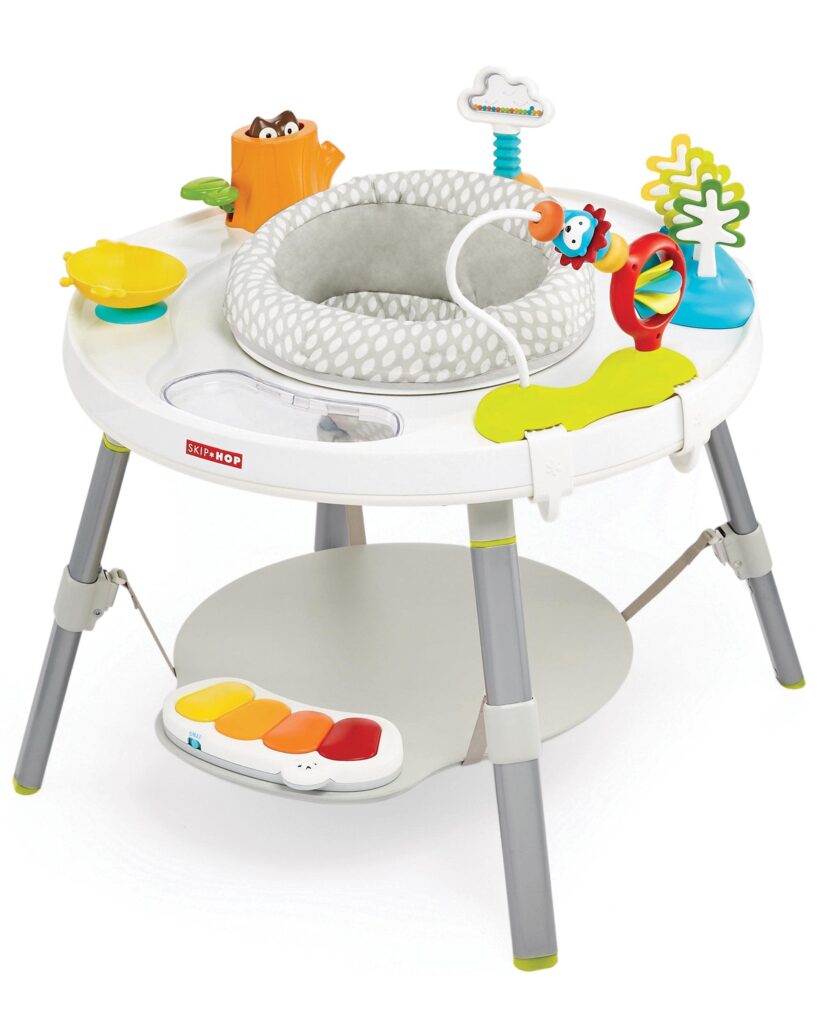
Families who want one product to last from early sitting through toddler play will get strong mileage out of this activity center.
Pros
- Converts through three stages, ending as a toddler activity table
- 360-degree rotating seat with 25+ activities
- Lightweight enough to move between rooms
Cons
- Requires 3 AAA batteries, not included
- Bulkier footprint than a simple mat
- Best suited to babies who can already hold their head up
This center stands out for its long lifespan. Instead of retiring the product once a baby outgrows the seat, parents remove it and use the base as a toddler table with a chalkboard surface. The Discovery Window lets babies watch their own feet while playing the piano, reinforcing cause and effect in a way flat mats can’t replicate. At 15 pounds, it’s easy enough to relocate, though it does need a few feet of clear floor space to use comfortably.
Baby Einstein Neptune’s Ocean Jumper

Parents of active babies who love to bounce will find this jumper gives them a safe outlet without needing a doorway.
Pros
- Adjustable to 4 height positions as baby grows
- 360-degree swiveling seat
- No doorframe mounting required
Cons
- Some seats sit slightly uneven per buyer feedback
- Bulky frame needs dedicated floor space
- Not for babies under 6 months
The jumping motion helps babies build leg strength, and the seat swivels fully so they can reach the crab, starfish mirror, and octopus paddle toy without help. The removable sea turtle panel teaches numbers and colors in three languages, a nice touch for bilingual households. It’s worth noting a few reviewers mention the seat isn’t perfectly level, so it’s worth checking assembly carefully.
Baby Einstein 4-in-1 Kickin’ Tunes Gym

Parents wanting one gym that spans newborn tummy time through toddler seated play will appreciate how many configurations this one offers.
Pros
- Works in 4 modes: lay and play, tummy time, seated, and on-the-go
- Piano detaches for portable use
- Teaches colors, shapes, and numbers in 4 languages
Cons
- Requires 3 AA batteries, not included
- Some units have reported piano responsiveness issues
- Mat padding is thinner than dedicated tummy-time mats
The kick piano is the standout feature here. Babies trigger lights and melodies by kicking, tapping, or pressing, which rewards early motor movement with immediate feedback. The included prop pillow supports tummy time for younger infants who tire quickly. A handful of reviews mention the piano occasionally missing kicks, so it’s not flawless, but most parents report years of use from ages 0 to 3.
Fisher-Price Glow and Grow Kick & Play Gym
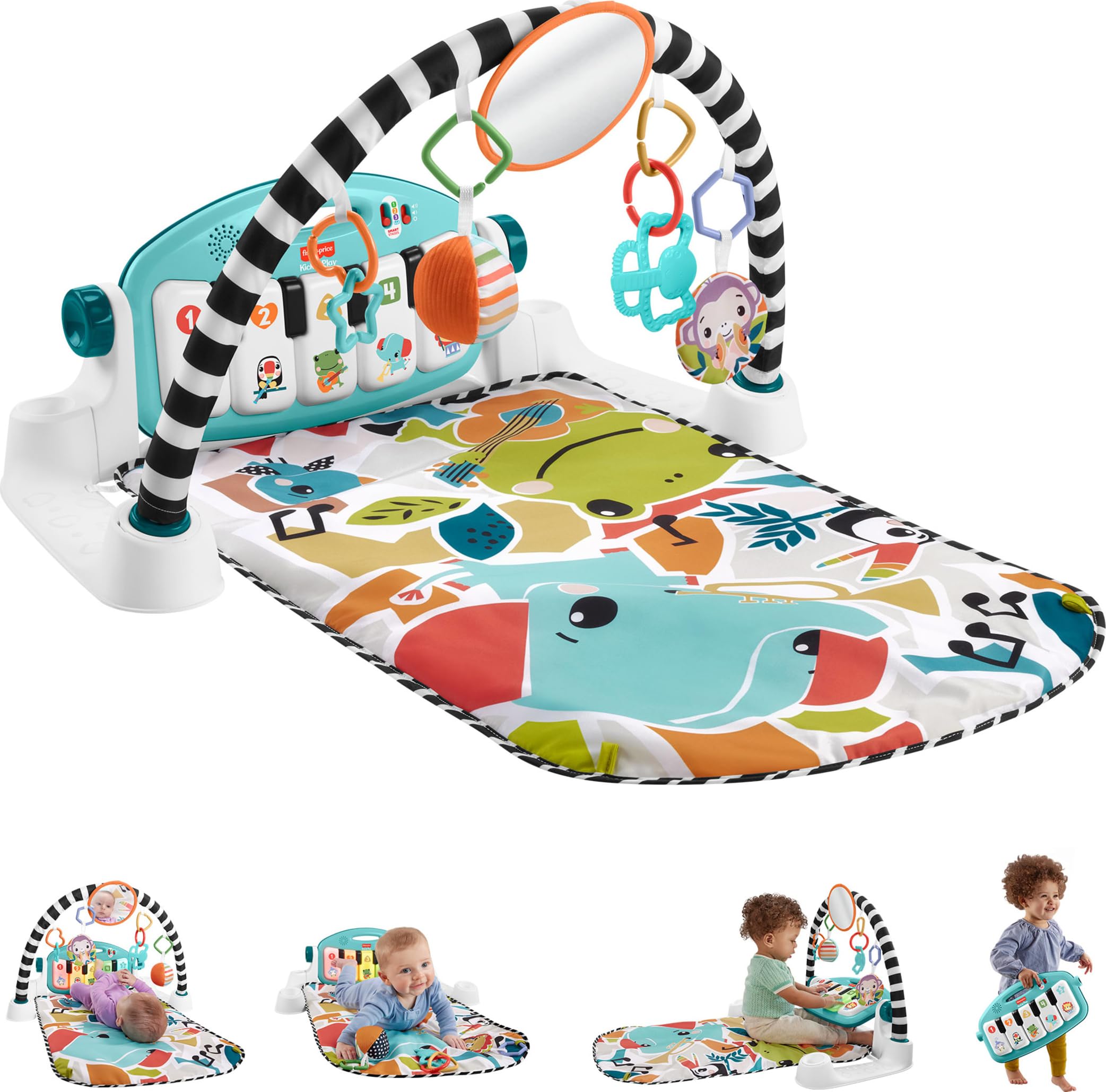
Newborns benefit most from this gym’s high-contrast arch and gentle, stage-based music settings.
Pros
- High-contrast toy arch supports early visual development
- 3 Smart Stages learning levels grow with baby
- Batteries included in the box
Cons
- Thinner mat than some competitors
- A few buyers reported color mismatches or broken pieces on arrival
- Piano detaches but adds bulk when reattached
This gym earns its name by adjusting to four play positions: lay and play, tummy time, sitting up, and detached piano play. The high-contrast arch is especially useful for newborns, whose vision favors bold patterns over soft colors. Ten linkable toys give plenty of variety without overwhelming a small baby, and the machine-washable mat makes cleanup simple.
Lovevery The Play Gym
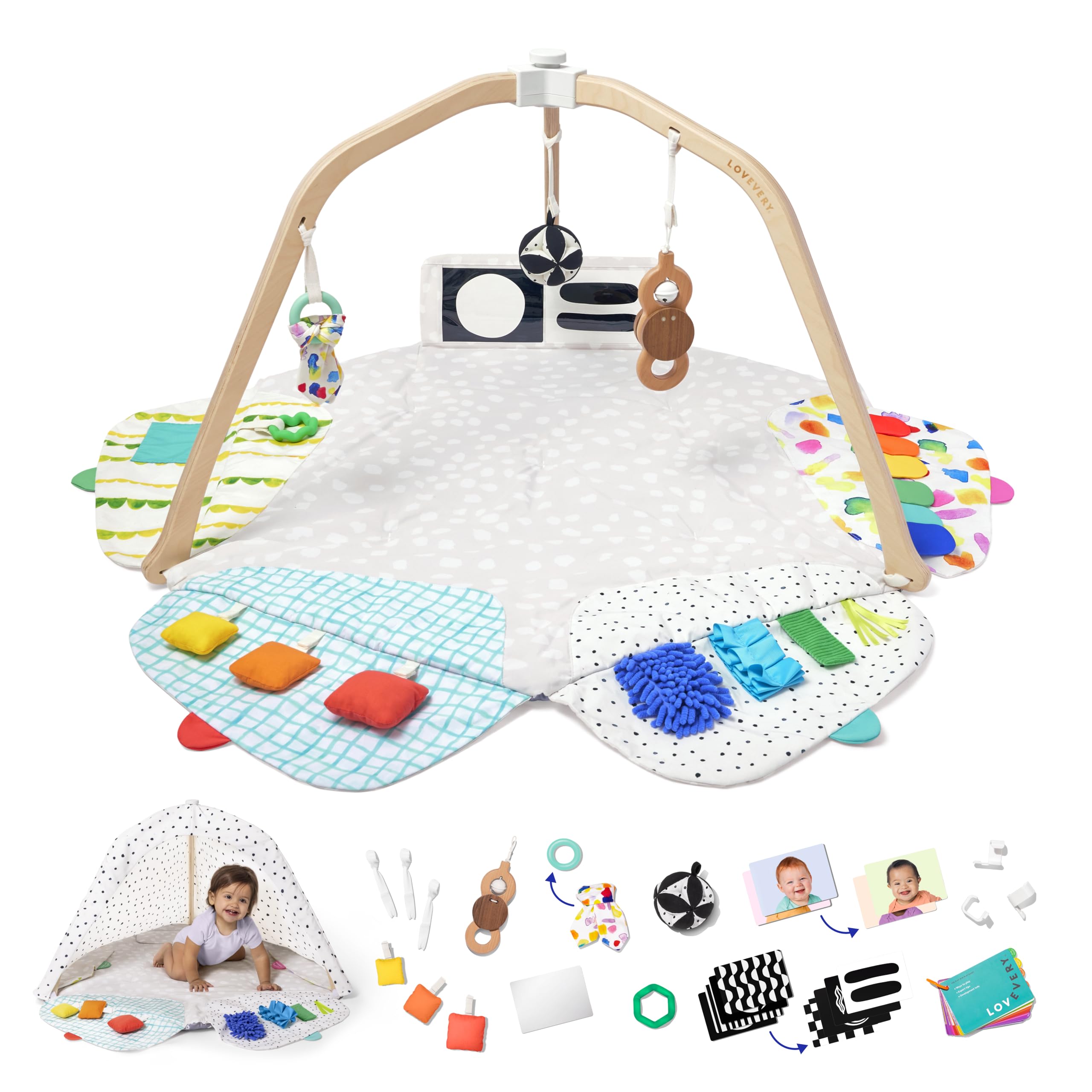
Parents who prefer a calmer, less flashy play space will like how this gym avoids screens, batteries, and blinking lights entirely.
Pros
- No batteries required, ever
- 5 development zones prevent overstimulation
- Converts into a play fort for older babies
Cons
- Higher price point than most gyms
- Wooden legs need occasional cleaning
- Setup involves more pieces than simpler mats
Instead of packing in lights and sound effects, this gym uses zones that reveal or conceal fabric, textures, and cards to keep a baby’s attention without overload. The included Play Guide gives parents specific activities tied to a baby’s age, which is useful for those who want more structure. Sustainably sourced wooden legs give it a sturdier, more furniture-like feel than plastic-framed alternatives.
Infinno Inflatable Water Mat

Budget-minded parents looking for a simple, battery-free tummy-time option will find this water mat does the job for a fraction of the cost of a full play gym.
Pros
- No batteries or assembly needed
- Folds flat for storage or travel
- Encourages tummy time through visual movement
Cons
- Can develop mold if not cleaned regularly
- Requires supervision at all times
- Less durable than hard plastic activity toys
Filled with water and floating sea creatures, this mat rewards a baby’s pushing and patting with visible motion, which builds neck and shoulder strength during tummy time. It’s inexpensive and packs flat, making it a good pick for travel or small living spaces. A little added vinegar in the water helps slow mold growth, something several parents recommend based on experience.
VTech Sit-to-Stand Learning Walker
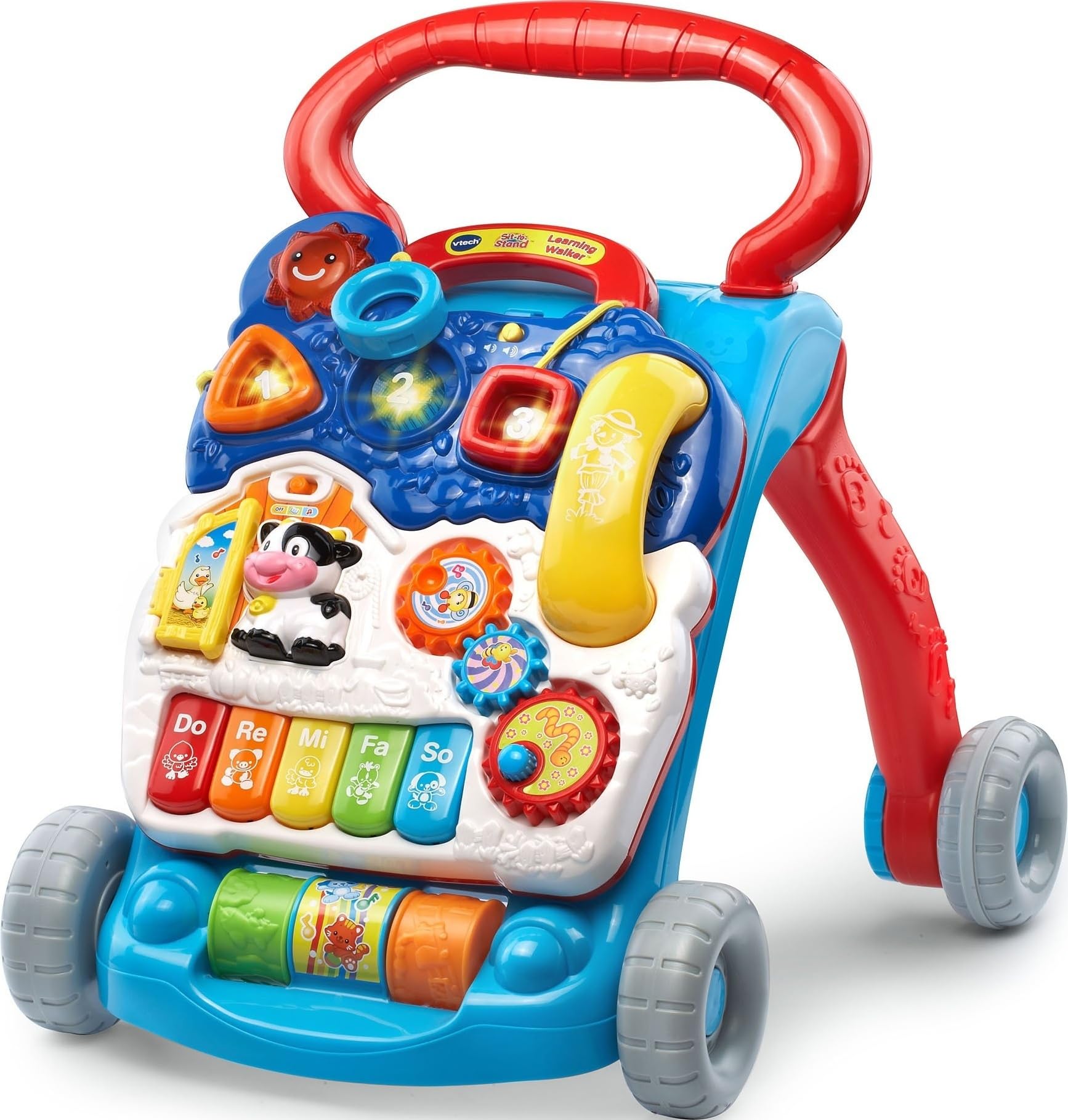
Babies who are cruising along furniture and ready to take steps will get the most from this walker’s removable activity panel and rolling base.
Pros
- Removable panel works as a standalone floor toy
- Two-speed control adjusts to walking ability
- Sturdy enough to support a baby’s full weight while walking
Cons
- Larger footprint needs open floor space
- Wheels can hit a baby’s feet if spacing is off for some builds
- Music volume may be loud for small rooms
This walker doubles as two toys in one. Before a baby walks, the front panel detaches for floor play with piano keys, spinning gears, and shape sorters. Once a baby is ready to cruise, it reattaches to the wheeled base, and the two-speed switch lets parents control how fast it rolls. A few parents note the back wheels sit close together, which can catch a baby’s feet during early walking attempts.
VTech Busy Learners Activity Cube
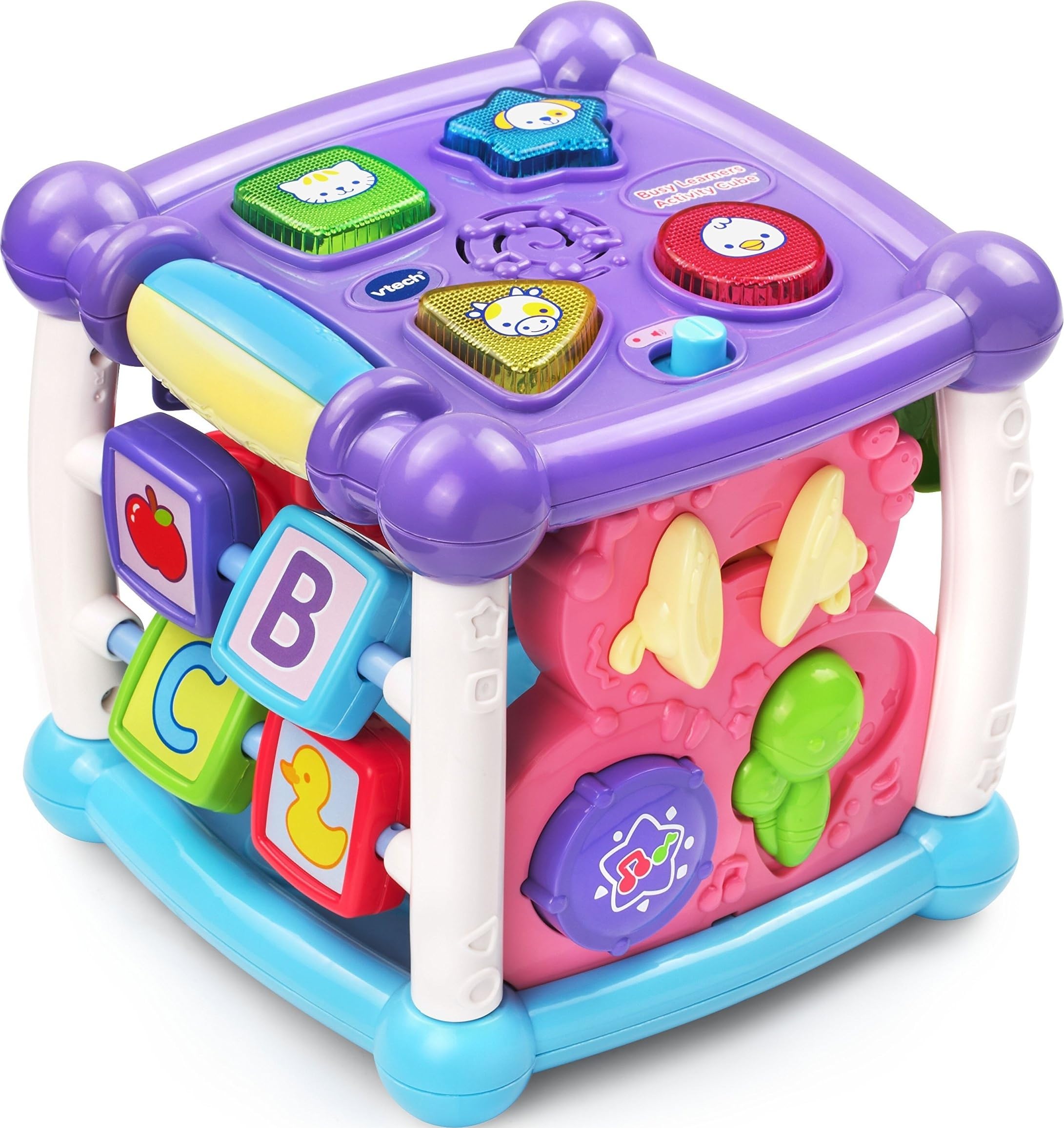
Parents who want a compact, portable toy for car rides or waiting rooms will get plenty of use from this five-sided activity cube.
Pros
- Compact size, easy to carry or pack for travel
- 14 interactive features across 5 sides
- Volume control and auto shut-off for quieter play
Cons
- Demo batteries included but wear out quickly
- Plastic construction feels less premium than fabric toys
- Not adjustable for different developmental stages
Each side of the cube introduces something different, from animal sounds to spinning gear blocks, giving toddlers a reason to keep rotating it. Its small footprint makes it one of the few items on this list that works well outside the home, whether that’s a stroller, car seat, or grandparent’s living room. Sound and motion sensors add engagement without needing a large play area.
Kidoozie Whirl ‘N Go Ball Tower

Toddlers working on fine motor skills and cause-and-effect thinking will enjoy dropping balls through this six-level tower.
Pros
- No batteries required
- Rattling balls add sensory feedback
- Simple concept toddlers understand quickly
Cons
- Levels can separate during rough play
- Balls sometimes fly off the tower
- Only ships with four balls, easy to misplace
Dropping a ball into the top and watching it spiral down teaches toddlers that their actions cause a direct result, a concept known as cause and effect. The rattling sound as balls descend adds an audio cue that keeps attention longer than a silent toy would. The tower’s main weak point is stability. Several parents mention the levels aren’t fastened together, so enthusiastic play can knock it apart.
Fisher-Price Sit-Me-Up Floor Seat
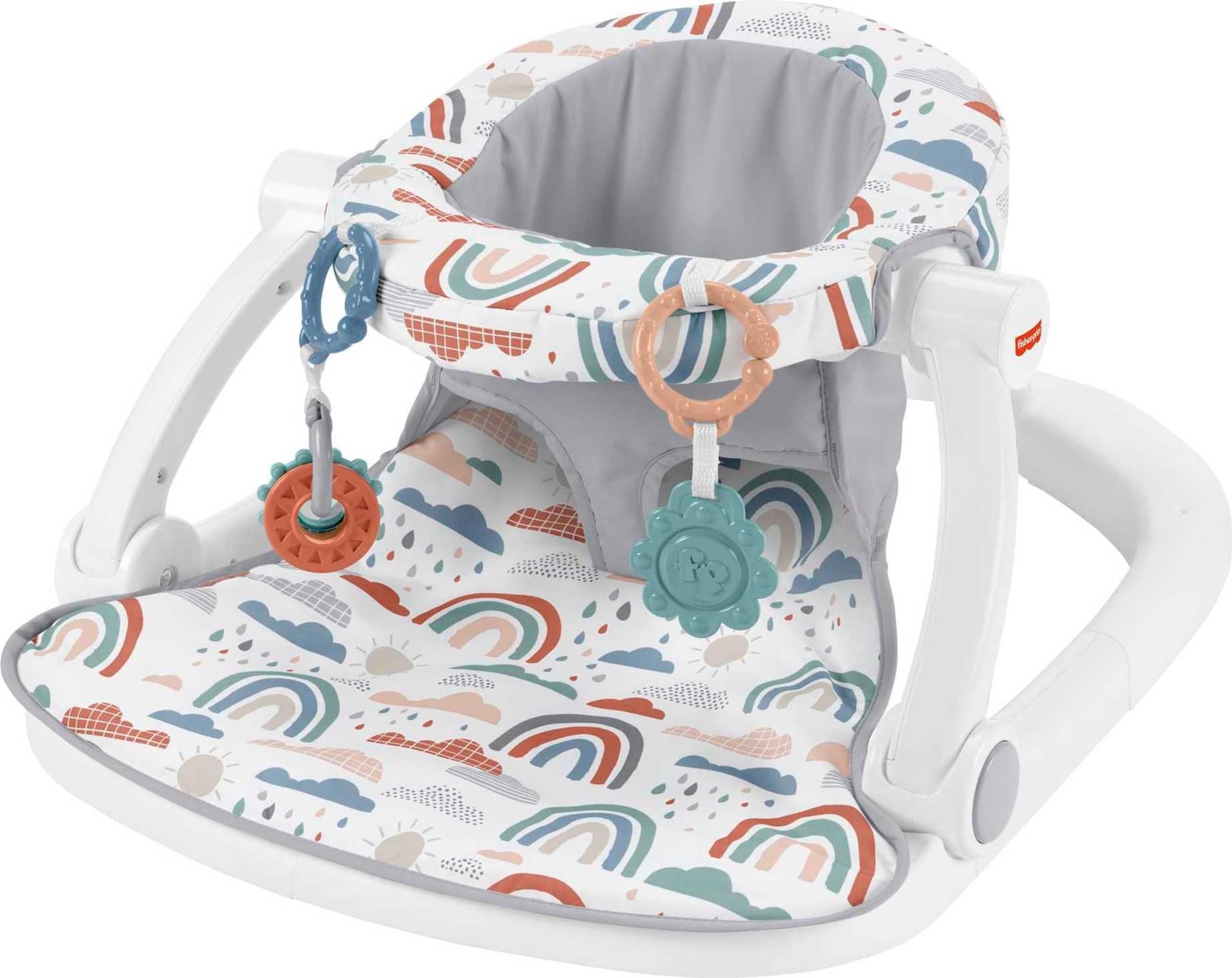
Babies who can hold their head up but aren’t yet sitting independently will benefit from the support this floor seat provides.
Pros
- Wide, stable base supports upright sitting
- Folds flat for storage or travel
- Machine-washable seat pad
Cons
- No tray for holding toys or snacks
- Removing baby from the seat can be awkward
- Limited to babies under 25 pounds
This seat gives babies a supported way to sit upright and see the room before they can do it unassisted. Two linkable toys, a clacker and a flower teether, keep hands busy without needing batteries or lights. The seat folds flat, which makes it easy to pack for visits to family or bring along on trips, though a few parents mention it takes some effort to lift a baby back out.
Buying Guide
Match the Product to the Baby’s Stage
Age on the box is a rough guide. What matters more is what the baby can already do.
| Baby’s Skill | Best Product Type |
|---|---|
| Can’t hold head up yet | Flat play gym or mat |
| Holds head up, not sitting | Floor seat or gym with tummy-time mode |
| Sits independently | Stationary activity center or jumper |
| Pulls to stand, cruises | Walker or standing activity center |
| Walking, toddler | Activity cubes, ball towers, fine-motor toys |
Check Weight and Height Limits
Most stationary centers and jumpers cap out between 25 and 35 pounds. Going past the limit affects both safety and how well the seat fits. Always check the minimum weight too, since some centers require a baby to hold their head up unassisted before use.
Think About Floor Space and Storage
Stationary centers, jumpers, and walkers need a few feet of clearance and don’t fold small. Mats, cubes, and floor seats pack away flat or fit into a bag, which matters for smaller homes or families who travel often.
Baby Activity Centers and Toys
Factor In Batteries and Noise
Musical toys add engagement but usually need AA or AAA batteries not included in the box. Look for products with volume control or an auto shut-off feature if constant music becomes a concern in a shared living space.
Prioritize Easy Cleanup
Babies drool, spit up, and chew on everything within reach. Machine-washable seat pads and mats save time over wipe-only fabric. Removable, dishwasher-safe parts like snack bowls or teethers are worth checking for before buying.
Watch for Removable Small Parts
Many toys include detachable rings, teethers, or balls designed for a baby’s stage. As babies grow into toddlers who might chew or pull harder, check that small parts stay securely attached and supervise play accordingly.