

Finding the best baby carrier for preemies starts with fit, airway support, weight limits, and medical approval.
A tiny baby can make daily tasks feel hard. You may need both hands while your baby needs close contact. A soft carrier can help during short walks, feeds, and quiet bonding time. Yet preemies need extra care because their neck control, breathing, and body size may differ from full-term babies. I reviewed the listed features, weight ranges, carry styles, and practical limits of these carriers. Always ask your baby’s doctor before using any carrier, especially if your baby spent time in the NICU or has breathing concerns.
See the differences between my top picks at a glance.
| Carrier | Listed weight range | Carry style | Best use | Preemie note | Buy |
|---|---|---|---|---|---|
| Baby Carrier Newborn to Toddler | 7–40 lb | Structured cotton carrier | Simple daily carrying | Check fit below 7 lb | View on Amazon |
| MOMTORY 6-in-1 | 7–50 lb | Carrier with hip seat | Longer outings | May feel large on a very small baby | View on Amazon |
| Biabyio Sling | 10–30 lb | Half-wrapped sling | Older, heavier infants | Not a first choice below 10 lb | View on Amazon |
| KeaBabies Pink Daisies Wrap | Newborn to toddler claim | Stretch wrap | Close bonding | Confirm newborn fit first | View on Amazon |
| Infantino Flip Luxe | 7–35 lb | Four-position carrier | Flexible everyday use | Use only when fit is secure | View on Amazon |
| Infantino Swift Classic | 8–25 lb | Two-position carrier | Quick, low-cost use | Wait until baby reaches 8 lb | View on Amazon |
| Momcozy Hip Seat | 7–44 lb | Detachable carrier and seat | Walks and growing babies | Check seat depth and posture | View on Amazon |
| KeaBabies Black Wrap | Newborn to toddler claim | Stretch wrap | Hands-free bonding | Needs careful airway setup | View on Amazon |
| Koala Babycare Wrap | Up to 22 lb | T-shirt-style wrap | Simple wrap learning | Verify baby’s size and head support | View on Amazon |
Baby Carrier Newborn to Toddler Cotton Carrier

This cotton baby carrier lists a 7- to 40-pound range and offers three carry positions. Its double-sided design gives parents a simple way to change the look without changing carriers. The cotton fabric may feel soft against a baby’s skin. For a small infant, I would focus less on the style and more on whether the panel holds the baby high and keeps the face clear.
The light design may suit short home use and brief trips. The listed 7-pound minimum matters a lot for preemies. A baby below that weight may not fill the seat or support the neck well. I would ask a pediatrician to check the fit before the first use, then keep the baby facing inward until the baby shows strong head control.
Pros:
- Soft cotton construction
- Three carry positions
- Listed range grows with the child
- Double-sided design adds daily variety
- Lightweight format may feel easy for short use
Cons:
- Listed minimum starts at 7 pounds
- May need careful adjustment on a tiny baby
- Product details do not replace a preemie fit check
What Amazon Buyers Are Saying
Buyer feedback for this type of carrier often centers on the soft feel, simple carry choices, and useful value. Some shoppers may find that a cotton carrier feels comfortable at first but needs careful tightening as the baby moves. Fit comments can vary with the wearer’s body and the baby’s size, so I would treat the weight range as a starting point, not a guarantee of preemie fit.
My Recommendation
This is a reasonable low-fuss option for a baby who has reached the listed minimum and has medical approval. It is not my first pick for a very small NICU graduate. I like the soft fabric and simple design, but I would test the seat and neck support with another adult nearby.
MOMTORY 6-in-1 Carrier With Hip Seat

The MOMTORY carrier lists six carry positions and a 7- to 50-pound range. Its hip seat can spread some of the child’s weight as the child grows. The black color suits parents who want a neutral look. Its plus-size-friendly design may also help caregivers who need more adjustment room.
This carrier is better suited to a family that wants one system for many stages. Still, six modes can mean more straps and more room for setup errors. A preemie needs a snug, upright, inward-facing position with the chin off the chest. I would not use the hip seat alone with a young preemie unless the doctor and the manual clearly support that use.
Pros:
- Six listed carry positions
- Wide weight range for long-term use
- Hip seat may help with larger babies
- Plus-size-friendly design
- Useful for changing carry needs
Cons:
- May feel bulky on a tiny infant
- More parts can make setup harder
- Hip-seat use needs extra care with young babies
What Amazon Buyers Are Saying
Common buyer themes for this style include appreciation for the many positions, waist support, and room to grow. Some users may like the hip seat for toddlers but find the full setup less quick than a simple wrap. Because reviews can reflect many body types and baby ages, I would pay close attention to comments about pressure points, strap adjustment, and the fit of the infant insert or newborn setting.
My Recommendation
I recommend this carrier for parents who want a long-use design and do not mind learning several settings. It can be a strong value after the baby grows, but it is not automatically the best baby carrier for preemies. Use the smallest setting only after a health professional confirms a safe fit.
Biabyio Adjustable Baby Sling Carrier

The Biabyio sling lists a 10- to 30-pound range and uses an adjustable strap with a half-wrapped design. Its compact shape may appeal to parents who want less fabric than a full wrap. The non-slip description suggests a focus on keeping the sling in place. I would still check the strap tension before every use.
The 10-pound minimum is the key issue for premature babies. Many preemies will not reach that point right away, so this is not a newborn solution for most families. Once the child reaches the listed range and has better body control, the sling may work for short carries. Keep the baby upright, visible, and high enough to kiss.
Pros:
- Compact sling format
- Adjustable strap
- Listed non-slip design
- May be quick for short carries
- Suitable weight range for a later infant stage
Cons:
- 10-pound minimum limits preemie use
- One-sided designs may tire one shoulder
- Needs close attention to airway position
What Amazon Buyers Are Saying
Shoppers who choose sling carriers often value their small size and fast setup. The most common concern with a sling is learning how to position the baby without creating a deep, curled posture. I would read current buyer comments for strap comfort and fabric stretch, but I would not use a review as proof that a very small baby can safely fit.
My Recommendation
This carrier makes more sense as a later option than as the best baby carrier for preemies. I would consider it after the baby reaches 10 pounds, passes a fit check, and can stay upright with clear breathing. For early preemie care, choose a carrier with clearer newborn support or wait for medical guidance.
KeaBabies Pink Daisies Wrap Carrier
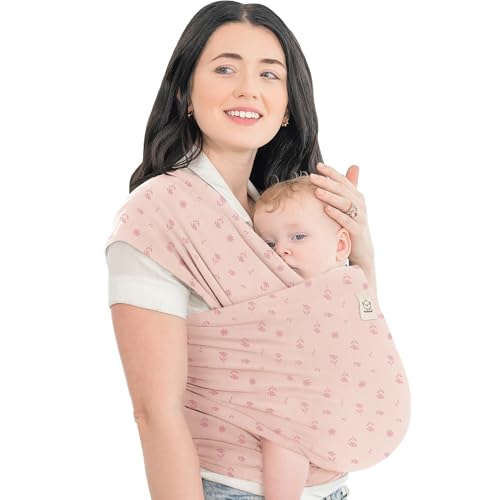
The KeaBabies Pink Daisies wrap uses a soft, adjustable design for newborn-to-toddler carrying. A wrap can spread fabric across the wearer’s back and shoulders. It can also bring a small baby close to the chest. That close contact may support calm bonding during brief, supervised use.
Wraps need practice. A loose panel can let a small baby slump, while a tight panel may feel uncomfortable. I would practice with a doll or full-term-sized stuffed toy first, then ask a second adult to check the baby’s airway. The baby should remain high, upright, visible, and close enough to kiss.
Pros:
- Soft wrap style for close contact
- Adjustable snug fit
- Lightweight design
- Breathable format for indoor bonding
- Can suit several baby stages with proper setup
Cons:
- Learning the wrap takes practice
- Stretch fabric may need frequent adjustment
- Newborn labeling does not guarantee preemie fit
What Amazon Buyers Are Saying
Wrap buyers commonly praise the soft feel and closeness. Many also say that tying the wrap becomes easier after practice. The usual complaint involves a learning curve, warm fabric, or uncertainty about tightness. Those points matter more with a preemie, so I would use a mirror and another adult during the first sessions.
My Recommendation
This is one of the more promising styles for a medically cleared small baby because a wrap can adapt around the infant. However, the parent must learn safe positioning. I would buy it for bonding and short indoor use, but only after professional instruction if the baby is very small or medically fragile.
Infantino Flip Luxe 4-in-1 Carrier

The Infantino Flip Luxe lists four carry positions and a 7- to 35-pound range. Its adjustable design aims to cover several stages, from early inward-facing carry to later positions. The Affogato color gives it a soft neutral look. A structured carrier can feel less intimidating than a long wrap for a first-time parent.
The listed 7-pound minimum rules out many tiny preemies at first. A structured panel must not cover the baby’s face or force the hips into a straight, narrow position. I would use inward-facing carry only for a young baby and confirm that the seat supports the thighs without pressing behind the knees.
Pros:
- Four listed carry positions
- 7- to 35-pound range
- Structured form may feel easy to learn
- Adjustable fit for parent and child
- Useful for everyday hands-free tasks
Cons:
- May not fit babies below 7 pounds
- Structured panels can feel large on preemies
- Several settings require careful reading of the manual
What Amazon Buyers Are Saying
Infantino carriers often attract buyers who want practical features at an accessible price. Feedback commonly focuses on easy daily use, adjustable straps, and value. Some parents may find structured carriers less comfortable for long walks or harder to fit on a small frame. I would compare the baby’s actual size with the carrier’s smallest safe setting before buying.
My Recommendation
This is a good general carrier for a baby near or above 7 pounds. It may work for a medically cleared preemie after a careful fit check, but I would not assume that from the word “newborn.” The price and four positions make it a sensible growth option.
Infantino Swift Classic Carrier With Pocket

The Infantino Swift Classic is a simple carrier with two carry positions and a listed 8- to 25-pound range. Its pocket offers a small place for an item such as a key or card. The included Wonder Cover bib may help protect the carrier during normal baby messes. A simple design can be useful for parents who dislike complex straps.
The 8-pound minimum makes this a poor match for many preemies during the early weeks. It may become useful once the baby gains weight and the doctor approves carrier use. I would keep the child facing inward and check the head, neck, legs, and breathing often. The smaller upper weight limit also means this carrier may have a shorter useful life.
Pros:
- Simple two-position design
- Built-in storage pocket
- Includes a cover bib
- Listed 8- to 25-pound range
- May suit quick errands
Cons:
- 8-pound minimum is high for many preemies
- Only two carry positions
- Shorter growth range than many rivals
What Amazon Buyers Are Saying
Buyers who want a basic carrier often like the low-complexity layout and small storage feature. Common concerns with simple carriers can include shoulder pressure, limited adjustment, and a less useful fit as the baby grows. Since the Swift begins at 8 pounds, I would not purchase it as the only carrier for a tiny preemie.
My Recommendation
This is a practical budget carrier for an infant who meets the minimum weight. It is not my leading choice for the best baby carrier for preemies, but it can work as a later, short-trip option. Buy it for simplicity, not for advanced newborn support.
Momcozy Carrier With Detachable Hip Seat

The Momcozy carrier combines a hands-free infant carrier with a detachable hip seat. It lists a 7- to 44-pound range and fits waist sizes up to 45 inches. This gives it a broad growth window for families who want one product for infant and toddler stages. The hip seat may reduce the feeling of pulling weight away from the parent’s shoulders during longer walks.
For a preemie, the full carrier matters more than the seat. A hip seat alone does not provide the same close upper-body support as a properly adjusted carrier. I would use the inward-facing infant setup first and avoid forward-facing carry until the child meets the maker’s rules and has strong head and trunk control.
Pros:
- Two-in-one design
- 7- to 44-pound listed range
- Detachable hip seat supports later use
- Waist fit up to 45 inches
- Useful for walks and growing children
Cons:
- Hip seat alone may not suit a small infant
- Can feel bulky during short indoor use
- Forward-facing modes need strict age and fit checks
What Amazon Buyers Are Saying
Users of hip-seat carriers often value the reduced shoulder load and the ability to change modes. Some may find the waist belt supportive, while others may prefer a slimmer carrier for home use. Comments can differ based on body size and walking distance. I would focus on reviews that match your baby’s age and your intended carry position.
My Recommendation
This is a strong long-term value pick, not a guaranteed preemie carrier. I like its broad range and detachable design. I would choose it for a baby at or above 7 pounds only after a doctor confirms safe fit, then keep the hip seat for the later stage.
KeaBabies Trendy Black Wrap Carrier

This black KeaBabies wrap shares the same basic appeal as the patterned version. It offers a lightweight, adjustable wrap for newborn-to-toddler use. The black color hides small marks and works with most clothes. The wrap style can create a close, snug fit when tied correctly.
For a premature baby, correct tying is vital. The fabric must support the baby without folding the body into a chin-to-chest position. I would start with short sessions while fully awake and check skin color, breathing, and temperature. I would also avoid using the wrap for sleep or while cooking.
Pros:
- Neutral black color
- Adjustable wrap fit
- Lightweight design
- Supports close parent-baby contact
- Can remain useful as the child grows
Cons:
- Requires hands-on practice
- May feel warm in hot weather
- Does not remove the need for medical approval
What Amazon Buyers Are Saying
Wrap users often mention closeness, softness, and improved comfort after learning the tying steps. The main challenge tends to be confidence during the first few uses. Some people also find long fabric hard to manage. I suggest watching the maker’s instructions and asking a trained babywearing educator to check the final position.
My Recommendation
This is a good wrap choice for a parent who wants close contact and can practice safely. It has more preemie potential than carriers with an 8- or 10-pound minimum, but the label alone is not enough. I rate it well for bonding and carefully supervised use.
Koala Babycare T-Shirt-Style Wrap

The Koala Babycare wrap uses a t-shirt-style format and lists use from newborn to toddler, up to 22 pounds. Its one-size design aims to make wrapping faster than tying a long piece of fabric. This may appeal to parents who want the feel of a wrap but dislike complex knots. The shorter upper weight limit keeps the focus on the infant and younger toddler stage.
A simple entry design may help new parents feel more confident, but it still needs a proper fit. The baby must sit high on the chest, with the face visible and the back supported. A preemie may need extra care because the smallest setting can still leave too much space. I would have a professional assess the setup before regular use.
Pros:
- T-shirt-style design may be easier to put on
- One-size format
- Listed use up to 22 pounds
- Supports close inward-facing contact
- Good option for short home sessions
Cons:
- Up-to-22-pound limit is lower than many structured carriers
- One-size fit may not suit every body
- Small babies still need careful airway checks
What Amazon Buyers Are Saying
Buyers often choose this style because it feels faster and less complex than a traditional wrap. Positive feedback may focus on closeness and ease after a few tries. Common limits can include warmth, fabric stretch, and fit differences between wearers. I would give special attention to comments about the baby’s position rather than comments about color or appearance.
My Recommendation
The Koala is one of my better options for parents who want a simpler wrap format. It may work for a medically cleared preemie when the baby fits securely and the wearer follows safe positioning rules. It is not ideal if you need a carrier that lasts well into toddlerhood.
How to Choose the Best Baby Carrier for Preemies
Choosing among the 10 best baby carrier for preemies takes more care than choosing a normal everyday carrier. The lowest listed weight does not prove that the carrier fits every baby at that weight. Preemies may have less neck strength, lower muscle tone, or special breathing needs. Use the points below as a buying guide, then follow your doctor’s advice.
1. Start With Medical Approval and the Real Weight Range
Ask the pediatrician or NICU team when your baby can use a carrier. Ask if your baby needs a special position or added support. Then compare the baby’s current weight with the carrier’s official minimum. Several carriers in this review start at 7 or 8 pounds. The Biabyio sling starts at 10 pounds.
Do not round up the weight. Do not add blankets to fill extra space. A loose carrier can let the baby slump. A folded blanket can block the face or change the hip position. If the maker sells an infant insert, check that it is approved for the exact carrier model.
2. Check Airway, Head Support, and Hip Position
A safe carrier keeps the baby upright and close to your chest. You should see the baby’s face at all times. The chin should stay off the chest. The nose and mouth must remain free. You should be able to kiss the top of the head without bending forward.
Look for a seat that supports the thighs and lets the knees sit higher than the bottom. The carrier should not force the legs straight down. For a young preemie, inward-facing carry usually gives the best control. Never use forward-facing mode just because the carrier offers it.
3. Compare Comfort, Setup, and Long-Term Value
Wraps such as the KeaBabies and Koala models can adapt well, but they take practice. Structured options such as the Infantino, MOMTORY, and Momcozy models may feel faster, but they can seem large on a small baby. A hip seat can help later, yet it may not provide enough support for early newborn use.
Think about your real routine. A simple carrier may beat a six-position model if you only need short trips. Check strap padding, waist adjustment, fabric warmth, washing instructions, and return rules. Practice at home with another adult nearby. Stop at once if your baby’s color, breathing, body position, or comfort changes.
Final Verdict: Which Should You Buy?
Among these 10 best baby carrier for preemies options, I favor the KeaBabies or Koala wrap style for a medically cleared small baby, with professional fit help. For babies at 7 pounds or more, the Infantino Flip Luxe and Momcozy offer useful growth value.
No carrier replaces medical advice. Choose the best baby carrier for preemies by checking weight, airway, head support, and hip position before price or style.
FAQs Of 10 best baby carrier for preemies
Can a preemie use a baby carrier?
Some preemies can use a carrier after medical approval. The baby must fit securely, stay upright, and keep a clear airway.
What weight should a preemie reach before babywearing?
There is no single safe weight for every preemie. Follow your pediatrician and the carrier’s official minimum weight. Several carriers reviewed here start at 7 or 8 pounds.
Are baby wraps safer than structured carriers for preemies?
Not automatically. A wrap can adapt closely, but poor tying can create a breathing risk. A structured carrier can work well when it fits the baby correctly.
What is the safest position for a premature baby in a carrier?
Inward-facing, upright carry usually gives the parent the best view and support. Keep the baby’s face visible, chin off the chest, and nose and mouth uncovered.
Can I use a hip seat with a newborn preemie?
A hip seat alone may not provide enough support for a newborn or preemie. Use the full carrier only when the manual and your doctor support it.
