

When kids change schools in Arizona, parenting time may need a practical review to keep transportation, routines, and school attendance working well. The best approach is calm, child-centered communication with humor used only when it stays respectful and low-pressure.
When kids change schools, parenting time often needs a fresh look. In Arizona, that usually means checking whether the current schedule still supports attendance, transportation, homework, and a stable routine.
This guide explains what “parenting time change if kids change schools in AZ” really means, what pressure points tend to show up, and how parents can discuss changes in a calm, kid-centered way. For families trying to keep everyday life organized, the goal is not to win a scheduling argument; it is to protect school success and reduce unnecessary conflict.
- School change impact: A new school can disrupt commute times and handoffs.
- Routine first: Homework, activities, and bedtime should guide the schedule.
- Communication style: Keep conversations clear, calm, and focused on the child.
- Humor rule: Use light observations, not sarcasm or blame.
- Best outcome: The plan should support school success and family stability.
What “Parenting Time Change If Kids Change Schools in AZ” Really Means in 2026
Reader intent: legal clarity, school stability, and kid-first scheduling
In practical terms, this topic is about whether a school move makes the existing parenting-time plan harder to follow. A new campus can change commute times, pickup windows, after-school care, and the amount of time a child spends in transit instead of resting or studying.
Parents often search this topic because they want a clear answer without getting lost in legal jargon. The real question is usually simple: does the school change make the current schedule less workable for the child?
How Arizona school changes can trigger a parenting-time review
A school change does not automatically rewrite a parenting plan, but it can create practical problems that lead parents to revisit it. If one parent now lives far from the new school, weekday exchanges may become late, rushed, or inconsistent.
That is where a review becomes useful. Families may need to discuss transportation, weekday overnights, homework support, or whether the schedule should be adjusted during the school week.
Why this topic matters for parents, co-parents, and caregivers
Children do best when school routines are predictable. When parenting time and school logistics are out of sync, the stress often shows up in the child’s sleep, mood, attendance, or focus.
Caregivers also feel the strain. A plan that looked manageable before a school move can suddenly become a daily obstacle course, especially during morning drop-off and after-school pickup.
Arizona School Changes and Parenting Time: The Real-Life Pressure Points
New school zones, commute times, and weekday handoff conflicts
School boundaries can shift a child farther from one home and closer to another. That may sound minor on paper, but a few extra miles can change whether a parent can make it to drop-off before work or pick-up after practice.
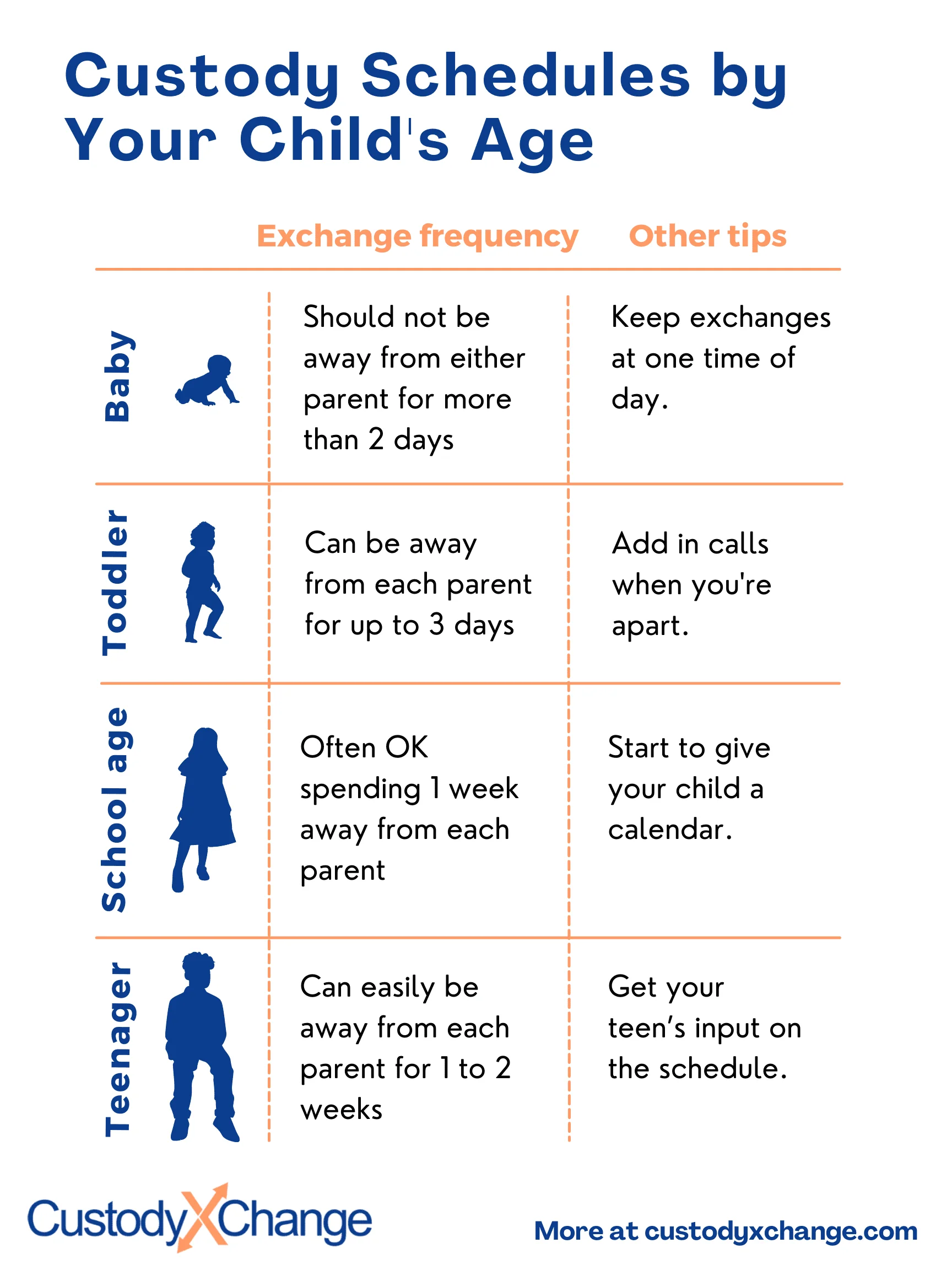
When handoffs happen on school days, timing matters. If the schedule forces a child to leave one home before dawn or arrive at the other home too late for rest, the plan may need a closer look.
Extracurricular schedules, homework load, and bedtime routines
School changes often come with a new set of activities, different homework expectations, and a different rhythm for bedtime. A child who now needs to stay for tutoring, band, or sports may not be able to follow the old parenting-time pattern without friction.
Even a well-meaning schedule can create problems if it cuts into homework time or sleep. In child development terms, consistency matters more than convenience.
If a child is struggling after a school change, look at the full routine, not just the calendar. Transportation, dinner time, homework, and bedtime all affect whether a parenting plan still fits.
When a school move affects transportation, attendance, and consistency
Attendance problems can start with transportation problems. A late handoff, a missed bus, or a long drive after school can quickly turn into repeated absences or tardies.
That is why families often review the schedule soon after a school change. If the current plan makes the child late, tired, or rushed, it may be time to adjust the structure around the school week.
When reviewing a schedule, map out the actual week: morning drop-off, pickup, after-school care, homework time, and bedtime. The most workable plan is the one that fits real life, not just the parenting calendar.
How to Talk About Parenting Time Changes Without Turning It Into a Family Roast
Jamie Reed’s humor rule: keep the joke aimed at the situation, not the child
When family stress is high, humor can lower tension, but only if it stays respectful. A child should never feel like the subject of the joke, especially during a school transition that may already feel uncertain.
The safest approach is to comment on the situation itself: traffic, backpacks, or the endless mystery of missing lunch containers. Avoid jokes that make the child feel blamed for adult scheduling problems.
Delivery advice for tense co-parent conversations and school meetings
In co-parent conversations, clarity matters more than clever wording. Keep the message short, specific, and focused on the child’s needs rather than on who caused the change.
At school meetings, a calm tone helps everyone stay practical. Teachers, counselors, and administrators usually respond best when parents explain the logistics and ask for solutions instead of using emotional language.
Do not use humor to soften a serious disagreement if the other parent is already frustrated. A joke that feels harmless to one adult can sound dismissive to another.
Choosing the right setting: text message, email, school conference, or in-person talk
Text can work for simple logistics, such as confirming a pickup time or asking for a school address update. Email is usually better when you need a clear record of the discussion, especially if the schedule is being reviewed.
In-person talks are best when the issue is complicated and both adults are calm enough to listen. School conferences are useful when the child’s routine, attendance, or support needs are part of the conversation.
Humor works best when it reduces tension without changing the meaning of the message. In family communication, that usually means using a light observation rather than a sharp comment.
Joke Craft Tips for Family Humor That Actually Lands
Use light observational humor about schedules, backpacks, and carpool chaos
Observational humor is usually safer than exaggeration or teasing. It gives everyone something familiar to recognize without making the conversation personal.
For example, a parent might note that school mornings involve more coordination than a small event planner. The point is to describe the challenge, not to mock the child or the other parent. [Source: NASA Science]
Simple humor often lands better under stress because it is easier to process. When people are worried about school logistics, they usually respond best to short, clear, low-pressure language.
Keep punchlines short, clean, and easy to understand under stress
Long setup lines tend to lose people when they are already thinking about bus times and custody calendars. Short humor is easier to absorb and less likely to be misunderstood.
That is especially important in parenting-time conversations. If the other adult has to decode the joke, the joke is probably in the wrong place.
Say what changed: the school, the commute, or the pickup time.
Use a neutral comment about the routine, not the people involved.
End with the next step: a call, a meeting, or a schedule draft.
Use timing, tone, and understatement instead of sarcasm or blame
Understatement usually works better than sarcasm because it feels less combative. Sarcasm can easily sound like criticism when parents are already stressed about school transitions.
Tone matters too. A calm, even voice helps the other person hear the practical point instead of reacting to the emotional undertone.
Sarcasm is risky in school-related parenting conversations. It often reads as blame, even when the speaker intended it as a joke.
Where Humor Works Best: School Events, TikTok, Newsletters, and Family Assemblies
School pickup line humor versus classroom or teacher-facing communication
The pickup line is one of the few places where quick, light humor may be appropriate, as long as it stays brief and polite. It can make a long wait feel less tense.
Teacher-facing communication is different. Emails, notes, and conferences should stay respectful and direct, because staff need clear information more than entertainment.
TikTok and short-form video: what works, what backfires, and why
Short-form video can be useful for relatable parenting observations, but it is not the right place for private family conflict. Content that seems funny to the creator may embarrass a child or oversimplify a real parenting-time issue.
It is safer to keep public humor broad and non-identifying. If a post would make a child or co-parent feel exposed, it should stay off the feed.
Newsletter or community post humor: friendly, inclusive, and parent-safe
School newsletters and community updates can use gentle humor to feel welcoming. The best version is simple and inclusive, with no inside jokes that leave some families out.
Think of it as friendly tone, not comedy routine. The goal is to help parents feel informed and comfortable.
Family assembly or shared gathering: keeping the mood warm, not awkward
At shared family gatherings, humor should support connection. It can acknowledge the reality of busy schedules without turning the event into a commentary on parenting choices.
If the group includes children, relatives, and both parents, the safest path is warm, neutral language that does not create side conversations or embarrassment.
What kind of humor works best during a school transition?
The kind that fits in a backpack: small, useful, and not full of drama.
Common Humor Mistakes When Kids Change Schools and Parenting Plans Shift
Jokes that make one parent look like the villain
When humor turns one adult into the punchline, it can damage trust fast. Even if the joke gets a laugh, it may also make future cooperation harder.
That is a poor trade in a school transition, where teamwork matters. A child benefits more from coordinated adults than from a clever line.
Using sarcasm when the audience is already stressed
Sarcasm often lands badly in tense conversations because it invites defensiveness. In a high-stress moment, people usually hear the edge before they hear the meaning.
If the goal is a workable parenting-time change, plain language is usually the better choice.
Making school transitions sound like a custody battle punchline
A school move can affect schedules, but it should not be turned into a joke about winning or losing. That framing can pull the conversation away from the child’s actual needs.
Parents should keep the focus on stability, attendance, and everyday comfort. That is where the useful decisions happen. [Source: Britannica]
What should parents avoid during a school-change conversation?
Anything that sounds like a courtroom trailer instead of a family plan.
Ignoring that kids may hear more than adults expect
Children overhear more than adults realize, especially during school pickups, phone calls, and casual conversations at home. A joke that seems private may be repeated later at the wrong time.
That is why family communication should stay respectful even when kids are not in the room. The message still matters if they eventually hear it.
Age-Appropriateness Notes: What Kids Can Handle at Different Stages
Elementary-age kids: simple, reassuring, routine-based humor
Younger children usually do best with predictable routines and simple explanations. If humor is used, it should be gentle and tied to everyday life, like the challenge of remembering a folder or lunch box.
Keep the message reassuring. The child should understand that the adults are handling the change and that school still has structure.
Middle schoolers: more independence, more sensitivity, more eye rolls
Middle schoolers often want more say in their routines, but they are also more sensitive to embarrassment. A joke that feels casual to an adult may feel like public attention to them.
Use humor sparingly and only if the child is comfortable with it. Respect matters a lot at this stage.
Teens: respect, privacy, and avoiding jokes that feel embarrassing
Teens usually want privacy and control over how their lives are discussed. Humorous comments about their schedule, grades, or social life can feel intrusive if they are not invited.
When a teen is adjusting to a new school, the best support is often straightforward conversation. Humor should never replace respect.
If a child looks uncomfortable, stop the joke and return to reassurance. A child’s reaction is a better guide than the adult’s intention.
When to skip humor entirely and go straight to reassurance
Skip humor when the child is anxious, upset, overwhelmed, or confused. In those moments, a calm explanation is more helpful than any attempt at levity.
That is especially true during the first days at a new school, after a difficult handoff, or when the child is worried about missing friends or activities.
- School changes can make an old parenting-time plan harder to follow.
- Commutes, activities, homework, and bedtime all affect the schedule.
- Use humor carefully, and keep it aimed at the situation, not the child.
- Choose the right setting for the conversation: text, email, meeting, or in person.
- Kid-centered planning should always come before clever wording.
Final Recap: Keeping Parenting Time Flexible, Fair, and Kid-Centered
Key takeaways on school changes, parenting time, and communication
When kids change schools in Arizona, the parenting-time plan may need a practical review. The most important questions are whether the child can get to school on time, keep a steady routine, and stay supported across both homes.
Parents do not need to agree on everything to make a good plan. They do need to focus on the child’s daily experience and communicate clearly about what is changing.
How to use humor to reduce tension without minimizing the issue
Humor can help families stay human during stressful transitions, but only when it is used with care. The best approach is light, neutral, and short, with no sarcasm and no blame.
If humor distracts from the child’s needs, it has gone too far. If it helps adults stay calm while solving the problem, it is doing its job.
Closing reminder: the best plan supports school success and family stability
The strongest parenting-time plan is the one that supports attendance, rest, homework, and emotional steadiness. A school change is a good time to check whether the current arrangement still fits those goals.
For families navigating school-friendly humor or trying to keep communication calm during a busy transition, the same principle applies: keep it clear, keep it kind, and keep it child-centered.
Frequently Asked Questions
No. A school change does not automatically rewrite parenting time, but it can make the current schedule harder to follow. Families often review the plan if transportation, attendance, or weekday handoffs become difficult.
The biggest pressure points are commute time, morning drop-off, after-school pickup, homework, extracurriculars, and bedtime. Those details often determine whether the plan still works for the child.
Yes, if the schedule affects attendance, pickup procedures, or after-school support. School staff can help clarify logistics, but they do not decide parenting-time issues.
Sometimes, but only if it is light, respectful, and clearly focused on the situation. Humor should never target the child or turn a serious scheduling issue into a blame game.
Avoid humor when emotions are high, the child is upset, or the audience includes teachers or administrators who need clear information. In those settings, calm and direct communication works better.
Keep routines predictable, explain changes in simple language, and make sure the child knows the adults are handling the logistics. Reassurance and consistency matter more than clever wording.