

The best baby carriers for hip dysplasia support a wide, deep seat that keeps your baby’s hips in a healthy “M” position.
Your baby may fuss during walks, while you cook, or when you move around the home. A good carrier can keep your hands free and your baby close. For babies with hip dysplasia, fit matters more than style. The carrier should support the thighs from knee to knee without forcing the legs straight or pressed together. I reviewed the features, weight ranges, hip-seat designs, carry options, and daily-use value of these nine picks. Always ask your child’s doctor or pediatric hip specialist before using a carrier with a baby who has a hip condition.
See the differences between my top picks at a glance.
| Carrier | Listed range | Main design | Best for | Check price |
|---|---|---|---|---|
| Momcozy 2-in-1 | 7–44 lb | Detachable hip seat | Long walks | View on Amazon |
| MOMTORY 6-in-1 | 7–50 lb | Multi-position hip seat | Growing families | View on Amazon |
| Biabyio Sling | 10–30 lb | Half-wrap sling | Short carries | View on Amazon |
| Grownsy 3D Knit | 7–50 lb | Breathable carrier with seat | Warm weather | View on Amazon |
| Momcozy Hip Seat | Up to 45 lb | Wide hip seat | Fast ups and downs | View on Amazon |
| Tushbaby Black & Gold | Up to 45 lb | Foam-free hip seat | Storage | View on Amazon |
| AOTSTND Carrier | 10–30 lb | Soft strap and seat | Budget use | View on Amazon |
| HKAI Hip Carrier | Not stated | Breathable mesh seat | Airflow | View on Amazon |
| Tushbaby Grey | Up to 45 lb | Foam-free hip seat | Minimalist carrying | View on Amazon |
Momcozy 2-in-1 Baby Carrier with Hip Seat

The Momcozy 2-in-1 combines a hands-free carrier with a detachable hip seat. Its listed weight range runs from 7 to 44 pounds. That range gives parents room to use it from early infancy through the toddler years, subject to the maker’s age and fit directions. The hip-seat design can help place the baby in a more open seated posture than a narrow, straight-leg carrier.
I like this model for parents who want one carrier for more than one stage. The detachable design also suits toddlers who often ask to get down, then want to be carried again. For hip dysplasia concerns, check that the seat supports both thighs and that your baby’s knees sit higher than the bottom. Do not rely on the product name alone; correct adjustment and medical advice still matter.
Pros:
- Two useful carry formats in one product
- Listed range from 7 to 44 pounds
- Hip-seat shape may reduce pressure from a narrow seat
- Useful for babies and walking toddlers
- Good choice for walks and errands
- Detachable design adds daily flexibility
Cons:
- Hip seats can feel bulky around the waist
- Forward-facing carry may not suit every baby or hip condition
- Parents must adjust the seat carefully for a deep, supported position
What Amazon Buyers Are Saying
Buyer feedback for this type of Momcozy carrier tends to focus on the value of the detachable seat and the help it gives during longer outings. Many shoppers also look for comfort around the waist and easy switching between carry modes. Common concerns with hip-seat carriers include added bulk, fit around smaller waists, and the time needed to learn each position. Check current reviews for your size and preferred carry mode before ordering.
My Recommendation
I recommend this carrier for parents who need flexibility and expect to carry a growing child. It is a strong all-around choice, but I would use only the positions approved for your baby’s age and hip needs.
MOMTORY 6-in-1 Baby Carrier with Hip Seat

The MOMTORY 6-in-1 carrier lists six carry positions and a 7-to-50-pound weight range. It also includes an ergonomic hip-seat design and a plus-size-friendly build. That broad range makes it appealing to families who want a carrier that can change as the child grows. The black finish also works well for daily use and hides small marks.
More positions do not always mean better support, so I would focus on the seat width and the baby’s leg posture. A baby with hip dysplasia needs a position that lets the thighs rest in a supported spread. The carrier may work well for parents who share carrying duties, since the waist and shoulder adjustments can be changed between adults. Read every position’s age, weight, and facing rules before use.
Pros:
- Six carry positions offer strong versatility
- Listed 7-to-50-pound range
- Hip seat supports a more upright seated carry
- Plus-size-friendly design may suit more adults
- Useful from babyhood to toddlerhood
- Good option for families who share one carrier
Cons:
- Many settings can create a learning curve
- The larger structure may feel warm or heavy
- Not every position fits every baby with hip concerns
What Amazon Buyers Are Saying
Amazon shoppers commonly pay attention to the number of positions, the room in the waistband, and comfort during longer carries. Buyers who like multi-use carriers often value the ability to change positions as their child grows. The main issues shoppers tend to mention with complex carriers are adjustment time, bulk, and fit differences between adults. I suggest checking recent buyer photos and reviews that match your baby’s age.
My Recommendation
This is one of my better picks for families that want a long-use carrier with many options. It is worth considering when both caregiver fit and baby hip positioning matter. I rate it highly for flexibility, but beginners should practice at home first.
Biabyio Adjustable Baby Sling Carrier

The Biabyio is a half-wrap sling with an adjustable strap and a listed 10-to-30-pound range. Its smaller range makes it more suited to babies who have outgrown newborn-only carrying and younger toddlers. The sling format can feel simple and light for quick trips. Its non-slip design aims to help keep the carrier in place while the baby sits close.
This style requires careful setup because the fabric and strap must hold the baby at the right height. I would use it for short carries around the home, quick errands, or gentle walks. It may not provide the same balanced support as a structured carrier during long outings. For a baby with hip dysplasia, confirm that the sling creates a deep seat and supports the thighs rather than letting the legs hang.
Pros:
- Light and simple sling format
- Adjustable strap helps fine-tune the fit
- Non-slip design may improve stability
- Listed 10-to-30-pound range
- Convenient for short carries
- Less structure than a large framed carrier
Cons:
- Smaller weight range than many top picks
- One-shoulder designs may tire some adults
- Requires careful setup and frequent fit checks
What Amazon Buyers Are Saying
Shoppers who choose sling carriers often discuss light weight, quick use, and how well the strap stays adjusted. Some buyers prefer the close feel of a sling, while others find one-shoulder carrying less comfortable over time. Fit can vary with body shape and baby size. Read the latest reviews closely if you plan to use this carrier for more than brief trips.
My Recommendation
I would choose the Biabyio for short, simple carries rather than all-day use. It can be useful for an older infant within the listed range, but it is not my first choice for a child who needs very controlled hip positioning.
Grownsy 3D Knit Baby Carrier with Hip Seat

The Grownsy 3D Knit carrier lists a 7-to-50-pound range and includes a hip seat. Its breathable knit construction may help improve airflow compared with thick, less open materials. The flexible fit and plus-size-friendly design give it broad appeal. It is made for families who want a structured carrier without a stiff feel.
Airflow matters during summer walks, but it should not replace correct hip support. I would set the baby high and close, then check that the seat supports the legs from below. The wide weight range may cover several stages, though newborn use must follow the product instructions. This carrier looks strongest for parents who want comfort, ventilation, and room to adjust.
Pros:
- Listed 7-to-50-pound range
- Breathable 3D knit material
- Hip seat supports seated carrying
- Flexible fit for different body sizes
- Useful for warm-weather outings
- Can serve baby and toddler stages
Cons:
- Open knit fabric still needs regular cleaning
- Flexible material may need extra adjustment
- May feel warm where the hip seat contacts the adult
What Amazon Buyers Are Saying
Customer discussions around breathable carriers often center on airflow, softness, and whether the carrier remains comfortable as the child gains weight. Buyers also tend to compare the waist fit and the ease of putting it on without help. Some users may prefer more structure, while others like a flexible knit feel. Check current reviews for comments about your climate and body size.
My Recommendation
The Grownsy is a strong choice for warm climates and parents who dislike heavy fabric. I would shortlist it among the 10 best baby carrier for hip dysplasia when ventilation and a broad weight range are top priorities.
Momcozy Adjustable Hip Seat Carrier

This Momcozy carrier uses a dedicated hip seat and lists support for babies up to 45 pounds. The product description highlights a widened seat, adjustable waistband, and extra back support. It also includes pockets for small items. The simple design suits parents who lift a child often during the day.
A hip seat works best when the child sits deep and close to the adult’s body. It can reduce the need to hold the child’s full weight with one arm, but it does not replace a hands-free carrier panel. I like this design for toddlers who want frequent breaks from walking. For hip dysplasia, make sure your child’s legs remain supported and follow the specialist’s advice on facing direction.
Pros:
- Listed capacity up to 45 pounds
- Widened seat supports the child’s base
- Adjustable waistband
- Added back-support design
- Pockets keep small items nearby
- Fast to use for repeated lifts
Cons:
- Less hands-free than a full panel carrier
- May feel bulky under fitted clothing
- Requires one hand for added child security in some situations
What Amazon Buyers Are Saying
Hip-seat buyers often value the quick setup and the relief of carrying a heavier toddler without using one arm alone. Reviews also tend to mention pocket space, waist comfort, and whether the seat stays stable during movement. A common limitation is that a standalone hip seat does not offer the same hands-free feel as a full carrier. Read current feedback about your child’s age and activity level.
My Recommendation
This is a practical pick for toddlers and older babies who go up and down often. It is worth buying if you want quick support, but I would choose a full carrier for hands-free walks or longer periods.
Tushbaby Original Hip Seat, Black and Gold
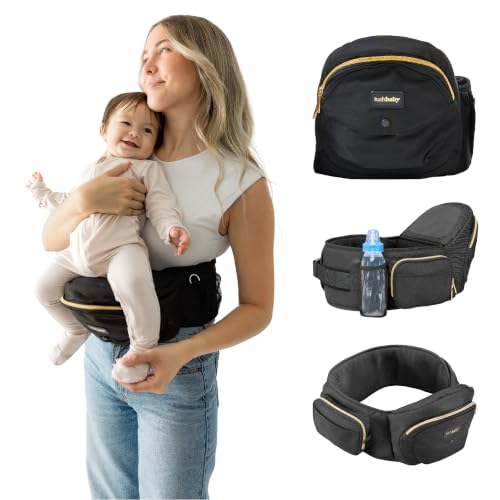
The Tushbaby Original is a lightweight hip-seat carrier with a listed capacity of up to 45 pounds. This version uses a black-and-gold color scheme and a no-foam design. It also offers built-in storage for small items. The carrier is aimed at parents who want a simple way to support a baby or toddler on the hip.
The no-foam design may appeal to parents who want less bulk. A hip seat can spread the child’s weight across the adult’s waist instead of placing all the load on one arm. Still, the child needs close supervision because this model is not the same as a fully enclosed, hands-free carrier. I would use it for supported hip carrying and ask a clinician about the best position for a child with hip dysplasia.
Pros:
- Listed capacity up to 45 pounds
- Lightweight no-foam design
- Built-in storage for small essentials
- Quick to put on and remove
- Useful for babies and toddlers
- Classic hip-seat format
Cons:
- Not a fully hands-free carrier by itself
- May need extra child support during active movement
- Hip-seat bulk can feel noticeable for smaller adults
What Amazon Buyers Are Saying
Customer feedback for the Tushbaby style often highlights convenience, storage, and the ability to carry a toddler with less arm strain. Buyers also compare waistband comfort and the weight of the seat. Some shoppers expect a hands-free carrier and feel surprised by the open design. I recommend reading the product details closely so the format matches your daily needs.
My Recommendation
This is a good minimalist choice for parents who carry a child on and off all day. It offers useful support and storage, but it should not be mistaken for a fully enclosed carrier. I rate it highly for quick toddler carrying.
AOTSTND Adjustable Baby Carrier

The AOTSTND carrier combines a soft adjustable shoulder strap with an adjustable, non-slip hip seat. Its listed weight range is 10 to 30 pounds. A pocket adds space for a phone, keys, or a small cloth. The charcoal gray color gives it a plain look for daily errands.
This carrier may suit parents who want a basic design without a long list of settings. The narrower weight range can work well for a specific stage, but it gives less room for growth than 45- or 50-pound models. I would inspect the seat position each time and keep the baby close to the adult. For hip dysplasia, support under the thighs remains the key test.
Pros:
- Adjustable shoulder strap
- Non-slip hip-seat surface
- Listed 10-to-30-pound range
- Includes a useful pocket
- Simple format for daily errands
- Soft strap may feel less rigid
Cons:
- Limited weight range compared with larger carriers
- May not suit newborns or larger toddlers
- Soft structure may need careful adjustment
What Amazon Buyers Are Saying
Buyers of simple hip carriers often focus on strap softness, seat grip, and how easy the product feels during short trips. The pocket also matters to parents who want to leave a small bag at home. Common concerns include the limited weight window and comfort during long use. Check current reviews for details on fit, since soft carriers can feel different on each body.
My Recommendation
I see the AOTSTND as a practical budget option for a baby within the listed range. It is best for short carries and quick tasks. I would choose a larger structured model for long walks or extended hands-free use.
HKAI Baby Hip Carrier with Breathable Mesh

The HKAI baby hip carrier uses an adjustable waistband, breathable mesh, and a non-slip hip-seat surface. The listing describes it for newborns and toddlers, but the provided product details do not state a specific weight limit. That makes careful review of the current product page important before purchase. The light gray finish gives it a clean, neutral look.
Mesh can help air move around the adult and baby during warm days. The non-slip surface may help the child stay centered, but it does not replace a secure hold or close supervision. I would confirm the exact age and weight rules before using this model with a newborn. For a baby with hip dysplasia, ask a medical professional whether the seat creates enough thigh support.
Pros:
- Breathable mesh construction
- Adjustable waistband
- Non-slip hip-seat surface
- Neutral light gray color
- Designed for newborn and toddler stages
- Simple hip-carry format
Cons:
- Specific weight limit is not stated in the supplied details
- Standalone hip seat offers limited hands-free support
- Newborn use needs extra care and professional guidance
What Amazon Buyers Are Saying
Reviews for mesh hip carriers often discuss airflow, surface grip, and how easy the waistband is to adjust. Buyers may also compare the seat size with the age of their child. The most important point to verify is the real-world fit, since a general “newborn to toddler” label does not tell you how the seat supports each stage. Read recent reviews and the full manual before use.
My Recommendation
The HKAI is worth considering if airflow is your main concern. I would not buy it without first confirming the current weight limits and checking that the seat supports your baby’s thighs. It is a reasonable warm-weather option, not my top medical-support pick.
Tushbaby Original Hip Seat, Gray

This gray Tushbaby Original has the same core style as the black-and-gold version. It is a lightweight, no-foam hip seat with storage and a listed capacity up to 45 pounds. The open design makes it fast to use when a toddler wants to be carried. Its gray color may appeal to parents who prefer a quiet, everyday finish.
I see this model as a useful companion carrier rather than a complete replacement for a hands-free option. It can help during grocery trips, stairs, and short walks when the child often changes between walking and riding. The adult must still keep the baby secure. If your child has hip dysplasia, ask the care team about the safest hip angle and whether a hip seat is appropriate.
Pros:
- Listed capacity up to 45 pounds
- Lightweight no-foam construction
- Storage for small daily items
- Fast on-and-off use
- Useful for independent toddlers
- Neutral gray finish
Cons:
- Not fully hands-free
- May require constant hand support
- Less suitable for long, active walks
What Amazon Buyers Are Saying
Buyers commonly praise the convenience of having a child seat ready without putting on a full carrier. Storage and reduced arm strain also appear important in this category. Some shoppers want more back coverage or hands-free security, which an open hip seat cannot provide. Compare the gray and other color listings for the same current specifications before ordering.
My Recommendation
The gray Tushbaby is a dependable option for quick toddler carries and frequent up-and-down use. I recommend it when simplicity matters most. For a baby who needs carefully controlled positioning, I would first get clearance from a pediatric hip specialist.
How to Choose the Best Baby Carrier for Hip Dysplasia
Choosing among the 10 best baby carrier for hip dysplasia takes more than comparing colors or prices. Hip dysplasia involves the way the hip joint develops. A carrier cannot treat it. The safest choice depends on your baby’s diagnosis, age, treatment plan, and body size. The International Hip Dysplasia Institute supports carrying positions that allow the hips to stay spread, bent, and supported. I also recommend asking your child’s doctor before you buy.
1. Look for a Deep, Wide Seat
The most important feature is thigh support. The seat should reach toward the backs of the knees without pressing the legs together. Your baby’s knees should sit higher than the bottom, which creates the familiar “M” position. Avoid a narrow base that lets the legs hang straight down. Also avoid any position that forces the hips into a tight, closed posture.
Hip seats can help, but the name does not guarantee a safe fit. Test the seat with your baby’s actual body size. Watch for dangling legs, a tilted pelvis, or pressure behind the knees. If you see these signs, stop and adjust the carrier. If the fit still looks wrong, choose another model.
2. Match the Carry Type to the Medical Need
A full carrier with a secure panel may offer more hands-free support. A standalone hip seat may work better for an older baby or toddler who gets down often. A sling can feel light, but it demands careful setup and may place more load on one shoulder. These differences matter when your baby needs a steady, well-supported position.
Do not assume forward-facing carry is right for your child. Some babies need inward-facing support for longer periods. Follow the manufacturer’s age, weight, and facing rules. Ask your pediatrician or orthopedic specialist about carrying after a diagnosis, brace use, or treatment.
3. Check Adult Fit, Weight Range, and Daily Value
A carrier that fits the baby but hurts the adult will not get used. Look for a waistband that sits firm but does not pinch. Wide shoulder straps can spread the load. Adjustable parts should lock in place and stay comfortable when you walk, bend, or sit. If more than one adult will use the carrier, check the adjustment range for everyone.
Next, compare the listed weight range with your child’s growth. A 10-to-30-pound carrier may cost less but may not last as long as a 7-to-50-pound model. Still, a wider range does not matter if the seat does not fit your baby now. Choose correct positioning first, then compare price, pockets, airflow, cleaning, and long-term use.
Final Verdict: Which Should You Buy?
My top overall pick is the MOMTORY 6-in-1 for its wide range and many carry choices. The Momcozy 2-in-1 and Grownsy are also strong options. For toddlers, the Tushbaby hip seats offer quick support.
The 10 best baby carrier for hip dysplasia should support the thighs and keep the hips open. Always confirm fit with your child’s medical team before use.
FAQs Of 10 best baby carrier for hip dysplasia
What is the best baby carrier position for hip dysplasia?
An inward-facing position with bent, spread legs and supported thighs is often preferred. Ask your child’s hip specialist for advice based on the diagnosis.
Can a hip seat help a baby with hip dysplasia?
A hip seat may support a seated posture, but it cannot treat hip dysplasia. Use one only when it gives full thigh support and your clinician approves it.
What should I avoid in a carrier for hip dysplasia?
Avoid narrow seats, dangling legs, forced straight-leg positions, and any fit that presses the knees together or causes visible discomfort.
Are baby slings safe for hip dysplasia?
A sling may be safe when fitted correctly, but the baby must stay visible, upright, and well supported. Confirm the hip position and follow the sling instructions.
How do I know if a baby carrier fits correctly?
Your baby should sit high and close, with the back supported and thighs supported toward the knees. Check breathing, leg position, and comfort often.
